

 Reviewed by
![Average Small Business Debt by Industry and Revenue [2026]](/assets/blog/average-small-business-debt/average-small-business-debt-ef8e61b5efe03f82fe021340c03f66a2d335ae756620e4180871cb18973e56a8.webp)
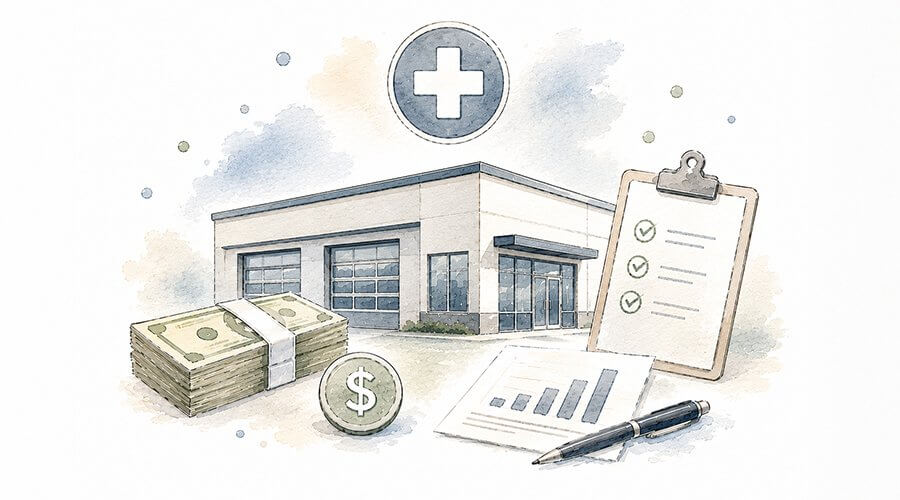
Debt can be beneficial to a company if you use it to expand operations, smooth out cash flow, or invest. The average amount of small business debt depends on the industry.
I've spent my whole career helping small to midsize business (SMB) owners find the right financing option for their needs. Below, I'll cover the average small business debt by industry and why it matters when you're borrowing.
What Is the Average Small Business Debt?
More than half (63%) of small businesses have $100,000 or less in outstanding debt and 37% have more than $100,000, according to the Federal Reserve. The vast majority (86%) of firms use small business financing on a regular basis, and the most common kinds of small business financing include credit cards and loans.
Minimum Qualifications
For Financing Through Clarify Capital

$10,000 in monthly revenue
Your business must earn at least $10K per month in a business bank account.

500+ credit score
You can get approved with any credit score. But the better your credit rating, the better interest rates lenders offer. Your FICO score should be above 500.

Minimum six months in business
Your company should be operational for a minimum of six months. This shows business lenders that your company is sustainable and won't go out of business.

Have a business bank account
Your Clarify advisor will need three or four months of your most recent bank statements to verify income. This is just to see you're actually making $10K+ month in revenue.
Average Small Business Debt by Industry
Some industries carry a high debt load because their clients take a while to pay, while others rarely have any debt.
Below, I'll break down the average small business debt by industry.
| Industry | Most common debt range | Firms with more than $100K in debt | Most commonly sought financing |
|---|---|---|---|
 | $250K to $1M | 48% | Loans |
 | $100K to $250K | 41% | Credit cards |
 | $100K to $250K | 44% | Credit cards |
 | $50K to $100K | 34% | Credit cards |
 | $50K to $100K | 31% | Credit cards |
How Debt Changes as a Business Ages
Newer businesses tend to carry smaller balances. As the business ages, that amount builds.
Once a company surpasses the 21-year mark, that number flips again. These companies are most likely to carry a debt load of $1 million, and also the most likely to carry no debt at all.
Now, let's take a look at how the numbers break out based on time in business.
| Years in business | No debt | $50K to $100K | $100K to $250K | $250K to $1M | More than $1M |
|---|---|---|---|---|---|
| 0 to 2 years | 33% | 13% | 14% | 9% | 5% |
| 3 to 5 years | 26% | 15% | 12% | 11% | 6% |
| 6 to 10 years | 24% | 11% | 18% | 19% | 8% |
| 11 to 15 years | 27% | 12% | 17% | 19% | 7% |
| 16 to 20 years | 30% | 12% | 16% | 18% | 6% |
| 21+ years | 36% | 9% | 15% | 16% | 12% |
Common Types of Small Business Financing
The most common types of small business financing are business loans and credit cards, but there are lots of different financing options available. Below, I explain some common options.
Business credit cards
The most popular form of business financing, with 65% of companies using them on a regular basis. They're useful for making recurring purchases and for covering short-term expenses, but when you have an outstanding balance, interest payments add up quickly.
Business lines of credit
Revolving credit lines that let you borrow up to $5 million and only pay interest on what you use. Terms can range from six to 36 months with weekly or monthly payment schedules. Interest rates start at 6%.
Short-term business loans
A lump sum ranging from $10,000 to $5 million. Repay the loan over six to 36 months with interest rates starting at 6%.
Equipment financing
Finance up to 100% of the cost of equipment. Interest rates start at 6%, and term lengths range from 12 months to 72 months.
SBA loans
Borrow $500,000 to $5 million with financing that is partially guaranteed by the U.S. Small Business Administration (SBA). Typically, these loans require a minimum of two weeks, but closer to 30 to 90 days, for approval.
Merchant cash advances
Advance funds based on your expected cash flow and repay from a percentage of your future sales. Merchant cash advance providers charge their fees as a factor rate, rather than an interest rate.
Invoice factoring
Factoring lets you sell your unpaid invoices to a factoring company at a discount in exchange for cash. Their fee structure is usually based on a percentage of each invoice that is paid off, typically between .50% and 5% per month.
Comparing Your Debt Against the Benchmarks
The information above lets you compare your debt with other businesses in similar industries. The equations below will tell you what your money earns, what you owe, and how much cash is free to make payments.
Debt-to-revenue ratio
Debt-to-revenue = Total outstanding debt ÷ Annual revenue
Debt service coverage ratio (DSCR)
DSCR = Net operating income ÷ Total debt service
Debt-to-equity ratio
Debt-to-equity = Total liabilities ÷ Owner's equity
Debt-to-income ratio
Debt-to-income = Total monthly debt payments ÷ Gross monthly income
The speed your debt comes due is just as important as the amount. A company with $300,000 in debt in a longer-term loan is relatively stable. But if that same $300,000 were due in a shorter time frame, it could severely limit the cash flow and the cash reserves of the company.
Warning Signs Your Debt May Be Too Heavy
Your current debt affects how much you're able to borrow in the future. Lenders review your revenue and cash flow to make sure you can handle another payment. Here are a few signs your debt load may be getting too heavy.
Using new financing to pay off old debt
Borrowing money to pay off old debt is an indication that your company is unable to generate sufficient income to support all of its outstanding debt.
Stacking short-term financing
Multiple merchant cash advances or two or more short-term business loans can strain your cash flow.
Debt squeezing your cash flow
When daily or weekly payments get so large there isn't enough left for payroll, rent, and other operating expenses.
If your debt load is too heavy, there are a few things you can do to help.
First, write down all your balances, all the rates (interest rate or factor rate), payments, frequencies, and the remaining repayment term.
Once you've identified where the pressure is coming from, you can then use either consolidation or refinancing to move the number. Let's look at the difference between these two options:
Consolidation
Consolidation involves combining multiple debts into one. This is usually a common option when a business has several debts that require regular payments on different due dates, with shorter repayment periods.
Refinancing
Refinancing involves replacing an existing debt with new financing, like if you're offered a better interest rate or repayment terms. Refinancing doesn't eliminate debt. If the original issue was low income or profit margins, borrowing more simply moves the problem.
Sometimes the right decision is to stop borrowing and focus on improving your company's cash flow. Borrowing additional money to help pay for day-to-day operations can put more strain on your finances.
The Bottom Line on Small Business Debt
There's no one-size-fits-all answer when it comes to small business debt. Focus on your own financial health. If you need working capital or a better setup for what you owe, apply today with Clarify Capital. We match your application across our network of 75+ vetted, reputable lenders.
Frequently Asked Questions
Still have questions about small business debt? Here are some of the most common ones.
Is $100,000 in Debt a Lot for a Small Business?
Not necessarily. Whether $100,000 in total debt is too much depends on how well a small business manages cash flow, generates revenue, maintains profitability, negotiates debt service, and has sufficient collateral.
What Is the Average Small Business Debt in the U.S.?
Sixty-three percent of small businesses have $100,000 or less in outstanding debt and 37% have more than $100,000, according to the Federal Reserve.
What Is a Healthy Debt-to-Revenue Ratio for a Small Business?
There isn't one figure that works across all industries, but a good debt-to-revenue ratio for a small business is generally below 36%. Lenders typically view businesses with lower debt-to-income ratios as more financially stable.
What Is a Good DSCR for a Small Business?
A ratio of 1.00 is considered good, but some lenders want to see 1.25 or better before approving. DSCR ratios vary depending on both the specific type of loan and the industry.
Do Small Businesses Use Credit Cards as Business Debt?
Yes. Credit cards are among the most popular types of small business debt.
Does Having Business Debt Hurt Your Credit Score?
Not as long as you continue making payments on time. Making regular payments can improve your business credit score, but missing payments can drag it down.
Can I Use New Financing to Refinance Existing Business Debt?
Yes. There are several different types of financing that let you refinance. An example is the SBA 7(a) program, which allows you to refinance old debts with a new one in some situations.
How Does Business Debt Affect Cash Flow?
Cash flow problems typically come from having too many bills to pay and not enough income. A small business can generate lots of sales and still have cash flow problems.
How Much Business Debt Is Too Much?
There's not a specific amount that's too much. Review your business's financial health and cash flow. A good place to start is the DSCR ratio. If it's lower than 1.00, that's a flag that you may have too much debt.
How Does Clarify Capital Protect My Financial Information?
Clarify follows SOC 2 security principles when handling applicant information. Checking your options won't affect your credit score.

Bryan Gerson
Co-founder, Clarify
Bryan has personally arranged over $900 million in funding for businesses across trucking, restaurants, retail, construction, and healthcare. Since graduating from the University of Arizona in 2011, Bryan has spent his entire career in alternative finance, helping business owners secure capital when traditional banks turn them away. He specializes in bad credit funding, no doc lending, invoice factoring, and working capital solutions. More about the Clarify team →
Related Posts