


 Reviewed by
A board-certified plastic surgeon came to me about a year ago with a predicament: He'd spent several years working in a major hospital, but felt it was time to start his own private aesthetic surgery practice. Entering his late 40s, he wanted more control over his schedule and knew opening his own place would bring in more cash-paying customers than insurance-billing ones. It was going to be a big investment, though, and he didn't know how to get financing.
The doctor needed an operating room (OR) with general-anesthesia capability, a separate pre-op suite, two recovery rooms, and several other cosmetic tools (including lasers, body-contouring devices, and injectables). That build-out, plus equipment, was going to be about $850,000. With accreditation fees, administrative technology expenses, plus the cost to hire employees, he was looking at a total investment nearing $1 million.
A commercial bank wanted a personal-guaranty cosigner and told the surgeon the process could take three months. My team at Clarify was able to help him explore options, connect with other lenders, and ultimately secure multiple loans and financing setups in about two weeks.
Situations like this are exactly where my team and I at Clarify Capital excel. Distinct from patient-side cosmetic financing, which is capital individuals can get to pay for their procedures, we help with practice financing for doctors who are looking to transition into a private surgery suite, already have one and want to refresh their operating room or equipment, or are thinking about acquiring an existing practice.
I know what the best financing options for plastic surgeons actually look like. I’ll walk through what they are, the six expense categories, how to apply for the right loan when you're ready, and a comparison of cash flow between cosmetic, reconstructive, and hybrid-model practices.
| Loan type | Typical amount (Clarify Capital) | Typical APR/cost | Repayment term | Funding speed | Best fit for a plastic surgery practice |
|---|---|---|---|---|---|
| Equipment financing | Up to 100% of equipment value | APR starting at 6% | 12 to 72 months | 1 to 5 days | OR table and lights, anesthesia machines and monitoring, lasers/EBD platforms (fractional, IPL, body contouring), recovery beds. Equipment serves as collateral; Section 179 in year 1 makes the math favorable on high-ticket platforms. |
| Working capital loan (short-term) | $10,000 to $5,000,000 | APR starting at 6% | 6 to 36 months | As fast as same-day | Accreditation-period payroll bridge (AAAASF/AAAHC surveys add months of prep before first case), marketing launch for the cosmetic line, ramp financing before the first cases generate billable revenue. |
| Business line of credit | $10,000 to $5,000,000 | APR starting at 6%; interest on drawn balance only | 6 to 36 months on drawn balance | As fast as same-day | AR smoothing on the reconstructive side (30 to 90 day commercial-payer reimbursement lag), injectable inventory restocking, surge capacity for high-volume cosmetic seasons. |
| Small Business Administration (SBA) 7(a) loan | Up to $5,000,000 | APR starting at 6.75%; rate caps base rate + 3.0% to 6.5% depending on loan size | 10 to 25 years | As fast as two weeks (typically 30 to 90 days) | Practice acquisition, full OR + ambulatory-surgery-center build-out, owning the building rather than leasing. |
Six Financing Categories for Plastic Surgeons
Plastic surgery is one of the most capital-intensive specialties in medicine. Between the office and OR needs, hefty accreditation fees, and tons of specialty equipment, a typical aesthetic-surgery practice launch will take $500,000 to $1,500,000 or more in investment.
I group the expenses you'll likely want to finance into these six categories:
Operating Room
The OR is the foundation of every aesthetic surgery practice, so I put all of its associated costs and equipment on its own. For a full build-out, consider that you'll need elements like:

Surgical-grade flooring and finishes

Medical-gas plumbing (for oxygen, nitrous, vacuum needs)

A redundant HVAC with HEPA filtration

Dedicated electrical system for the OR table and lights

Fire-rated separation
ADA-compliant recovery spaces
All of this can add up to anywhere from $100,000 to more than $400,000, depending on the size of the OR and the existing space (if there is one). There are also the additional costs that come with getting your OR accredited by top organizations. For example:
The American Association for Accreditation of Ambulatory Surgery Facilities (AAAASF or Quad A) survey fees can be between $4,000 for a small single-specialty practice and $11,000 for a multi-OR facility
The Accreditation Association for Ambulatory Health Care (AAAHC) fees run from $2,000 for small/local anesthesia only to roughly $11,000 for 10+ surgeons, multiple specialties, and general anesthesia
In my experience, an SBA 7(a) loan is usually the best fit for an OR build-out. You need something flexible enough to cover not only equipment, but construction, renovation, accreditation, and working capital needs. The SBA 7(a) loan is just that. They can go up to $5 million and are known for their accessibility, good rates, and long repayment terms.
Anesthesia Equipment
Anesthesia is technically going to be part of your operating room, but since the expenses associated with it can be quite high on their own, I break it out into its own category. To offer services with anesthesia, you're going to need:

Anesthesia machines ($10,000 to $150,000, depending on the brand) and its accessories, like:
- Vaporizers
- Gas delivery
- Scavenging

Patient monitoring systems, like:
- Capnography
- Pulse oximetry
- ECG
- NIBP
Emergency cart, with:
- Defibrillator
- Crash medications
- Suction and oxygen wall outlets
Equipment financing is a natural fit here because it's designed specifically for buying equipment, machinery, or vehicles. You get it as a lump sum, then pay it monthly over a fixed term. There's usually no down payment, and qualifying is also fairly accessible because the equipment itself acts as collateral.
Pre-op Suite
Having a pre-op preparation space is required at most surgery centers, per AAAASF and AAAHC standards. Equipping the room appropriately is going to cost anywhere from $15,000 to $50,000. That's likely to include:

Multiple stretchers or gurneys

Vital-signs monitoring stations
IV setup carts

Warming blankets

Forced-air warming systems (Bair Hugger or equivalent)

Patient-prep supplies

Privacy partitioning
The build-out cost on the room itself could roll into the OR build-out category above, but my recommendation for equipping these rooms is equipment financing.
Recovery Rooms
The quantity and quality of your practice's post-anesthesia care units (PACU) are going to be a big factor in how much work you can realistically do at a time, and therefore how much business you're bringing in. The OR can only schedule as many cases as the recovery rooms can absorb in their post-op monitoring window.
Most aesthetic surgery practices have two to four recovery rooms. They'll each typically run $10,000 to $30,000, including:

A reclining or hospital-grade recovery bed

Advanced monitoring (vital signs, respiratory rate)

Oxygen and suction wall outlets
Infusion pumps for medications

Emergency call buttons
My recommendation is the same here as it was for the pre-op suite: you could roll the PACU build-out costs into the broader OR build-out category, but equipment financing is best for outfitting the room with everything it needs.
Lasers and Energy-Based Device (EBD) Platforms
Apart from procedures, non-surgical cosmetic treatments will be a major revenue driver for your practice. The tools you need to perform them will typically require between $250,000 and $600,000 in investment. To offer a full suite of services in this category, you'll need:
Lasers for hair removal, vascular treatments, or skin resurfacing (range $50,000 to $200,000+ per device, depending on modality)
-systems-for-pigmentation-and-skin-rejuvenation-9caa6b3cc15030af7e5a112b2a6d0f7bf6d068519dabcba0695752cabd03cc12.svg)
Intense pulsed light (IPL) systems for pigmentation and skin rejuvenation

Skin-tightening platforms that use ultrasound or radiofrequency technology

Body-contouring platforms such as Emsculpt Neo, Cool Sculpting, and Vanquish (can be $90,000 to $150,000 each)
-microneedling-devices-a783dfe5c1632da0a511145304b5c9d9b6345641c56fa5b4fc90b42110e6e8dd.svg)
Radiofrequency (RF) microneedling devices
-equipment-for-regenerative-and-aesthetic-treatments-fc2e9151f8e67cba5715e62d73279f9bf2ff167f528e00fafa1ebf55eb24615a.svg)
Platelet-rich plasma (PRP) equipment for regenerative and aesthetic treatments
Equipment financing is also going to be your best bet here in most cases. Section 179, a special tax deduction, may let you deduct the cost of certain equipment for the first year you have it, even if you finance the purchase and make payments over time. In 2026, you can deduct up to $2,560,000, which often exceeds the first year of payments in typical financing terms.
Aesthetician-Grade Tools
Continuing with the non-surgical theme, aesthetician treatments like facials, peels, microneedling, dermaplaning, injectables, and other light-based skin treatments are services you should consider offering to boost cash flow and build long-term client relationships. These are things that you can generally hire aestheticians/other licensed staff members to do under the practice's supervision.
It will be around $50,000 to $150,000 of investment, and the equipment you'll need can include:
HydraFacial system or alternative clinical-grade hydra-dermabrasion machine ($20,000 to $30,000 or $2,000 to $15,000, respectively)

Microcurrent and LED devices ($5,000 to $25,000 per device)

Injectable inventory for neuromodulators, hyaluronic acid fillers, and biostimulators

Chemical peel and dermaplaning supplies

Treatment chair and table for each aesthetician
For the facial systems, light devices, and office chairs/tables, I'd use equipment financing.
I'd suggest rolling the injectable inventory and other supplies into a business line of credit. A business line of credit (LOC) is designed for borrowing cash. A lender deposits money into your business bank account, which you can draw from as needed, pay back, and then re-draw from continuously. You only pay interest on that borrowed portion, not on the unused credit.
Minimum Qualifications

$10,000 in monthly revenue
Your business must earn at least $10K per month in a business bank account.

500+ credit score
You can get approved with any credit score. But the better your credit rating, the better interest rates lenders offer. Your FICO score should be above 500.

Minimum six months in business
Your company should be operational for a minimum of six months. This shows business lenders that your company is sustainable and won't go out of business.

Have a business bank account
Your Clarify advisor will need three or four months of your most recent bank statements to verify income. This is just to see you're actually making $10K+ month in revenue.
How Plastic Surgeons Can Apply for Practice Financing
Distinct from patient-side cosmetic financing, which is capital individuals can get to pay for their procedures, practice financing is only for surgeons and doctors running facilities. The latter is where my team and I at Clarify Capital can help. Here's what the application process will look like:
Step 1: Apply online
It takes about two minutes. You’ll need your medical practice's legal name, EIN, time in business (or projected open date for a new practice), monthly revenue (or projected revenue), requested loan amount, owner contact information, and a credit authorization. Apply here.
Step 2: Connect with your lending advisor
A U.S.-based Clarify Capital lending advisor reviews the application, runs a soft credit pull (no impact to your score), and requests three to four months of recent business bank statements. For acquisition financing, expect a deeper request: trailing 12 months profit and loss statement (P&L), balance sheet, tax returns, and the target practice's financials.
Step 3: Get matched and funded
Clarify works with 75+ vetted lenders and matches your profile to the lender most likely to approve you at the best terms. Approved files often get a written offer the same day. You can sign electronically, complete ACH setup, and the funds will hit the practice's business bank account as soon as that day.
Get a Loan Quote for Your Plastic Surgery Practice
Whether you're opening a private aesthetic surgery suite, financing an accredited OR build-out, refreshing your laser and energy-based-device platforms, or acquiring an existing practice, Clarify Capital matches you across 75+ vetted lenders and can often get you a written offer in 24 hours.
Every applicant works with a U.S.-based lending advisor (not a chatbot or a call center) from application through funding. Our 5.0 Trustpilot rating is the highest in the industry, and we've placed more than $1 billion across 50,000+ businesses
Get started and apply through Clarify today.
Frequently Asked Questions
Here are answers to questions I often get about financing for medical practices, and specifically for plastic surgery practices.
How Do Plastic Surgeons Finance a Practice?
Plastic surgeons often utilize a combination of several financing and loan options: equipment financing (for OR hardware, anesthesia gear, lasers, and energy-based devices), working capital loans (for marketing and accreditation-period payroll bridge), lines of credit (for accounts receivable smoothing, daily business expenses, and inventory), and SBA 7(a) loans (for acquisition or large OR build-outs).
How Much Does It Cost To Open a Plastic Surgery Practice?
A cosmetic-only practice will typically cost $500,000 to $1,200,000. Reconstructive-focused practices can cost $300,000 to $800,000. Hybrid practices with accredited ORs and medspa-integrated aesthetic services can cost $800,000 to $1,500,000 or more. A lot of variability depends on your OR build-out scope.
What Accreditation Do I Need for an Office-Based Surgery Facility?
Most states in the US require you to be accredited by the AAAASF (American Association for Accreditation of Ambulatory Surgery Facilities), AAAHC (Accreditation Association for Ambulatory Health Care), or The Joint Commission. There may also be other state-specific licensure depending on where you practice.
Should I Focus on Cosmetic-Only, Reconstructive, or a Hybrid Plastic Surgery Practice?
Hybrid practices are most likely to bring in the most business. Cosmetic-only practices command higher per-case revenue and the highest valuation multiples at scale, but face more market-sensitive demand. Reconstructive-focused practices have the most stable revenue but the lowest valuation multiples per revenue dollar. A hybrid practice will get the best of both worlds and often get better financing terms.
What's the Difference Between Practice Financing for Surgeons and Patient Financing Like CareCredit?
They are completely separate with different underwriting processes, lenders, and audiences. Practice financing is capital for the opening, expanding, or acquiring of a medical practice. They often include things like equipment loans, working capital, SBA 7(a) loans, and lines of credit. Patient financing is capital for a patient to pay for cosmetic procedures, and is often processed at the practice's front desk as a payment method. Clarify Capital does practice financing for surgeons, not patient-side consumer credit.
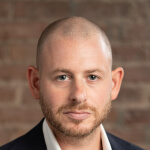
Bryan Gerson
Co-founder, Clarify
Bryan has personally arranged over $900 million in funding for businesses across trucking, restaurants, retail, construction, and healthcare. Since graduating from the University of Arizona in 2011, Bryan has spent his entire career in alternative finance, helping business owners secure capital when traditional banks turn them away. He specializes in bad credit funding, no doc lending, invoice factoring, and working capital solutions. More about the Clarify team →
Related Posts




![Business Action Plan Template for 2025 Growth [Free]](/assets/blog/business-action-plan-template-2025/business-action-plan-template-2025-small-cda22747f8266c0ffbaec17daaaae20a84835bff0f9e94315070bb25a2d95f6b.jpg)