

 Reviewed by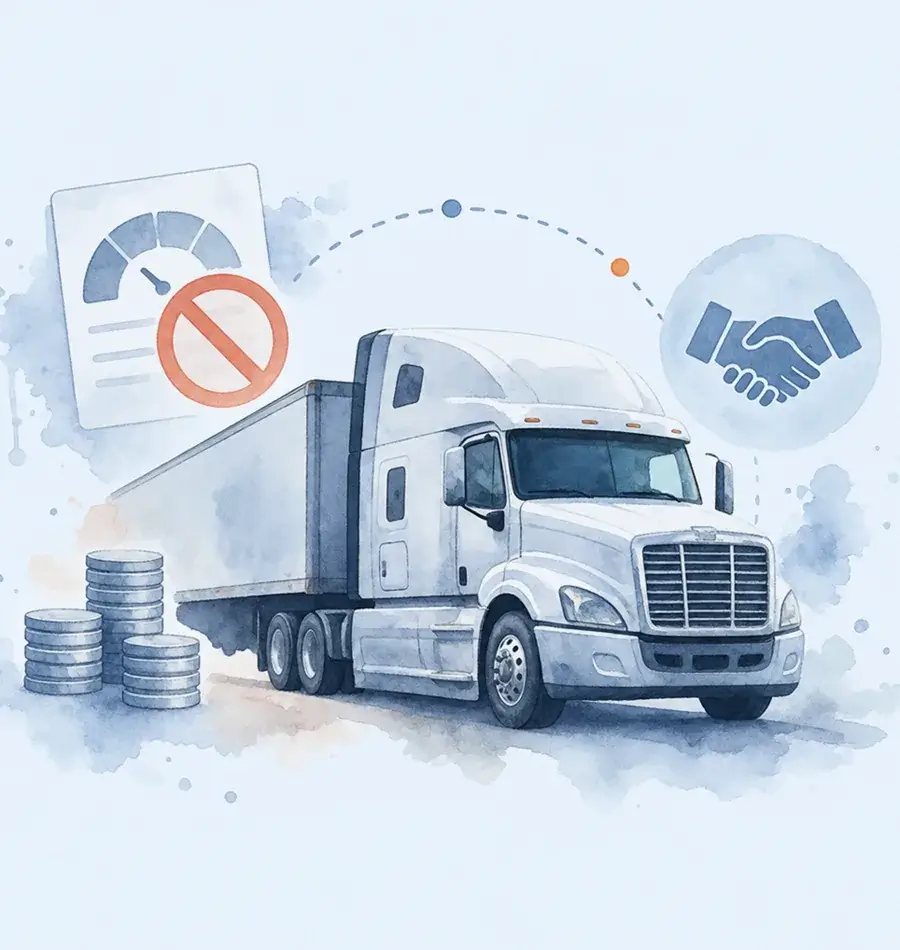
No-Credit-Check Semi-Truck Financing
Get Your Truck Funded Based on Revenue, Not Your Credit Score
Clarify Capital connects owner-operators and small fleets with lenders who approve based on business performance, not a three-digit number. Same-day decisions, funding in 1 to 2 business days.
Trucking businesses funded
800+
Total amount funded
$70M+
Total amount funded
$70M+
Typical time to approval
Same Day
Repeat funding rate
65%
- 550+ credit score OK
- Funded in 1 to 2 days
- No hard credit check
How It Works
Apply Online
Apply in under 2 minutes with basic business info and bank statements.
Soft Credit Review
It's just a soft credit pull that won't hurt your credit score.
Compare Offers
Your advisor presents top options. Pick the rate and terms that fit your budget.
Get Funded
Sign your agreement and receive funds in as little as 1 to 2 business days.
A true no-credit-check loan is rare. What lenders mean by "no-credit-check semitruck financing" is that they evaluate your business using factors like revenue, bank statements, and a soft credit pull that doesn't hurt your credit score. This type of financing may be helpful for owner-operators and trucking businesses with steady income that have lower credit scores or don't meet traditional lending requirements.
If you run a trucking company or another business that relies on a commercial truck for transportation, I'll walk you through what you need to know about this financing option, including the types of financing available, what it may cost, and what the process looks like.
Can You Really Finance a Semitruck With No Credit Check?
No-credit-check financing doesn't mean a lender won't look at your credit. Instead, lenders will focus on factors like:
Business performance
Cash flow
Contracts
Time in business
Existing debt
But they'll also usually do a soft credit check or “soft pull.” This is when they look at your credit score without it affecting the score. (A “hard pull,” which is often used when applying for other loans and credit cards, is when the check appears on your report and lowers your score by a few points.)
Semitruck Financing Options and How To Compare Them
Now that you understand more about what no-credit-check commercial truck financing is, here are your options.
| Semitruck financing option | Rates/fees | Speed of financing | Best for |
|---|---|---|---|
| Equipment financing | 6% to 36% APR for heavy equipment | 1 to 5 days | Owner-operators with steady revenue who need to buy or upgrade a truck and want to spread out the payments |
| Invoice factoring | 0.5% to 5% per invoice per month | As quickly as same day | Businesses waiting on unpaid invoices that need money to cover costs/cash gaps |
| Semitruck leasing | Varies depending on truck, mileage, and term | 24 to 48 hours | Growing operations, finance multiple vehicles, getting on the road quickly with minimal up-front capital |
| Short-term loan | APRs starting at 6% | As fast as same day | Urgent and temporary expenses like repairs, down payments; a loan for a truck without a long-term commitment |
| Business line of credit | 6% to 60% or higher APR (variable) | As quickly as same day | Managing cash flow gaps; flexible access to working capital for fuel, repairs, or day-to-day expenses |
How These Financing Options Play Out in Real Trucking Businesses
Let's break down the most common types of semitruck financing.
Equipment Financing
Equipment financing is specifically for businesses that need to purchase new equipment. It allows you to replace old trucks or expand your fleet if you can't quite shoulder the huge up-front cost and want to spread it out. The lender pays for the truck (either directly or by reimbursing you), and then you make monthly payments (plus interest) over a set period, usually somewhere between one and six years. Key to this funding is that the truck serves as collateral, so if you default on payments, it can be taken away.
Invoice Factoring
Invoice factoring is when a business sells its unpaid invoices to a factoring company. The factoring company pays you an up-front payment and takes over the legwork of collecting payments on future invoices in exchange for a cut of them.
This fits if you find yourself waiting months for freight invoices to get paid and have trouble with slow-paying customers. It can help you turn those invoices into immediate cash for things like fuel, maintenance, and payroll. However, be mindful that the factoring company's intervention with customers might cause some strain on those relationships.
Semitruck Lease
Similar to the way you might lease a car or house, you can also lease a semitruck by making a monthly payment to use it for a set period of time. Then, whenever the lease is up, you give it back (or, if there's the option, buy it). Leasing can be good if you want to get on the road quickly without a big up-front investment. Monthly payments can be lower than financing, and some leases may include maintenance or service agreements.
That said, there are often restrictions on mileage, usage, or modifications. It can also be more expensive to lease in the long run than to buy through financing.
Short-Term Business Loan
Short-term business loans are a lump sum of money that is paid back with a set interest rate over a relatively short period of time, usually anywhere from six to 36 months.
They're good for covering one-time, temporary expenses. Your company might use them for things like repairs or down payments on trucks. They're usually a bit easier to qualify for than long-term loans, and funding turnaround time can also be pretty quick. But credit does often play a role in assessment and offers.
Business Line of Credit
A business line of credit is similar to a credit card. It allows you to spend up to a certain amount of money on a revolving basis, and you only pay back and accrue interest on what you use in a given period.
They usually have lower interest rates than regular credit cards, and using one can build back up your personal credit score if it's low (if the lender reports payment activity to credit bureaus).
This type of financing is flexible but better for small expenses like fuel, repairs, or day-to-day costs. The main caveat is that qualifying can be challenging (it's generally one of the hardest on this list), and rates can be high.
What It Costs To Finance a Semitruck
If you go with financing, you should think through how the total cost will play out over time. To help you get an idea, consider each of these factors:

Truck price
A used semi truck can start around $30,000 to $120,000. New vehicles from top companies can go up to $200,000 or more.

Down payment
Lenders may require you to cover the down payment on trucks, which can run anywhere from 10 to 20% of the total cost.

Interest rates
Depending on the type of financing you choose (from our chart higher up), interest rates can range widely from 6% to 60%+. But some don't use interest rates (like merchant cash advances or invoice factoring).

Loan term
Loan terms depend on the type of financing you choose. Some keep going until you've paid off the borrowed amount (invoice factoring), while others last a few years (equipment financing, short-term loans), are revolving (business lines of credit), or end when you return or change your truck (leasing).

Vendor considerations
Where you buy a truck after securing your financing can matter a lot. Buying from a dealership is usually less risky, and lenders have more assurance of the truck's condition than in a private sale. You may also choose to do your truck financing through a dealership.

Tax implications
Some borrowers might be eligible to write off the cost of their truck in their taxes, depending on their situation. This can save a significant chunk of money.
Don't Finance With a Low Credit Score Unless You Understand These Things First
When applying for financing with a less-than-perfect credit situation, it's important to set realistic expectations. You aren't out of options, but you should know that you'll likely get offers with:
Higher interest rates. You're most likely going to see higher interest rates on the financing options you qualify for if you have a lower credit score. That means the total cost of the loan is higher.
Larger down payments. You may be asked to pay a larger down payment for certain financing options than someone with higher credit. It reduces the lender's risk a bit.
Shorter terms. Your financing offers may have shorter payback terms than with other types of financing, meaning you'll have to pay the loans back in a smaller window of time with higher payments.
Limited vehicle selection. Lower credit may limit what types of trucks you can realistically get qualified to buy, even with the financial backing of a loan or other financing method.