

 Reviewed by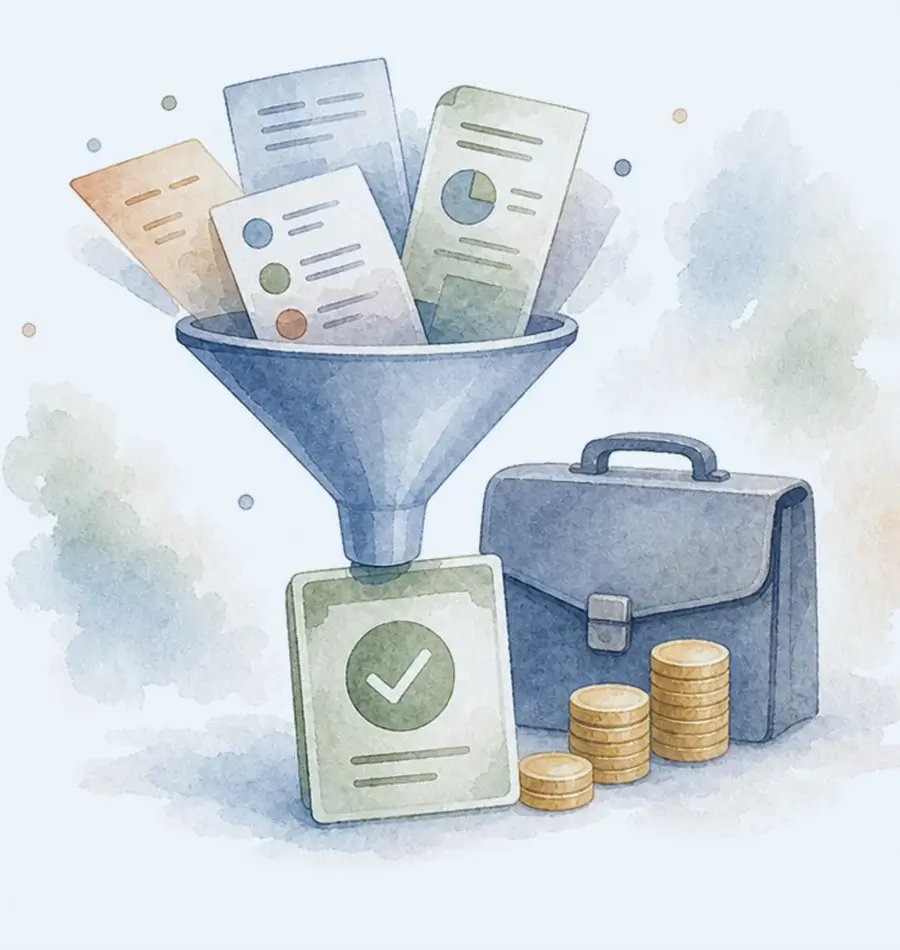
Managing three to four business debts at once is exhausting. Maybe there are different due dates, interest rates, and a merchant cash advance taking a piece of your daily sales. A business debt consolidation loan is designed to combine all of these debts into one loan, with one monthly payment, and typically has a lower interest rate.
I've worked in alternative finance for my entire career, and I've helped many small business owners get rid of high-interest debt. Below, I outline how debt consolidation works, the types of loans you can use to consolidate debt, the potential costs, and the requirements to qualify for a business debt consolidation loan.
What Are Business Debt Consolidation Loans?
Business debt consolidation loans are loans that let you combine several debts into one loan. You get a new loan, use it to pay off the other loans, and then you only have to make one monthly payment instead of five.
Typically, the goal of business debt consolidation is a lower interest rate, a simpler schedule, or both. Many business owners find themselves carrying high-interest debt, such as a merchant cash advance or multiple business credit cards. When this happens, small business debt consolidation can reduce the amount you pay in interest and give you additional cash flow. It also simplifies managing your debt, since you only need to monitor one loan balance rather than multiple.
How Does Debt Consolidation Work?
The concept of business debt consolidation is quite simple. You get a new business loan for the total amount of your current outstanding debt. Using that new loan, you then pay off each of your current debts. After that, you make one monthly payment on the new loan.
That single monthly payment is the goal. Rather than keeping tabs on five different due dates and five different interest rates, you only need to keep track of one. And if the new loan carries a lower APR than the debts it's replacing, you'll save money on interest over the life of the loan. Done correctly, consolidation can improve your cash flow and, over time, help your business credit profile. That's because a single steady payment is easier to keep up with than multiple payments.
Types of Business Debt Consolidation Loans
There's no single correct method for consolidating your business debts. The best approach depends on your credit rating, the amount of revenue your business generates, and the type of debt you want to eliminate.
Here are some of the most common methods for consolidating business debt.
Short-Term Business Loans
Short-term business loans are fast and serve as excellent options for emergencies. They're ideal when you have upcoming payments you must address quickly. The repayment term on a short-term business loan is limited to 24 months.
Business Lines of Credit
A business line of credit functions similarly to a credit card. It's a revolving credit facility that lets you access funds when needed and only pay interest on the borrowed amount. That flexibility makes business lines of credit well-suited for consolidating debt and providing working capital. A borrower may withdraw only what's necessary to settle a specific debt balance.
Invoice Financing
Invoice financing lets you convert your outstanding invoices into immediate cash. It's ideal for companies with long invoice cycles. Through invoice financing, a company may use its outstanding invoices to stabilize its cash flow and settle its other debts.
SBA Loans
SBA loans are government-backed loans known for their extended repayment periods and affordable monthly payments. That's why SBA loans are often used for debt consolidation. The majority of SBA 7(a) loans are provided through banks and credit unions, so you must have a good credit report to be eligible, and SBA financing takes more time than the other options listed above.
Equipment Financing and Leasing
Equipment financing involves using a loan to purchase or lease equipment. Equipment loans may be incorporated into a consolidation strategy when your existing debts are related to equipment you've previously purchased. In many cases, applicants don't need to submit complete financial statements to secure approval.
Merchant Cash Advances
A merchant cash advance gives you rapid access to cash in exchange for a portion of future sales. Although merchant cash advances are fast, they typically come at a greater expense. So merchant cash advances are a mixed bag when it comes to debt consolidation. While they may help you get access to capital quickly, and possibly help businesses with lower credit that can't qualify for other forms of financing, you should carefully consider the cost before using a merchant cash advance to retire your existing debts.
Home Equity Line of Credit (HELOC)
Although it's an option many entrepreneurs overlook, a home equity line of credit (HELOC) is one of the lowest-cost ways to consolidate your business debt. HELOC is a way to borrow money using the available equity in your home. As of July 2026, interest rates on HELOCs begin at prime, the base rate banks use to lend to their top-tier customers. As of July 2026, the prime rate is 6.75%, which is significantly lower than what a merchant cash advance or short-term loan costs.
The drawback of using a HELOC is that you're pledging your personal property as collateral. So if you default on the HELOC, the lender can start foreclosure proceedings on your home.
Benefits of Business Debt Consolidation Loans
Business debt consolidation can actually improve your financial standing in the following ways.

Easier cash flow management
When you combine several debts into one loan, you can clean up your books. You'll have a much clearer understanding of what you owe and when it's due. That makes creating budgets and managing cash flow substantially easier.

Lower interest rates
By consolidating multiple debts into one loan with a potentially lower interest rate than each individual loan, you can save money on interest charges over time. Some lenders even offer fixed rates, so no matter what happens with inflation or market conditions, your monthly payment stays constant.

Better credit profile
If you consistently make timely payments on a single loan rather than multiple separate loans, that can help your credit profile over time. A stronger credit profile can lead to better opportunities for financing in the future as your credit history grows.

Real debt relief
Dealing with multiple debts at once can become overwhelming. Business debt consolidation offers real debt relief by cutting them down to just one payment per month. That lets you focus on operating your company instead of being distracted by excessive financial burdens.
Minimum Qualifications

$10,000 in monthly revenue
Your business must earn at least $10K per month in a business bank account.

500+ credit score
You can get approved with any credit score. But the better your credit rating, the better interest rates lenders offer. Your FICO score should be above 500.

Minimum six months in business
Your company should be operational for a minimum of six months. This shows business lenders that your company is sustainable and won't go out of business.

Have a business bank account
Your Clarify advisor will need three or four months of your most recent bank statements to verify income. This is just to see you're actually making $10K+ month in revenue.
Common Reasons Companies Use Business Debt Consolidation Loans
Many business owners underestimate how consolidation can be used. Understanding how owners currently use debt consolidation will help you get more out of these tools.

Refinance high-interest debt
Refinancing high-interest debt is probably the most common reason companies consolidate, since it cuts their overall interest and lowers their monthly payment.

Manage seasonality in cash flow
Companies with seasonal swings in their cash flow benefit greatly from a consolidation strategy during slow months, so they don't struggle financially when cash inflows drop.

Free up funds for growth
Once you remove excess financial burden through consolidation of high-interest debt, you create an opportunity to redirect resources toward growth, whether that's marketing, opening another office, or introducing new products.

Eliminate Your Debt With Clarify Capital
A successful consolidation strategy can turn several costly payments into manageable ones. Choosing which form of consolidation fits best, whether a term loan, a line of credit, or a HELOC, depends on your business performance and your available credit.
If you're ready to make managing your debt more efficient, apply today and a Clarify Capital lending advisor will go over what you'd qualify for. It only takes two minutes, and checking your options will not affect your credit score.
FAQs About Business Debt Consolidation
Here are the most common questions that I hear from SMBs about debt consolidation.
What Is a Business Consolidation Loan?
A business consolidation loan is a single loan created solely to pay off multiple existing debts at once. Once all your existing debts are paid off with the proceeds from the new loan, you make one monthly payment on that single loan instead of five separate payments.
Can I Combine Multiple Business Debts Into One New Loan?
Yes. That's precisely what a consolidation loan does. It combines multiple existing debts into one new loan, which removes the need to make multiple separate payments.
Will Consolidating Business Debts Hurt My Company's Credit Rating?
You may see a temporary dip in your credit rating from applying for a new loan, since that can involve a hard inquiry on your credit file. But making consistent, timely payments on your newly consolidated loan usually helps your credit profile more than it harms it over time. Using Clarify's platform to explore funding options performs a soft inquiry, so it won't harm your credit rating.
What Credit Score Do I Need To Consolidate Business Debt?
It depends on the loan. Some options, like a merchant cash advance, work for businesses with lower credit, while SBA loans and the lowest rates go to stronger credit profiles. At Clarify Capital, financing starts with credit scores as low as 550, though a higher score earns you better rates and terms.
What's the Difference Between Consolidating Business Debt and Refinancing?
Consolidating business debt combines multiple existing debts into one new loan, while refinancing changes the terms or interest rate of a single existing loan (or both). The two overlap, since a consolidation loan often refinances your debt to a better rate, but consolidation refers specifically to combining multiple debts into one new loan.
Can I Consolidate Both My Company's Debt and Personal Debt at Once?
Generally speaking, it's best for business owners to keep personal and company debt separate, both for cleaner bookkeeping and for tax reasons. A HELOC is one area where this line blurs, since personal assets are used to clear company debt.
How Does Clarify Capital Protect My Information?
Clarify follows SOC 2 security principles, so the bank statements and tax returns you send stay protected through the review. Checking your options will not affect your credit score, because the lender's first look at your credit is a soft pull, not a hard inquiry.

Bryan Gerson
Co-founder, Clarify
Bryan has personally arranged over $900 million in funding for businesses across trucking, restaurants, retail, construction, and healthcare. Since graduating from the University of Arizona in 2011, Bryan has spent his entire career in alternative finance, helping business owners secure capital when traditional banks turn them away. He specializes in bad credit funding, no doc lending, invoice factoring, and working capital solutions. More about the Clarify team →
Related Posts