

 Reviewed by
Key Takeaways:
Nearly 7 in 10 SMB leaders (69%) believe human storytellers are becoming more valuable in the age of AI.
Nearly 1 in 3 SMBs (29%) created a storytelling-focused job posting this year.
On average, 22% of SMBs' total marketing budgets are allocated to storytelling and content creation.
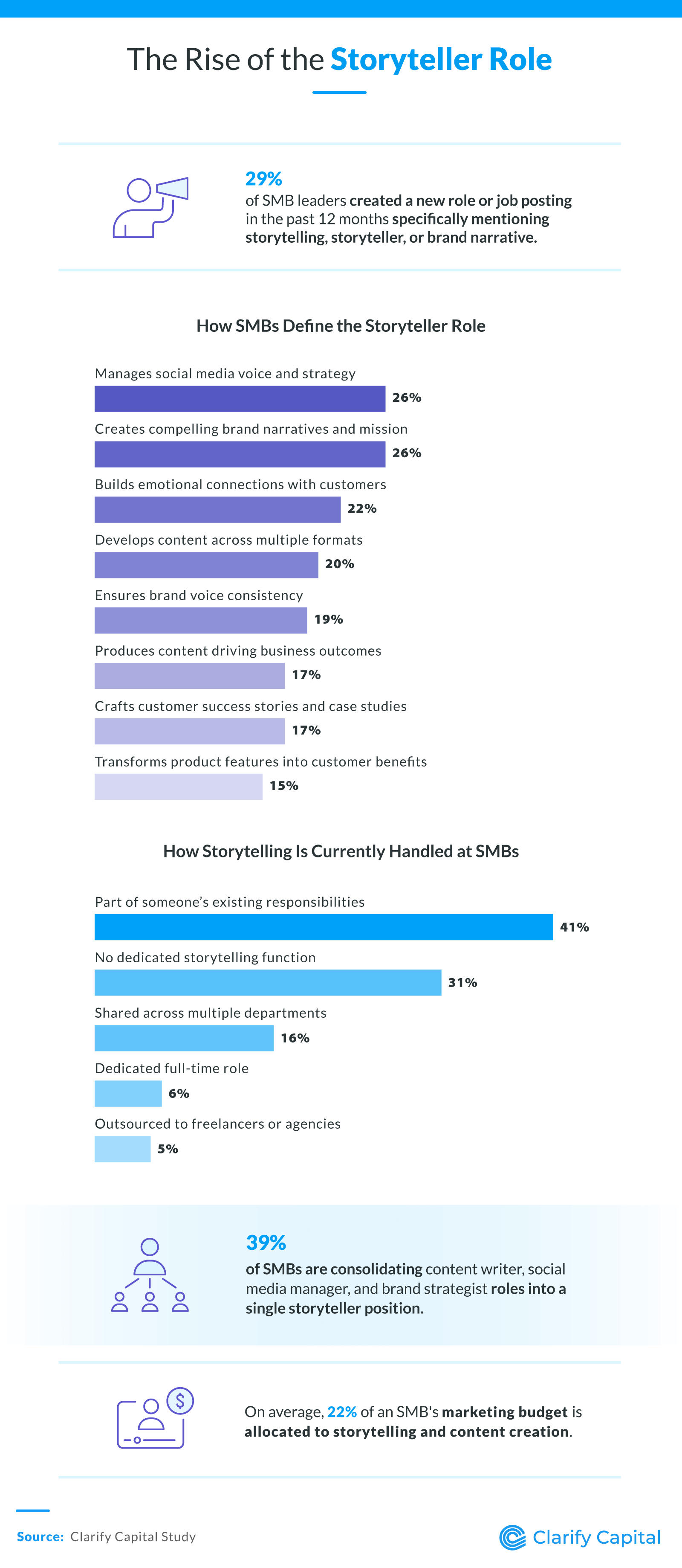
39% of SMBs are consolidating content writer, social media manager, and brand strategist roles into a single storyteller position.
34% of SMBs are hiring storytellers with backgrounds in journalism, entertainment, and publishing.
Storytelling Is Becoming a Real Role Inside SMBs
What used to be a side responsibility is turning into a defined position. More SMBs are treating storytelling as a core function, not just an extra marketing task.
Millennials are the generation most actively creating storytelling roles.
29% of SMBs created a storytelling-focused job posting this year, yet 72% still don't have a dedicated storyteller.
Top reasons why SMBs are hiring storytellers:
Increasing social media and content demands (36%)
Desire to build stronger customer connections (33%)
Need for competitive differentiation (21%)
Product or service complexity requiring explanation (19%)
Competition from bigger-budget brands (17%)
Internal culture and employee engagement (15%)
SEO / AEO and AI search visibility (13%)
41% of SMBs tack storytelling onto existing roles, and 39% are merging multiple creative roles into one storyteller position. Only 31% have no one focused on it at all.
The top 3 ways SMBs define the storyteller role:
Managing social media voice and strategy (26%)
Creating compelling brand narratives and mission (26%)
Building emotional connections with customers (22%)
SMBs now dedicate 22% of their marketing budget to storytelling and content.
Business Owners See Storytelling as a Growth Investment
When every marketing dollar matters, business owners want clear returns. Many now view storytelling as a strategic investment that can drive measurable growth.
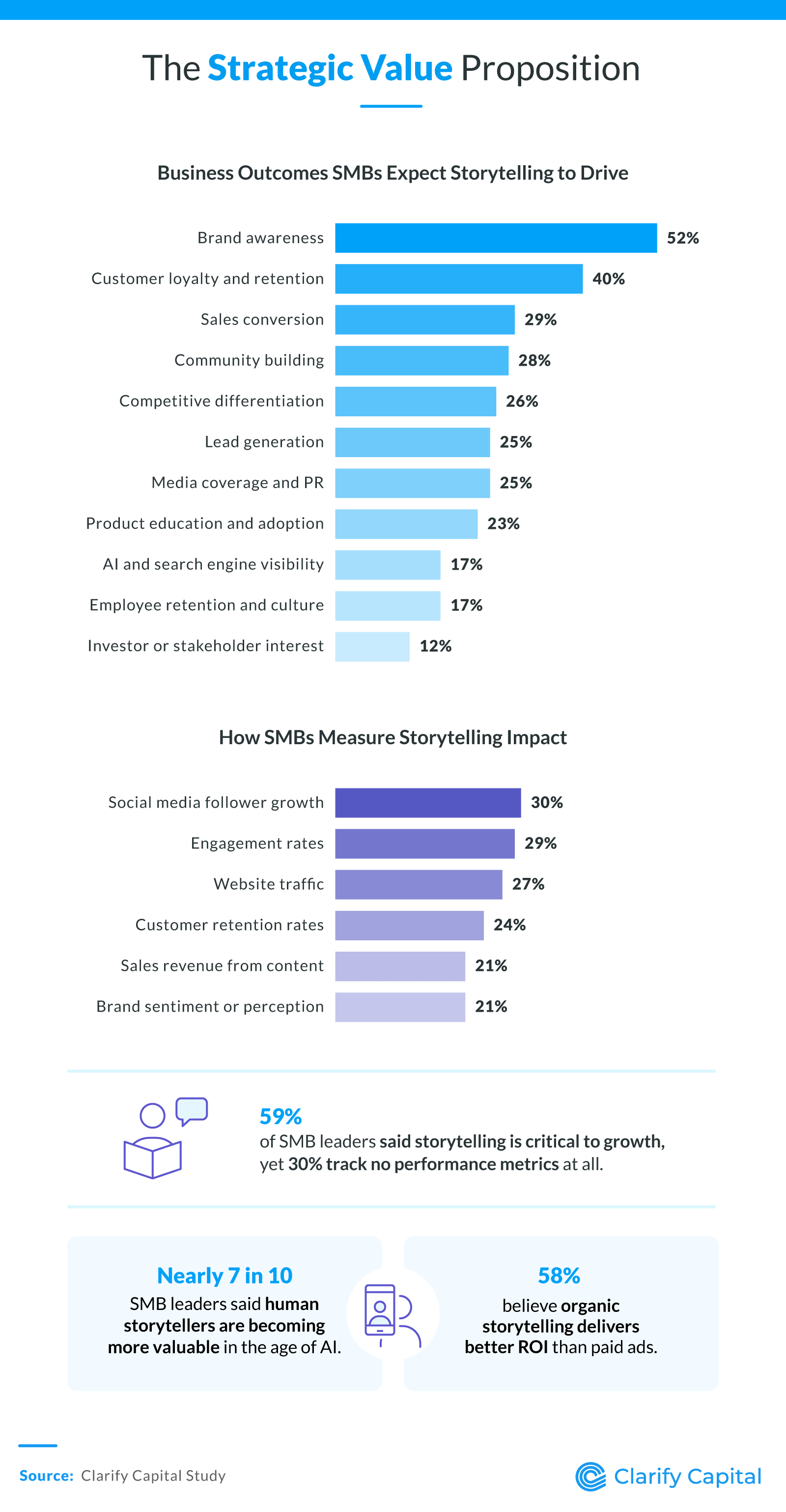
Top business outcomes SMBs expect storytelling to drive:
Brand awareness (52%)
Customer loyalty and retention (40%)
Sales conversion (29%)
Top metrics SMBs use to track storytelling impact:
Social media follower growth (30%)
Engagement rates (29%)
Website traffic (27%)
30% don't track storytelling performance metrics.
A majority of SMB leaders agree that:
Human storytellers are becoming more valuable in the age of AI (69%)
Brand storytelling helps them compete against companies with bigger marketing budgets (62%)
Storytelling is critical to growth (59%)
Storytelling delivers better ROI than paid ads (58%)
In 73% of companies, storytelling roles are paid the same as, or more than, traditional marketing roles.
33% SMBs now pay storytellers more than traditional marketers.
Hiring the Right Storyteller Comes With Challenges
Demand for storytelling talent is rising, but finding the right fit is not simple. Budget limits and skill gaps are making hiring more competitive for SMBs.
41% of SMBs rank budget as the No. 1 obstacle to investing in storytelling.
Manufacturing companies (30%) and technology firms (25%) are most likely to say that unclear ROI is an obstacle to storytelling investment.
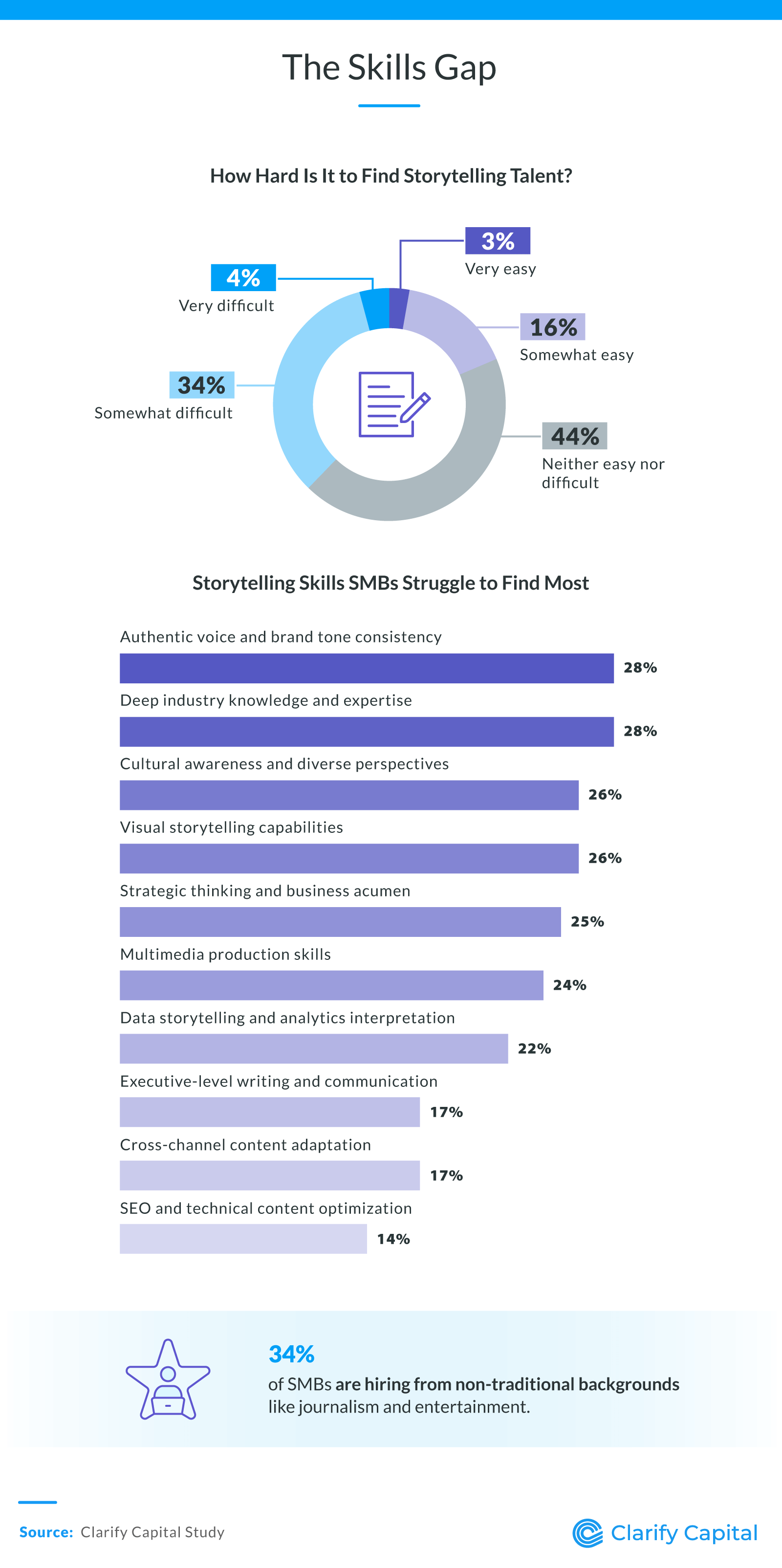
34% are hiring from non-traditional backgrounds, such as journalism and entertainment, rather than traditional marketers.
Mid-sized companies report the highest rate of hiring from non-traditional backgrounds (42%).
The most elusive storytelling skills:
Authentic brand voice (28%)
Deep industry knowledge (28%)
Cultural awareness (26%)
38% of SMBs find it somewhat or very difficult to find qualified storytelling candidates. Millennials (40%) are more likely than any other generation to report difficulty finding qualified storytelling talent.
Conclusion
Storytelling is no longer a “nice to have” for small and midsize businesses. It's becoming a defined role, a budget line item, and a measurable growth strategy. Even as AI accelerates content production, SMB leaders are placing higher value on human voices that can build trust, shape brand identity, and create emotional connection. In this storyteller economy, the brands that stand out will be the ones that communicate with clarity, authenticity, and purpose.
Methodology
This study was conducted via an online survey fielded through CloudResearch Connect in February 2026. A total of 719 U.S. small and midsize business leaders completed the survey, including business owners, C-suite executives, directors, department heads, and hiring managers across a range of industries and company sizes. Respondents were screened to ensure active involvement in business operations and hiring decisions.
The sample spans four generations, with millennials representing 58% of respondents, Gen X 25%, baby boomers 15%, and Gen Z 2%, and includes 53% men and 47% women. Company sizes range from micro businesses with 1–10 employees to enterprise organizations with 500 or more, and industries represented include technology, retail and e-commerce, healthcare, professional services, education, finance, and more. All percentages are rounded to the nearest whole number. For multi-select questions, percentages reflect the share of total respondents who selected each option and will therefore sum to more than 100%.
About Clarify Capital
Clarify Capital helps small and midsize business owners access the financing they need to grow with confidence. For small businesses making serious investments in brand and marketing, our business expansion loans give you the capital to back your strategy with real resources.
Fair Use Statement
If you'd like to share or report on this study, you're welcome to do so for noncommercial purposes. Just include a link back to this page and credit Clarify Capital as the source.

Michael Baynes
Co-founder, Clarify
Michael has over 15 years of experience in the business finance industry working directly with entrepreneurs. He co-founded Clarify Capital with the mission to cut through the noise in the finance industry by providing fast funding and clear answers. He holds dual degrees in Accounting and Finance from the Kelley School of Business at Indiana University. More about the Clarify team →
Related Posts