

 Reviewed by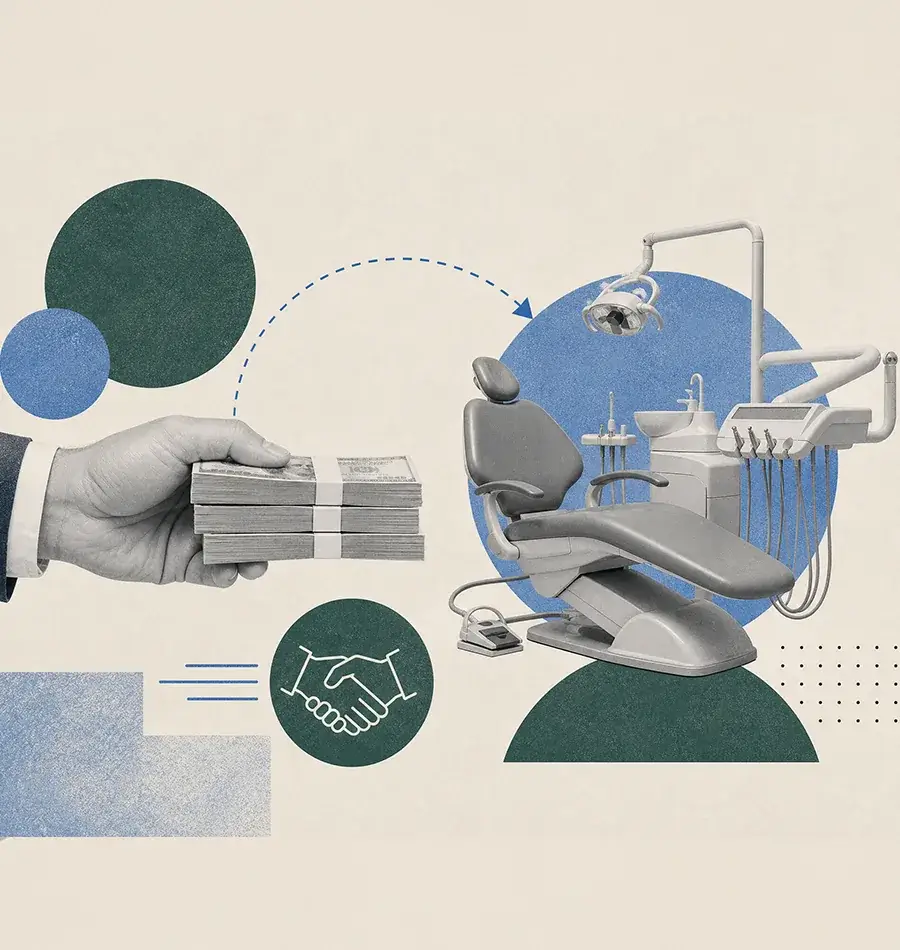
It's a busy Tuesday in your office, and the dental chair in operatory three decides to stop working.
You run the numbers, and it's going to cost $35,000 to replace the entire unit. Payrolls in three days, and you have $70,000 in your business bank account. In moments like these, the right financing can make a big difference for a practice.
Instead of knocking out half your cash reserves, you decide to apply for equipment financing to cover the cost of the new dental chair. You work out a reasonable monthly payment and pay it back over five years. At 9%, that costs $727 a month and $8,600 in interest.
I'm Bryan Gerson, co-founder of Clarify Capital. I've arranged more than $900 million in financing for small to midsize businesses, including for healthcare professionals and dental practices. The scenario above is more common than you think. Financing can help ease the strain on your cash reserves if you're looking to make a big purchase, or just cover a gap in the day-to-day.
Below, I cover what dental practice financing costs, how to apply, and what lenders consider.
| Financing type | Funding speed | Minimum credit score | Documents | Collateral |
|---|---|---|---|---|
| Short-term business loan | As quickly as same day | 550 | Bank statements, 3 to 4 months | Not required |
| Business line of credit | As quickly as same day | 600 | Bank statements, 3 to 4 months | Not required |
| Equipment financing | 1 to 5 days | 550 | Bank statements, 3 to 4 months | Equipment serves as collateral |
| SBA loans | As fast as two weeks (typically 30 to 90 days) | 640 | Tax returns, financials, bank statements | Sometimes required, depending on loan size and program |
| Home equity line of credit | As fast as one week | 620 | Income verification, pay stubs, tax returns, bank statements | Qualifying real estate serves as the asset (1 to 4 units) |
| Invoice factoring | 1 to 2 weeks | Depends on invoiced customer's credit score | Bank statements, 3 to 4 months | Invoice serves as the asset |
| Merchant cash advance | As quickly as same day | 500 | Bank statements, 3 to 4 months | Not required |
Types of Dental Practice Financing
Each type of dental practice financing serves a different business purpose. A business line of credit covers the day-to-day ups and downs of running a practice, while a short-term business loan pays for a large one-time purchase.
Here's what each one does.
Short-term business loan
Use this lump-sum loan to cover business expenses ranging from payroll to marketing. Payment terms range from six to 36 months.
Business line of credit
Draw on this credit line as needed. Pay interest only on what you use.
Equipment financing
Finance the purchase of new dental equipment. Covers up to 100% of the equipment value.
SBA loans
These loans are partially guaranteed by the U.S. Small Business Administration (SBA), offering competitive rates and long repayment terms.
Home equity line of credit (HELOC)
A revolving line of credit with a draw period of up to five years. Your home secures the line, so if you default, it could be at risk.
Invoice factoring
Advance cash on an invoice tied to when your customer pays (typically 30, 60, or 90 days). You pay a fee per invoice.
Merchant cash advance
Advanced cash paid from a share of future sales. A fast but expensive option.
Some practice owners use business credit cards to cover the day-to-day expenses that come with running a business.
Minimum Qualifications

$10,000 in monthly revenue
Your business must earn at least $10K per month in a business bank account.

500+ credit score
You can get approved with any credit score. But the better your credit rating, the better interest rates lenders offer. Your FICO score should be above 500.

Minimum six months in business
Your company should be operational for a minimum of six months. This shows business lenders that your company is sustainable and won't go out of business.

Have a business bank account
Your Clarify advisor will need three or four months of your most recent bank statements to verify income. This is just to see you're actually making $10K+ month in revenue.
How Dental Practice Loans Work and What Lenders Consider
How your dental practice loan works depends on the one you select. Short-term loans are repaid over a fixed period, while business lines of credit let you draw and redraw on the line.
Either way, the first question I hear from most dental practice owners is about interest rates. I tell owners that your APR depends on your credit score, financing type, and the repayment terms.
The next question is: How do I get approved? Lender qualifications vary, but most of them consider the following things:

Time in practice
Most lenders want to see a consistent operating history. SBA lenders ask for at least two years.

Cash flow and annual revenue
Lenders want to see that you can cover the payment and still have room left over. That's called a debt-service coverage ratio.

Personal credit score
At Clarify Capital, the minimum credit score for equipment financing starts at 550. Higher scores unlock better APRs and terms.

Loan amount and equity
A bigger loan usually requires a closer lender review. Some financing may require you to make a down payment.

Collateral requirements
The SBA sometimes requires collateral on 7(a) loans. If you're applying for equipment financing, the equipment serves as collateral.

Personal guarantee
Revenue-based financing may still require you to sign a personal guarantee. You'll sign one for an SBA loan if you own 20% or more of the practice.
Practice owners often ask me how much their student loan debt is weighed during the application process. The truth is that most lenders understand that dentists have a lot of debt from dental school, so it won't work against you.
How To Apply
The process is five simple steps with Clarify Capital:
Price out your financing. Decide what you need money for, how much, and how quickly.
Prepare your documents. Gather at least three to four months of business bank account statements. For SBA loans, you may also be required to provide tax returns.
Apply. Clarify Capital's one application matches your profile against our network of 75+ vetted, reputable lenders to match you to the best possible financing.
Compare the offers. You'll want to look at cost, APR, fees, and repayment terms before you sign anything.
Sign and fund. Depending on the type of financing, money can land in your bank account as quickly as same day.
Checking your options through Clarify Capital won't affect your credit score. We do a soft credit check when you first apply, though lenders may run hard checks at final approval.
Dental Practice Financing Interest and Fees
The highest cost on your dental practice loan is the APR. That's the percentage of interest you'll pay per year.
Let's look at a quick example: Say you finance $150,000 of equipment at 9% over 60 months. You'd pay $3,114 a month and roughly $36,800 in interest on that loan. Bring the repayment terms down to 36 months, and the monthly payment climbs to about $4,770, while interest drops to $21,700. Lenders can usually price this out for you when you apply.
But the APR is just a part of the total cost. Many lenders also charge an origination fee to underwrite the loan. SBA loans often include a guaranty fee on the guaranteed portion of your loan. Invoice factoring charges 0.5% to 5% per invoice per month. It's a good idea to check the fee schedule before you sign.
Financing a Practice Acquisition
Practice acquisition loans get underwritten differently than other types of business financing.
The first thing lenders consider when pricing a practice acquisition is steady revenue. They want to know whether the practice continues to pull in business and whether it continues to generate steady revenue after the acquisition. They'll also take a look at any existing debt, the practice's patient count, payroll and staff retention, and lease terms. Lenders also consider your industry experience.
Practice acquisition is an approved use of an SBA 7(a) loan. No down payment is required on SBA 7(a) loans through Clarify Capital's network of lenders. APRs start at 6.75% for qualified borrowers.

Find Out How Clarify Can Help Your Practice
The right financing comes down to what you need to pay for, how quickly you need the money, and when you can afford to pay it back. Healthcare professionals sometimes lean on a few different types of financing to cover their needs: a business credit card for the day-to-day costs, and an equipment loan to cover a costly upgrade.
When you're ready to see what your practice qualifies for, apply today. A U.S.-based lending advisor will walk you through your options.
Frequently Asked Questions
Quick answers to the most common questions from dental professionals.
How Hard Is It To Get a Dental Practice Loan?
It depends on the type of dental practice financing you're applying for. Lenders want to see a steady operating income, strong credit, and industry experience. That said, you aren't disqualified from financing if you don't have all of the above. Alternative lenders tend to have a more flexible loan application process.
Can You Get a Loan To Buy a Dental Practice?
Yes, practice acquisition loans cover the cost of buying a dental practice. SBA 7(a) is a common route for a practice acquisition.
How Much Can You Borrow for a Dental Practice?
Through Clarify Capital's network of lenders, you can borrow up to $5 million. But the numbers depend on the financing option. Equipment financing covers up to 100% of the value of the dental equipment. HELOCs go up to $750,000.
What Credit Score Do You Need for a Dental Practice Loan?
It depends on the type of financing. Credit scores start at 550 for equipment financing and short-term business loans. For SBA loans, you'll need a credit score of 640 and a minimum of two years in business to qualify. HELOCs have a minimum credit score of 620, and business lines of credit start at 600.
How Much Does It Cost To Buy a Dental Practice?
It depends on the practice. In general, buying a dental practice that's already in business starts at around $500,000 and goes up from there.
Can a New Practice Qualify?
Sometimes. For SBA loans, you need at least two years in business. Business lines of credit require at least one year of operating history. Newer practices (at least six months of operating history) can qualify for merchant cash advances, equipment financing, and short-term business loans. Clarify Capital doesn't finance startups.
Are There No-Collateral Options?
Yes, there are some dental practice financing options that don't require collateral. A few examples include working capital loans, business lines of credit, and merchant cash advances. SBA loans sometimes require collateral, depending on the loan size and program.
Is My Information Secure When I Apply?
Yes, Clarify Capital follows SOC 2 security principles when handling client data.

Bryan Gerson
Co-founder, Clarify
Bryan has personally arranged over $900 million in funding for businesses across trucking, restaurants, retail, construction, and healthcare. Since graduating from the University of Arizona in 2011, Bryan has spent his entire career in alternative finance, helping business owners secure capital when traditional banks turn them away. He specializes in bad credit funding, no doc lending, invoice factoring, and working capital solutions. More about the Clarify team →
Related Posts