

 Reviewed by
When cash flow's tight, waiting 30 to 90 days for customers to pay outstanding invoices can stall your entire operation. Invoice factoring gives you a way around that: sell your accounts receivable to a factoring company, get most of the money up front, and let them collect from your customers. No loans, no added debt, just working capital in your bank account.
I've compared the best factoring companies for small businesses in 2026, looking at factoring rates, advance amounts, funding speed, and contract flexibility for each one. Whether you're in trucking, staffing, health care, or professional services, there's an option here that fits your cash flow needs.
| Best Factoring Companies for Small Businesses in 2026 | ||||
|---|---|---|---|---|
| Company | Factoring rates | Advance amounts | Funding speed | Best for |
 | 0.5% to 5% | Up to 100% | 1 to 2 weeks | B2B companies and government contractors |
 | 1.9% to 2.9% per 30 days | Up to 100% | Within 24 hours | Small businesses wanting fast, flexible factoring |
 | 0.5% to 3.0% | 80% to 90% | Same day to 48 hours | B2B companies with longer payment terms |
 | 1% to 4% | 85% to 95% | Same day (85% within 24 hours) | Trucking and freight companies |
 | 1.75% to 4.25% (estimated) | Varies (volume-based) | Same day | Freight brokers and owner-operators |
 | Contact for rates | Contact for advance rates | Within 24 hours | Businesses wanting non-recourse factoring |
 | 1% to 5% | Up to 100% | 24 to 48 hours | Mid-sized businesses across multiple industries |
 | Contact for rates | Contact for advance rates | Approval in days | Government contractors (primes and subcontractors) |
Whether you need money today or a flexible long-term partner, these invoice factoring services offer accessible accounts receivable financing for all kinds of businesses. Look for same-day funding and a simple online application, especially if you're running a trucking business, startup, or any operation where cash flow matters.
What Is a Factoring Company and How Does It Work?
A factoring company turns your unpaid invoices into immediate working capital. Instead of waiting 30, 60, or 90 days for customers to pay, you sell those invoices to the factoring company and get a cash advance. It's a fast way to free up funds without taking out a business loan or adding debt.
Here's how invoice factoring works:
You send your outstanding invoices (typically ones due in 30 to 90 days) to the factoring company.
They advance you a percentage of the invoice amount, usually 70% to 95%. The exact rate depends on your industry and your customer's creditworthiness.
Your customer pays the factoring company directly on the original payment terms.
Once your customer pays, the factoring company sends you the remainder minus their factoring fee (usually 0.5% to 5%).
Unlike business loans or lines of credit, invoice factoring doesn't require collateral or a strong personal credit score. Approval is based on your customer's ability to pay, not yours. That makes it a practical option for startups, businesses with limited credit history, or any company with strong clients and uneven cash flow.
Factoring services are especially common in industries where slow invoice payments create cash flow challenges: trucking companies and freight brokers, staffing agencies, health care providers, oilfield services, and professional services firms. Mid-sized businesses with high accounts receivable volume use factoring to stay liquid without waiting weeks for checks to clear.
Best Small Business Invoice Factoring Companies in 2026
Picking the best factoring companies comes down to three things: speed, cost, and flexibility. The right invoice factoring company depends on your industry, how much you're factoring, and how fast you need the cash. I've matched hundreds of business owners with factoring providers over the years, and these are the ones that consistently deliver.
Clarify Capital
Clarify Capital compares 75+ invoice factoring companies to match you with the best fit. Factoring rates run 0.5% to 5%, depending on your industry and invoice volume, with advance amounts up to 100% and funding in 1 to 2 weeks.
Factoring rates between 0.5% and 5%
Advance amounts up to 100%
Funds available within 1 to 2 weeks
Compares 75+ factoring providers in one application
Transparent pricing with no long-term contracts
FundThrough
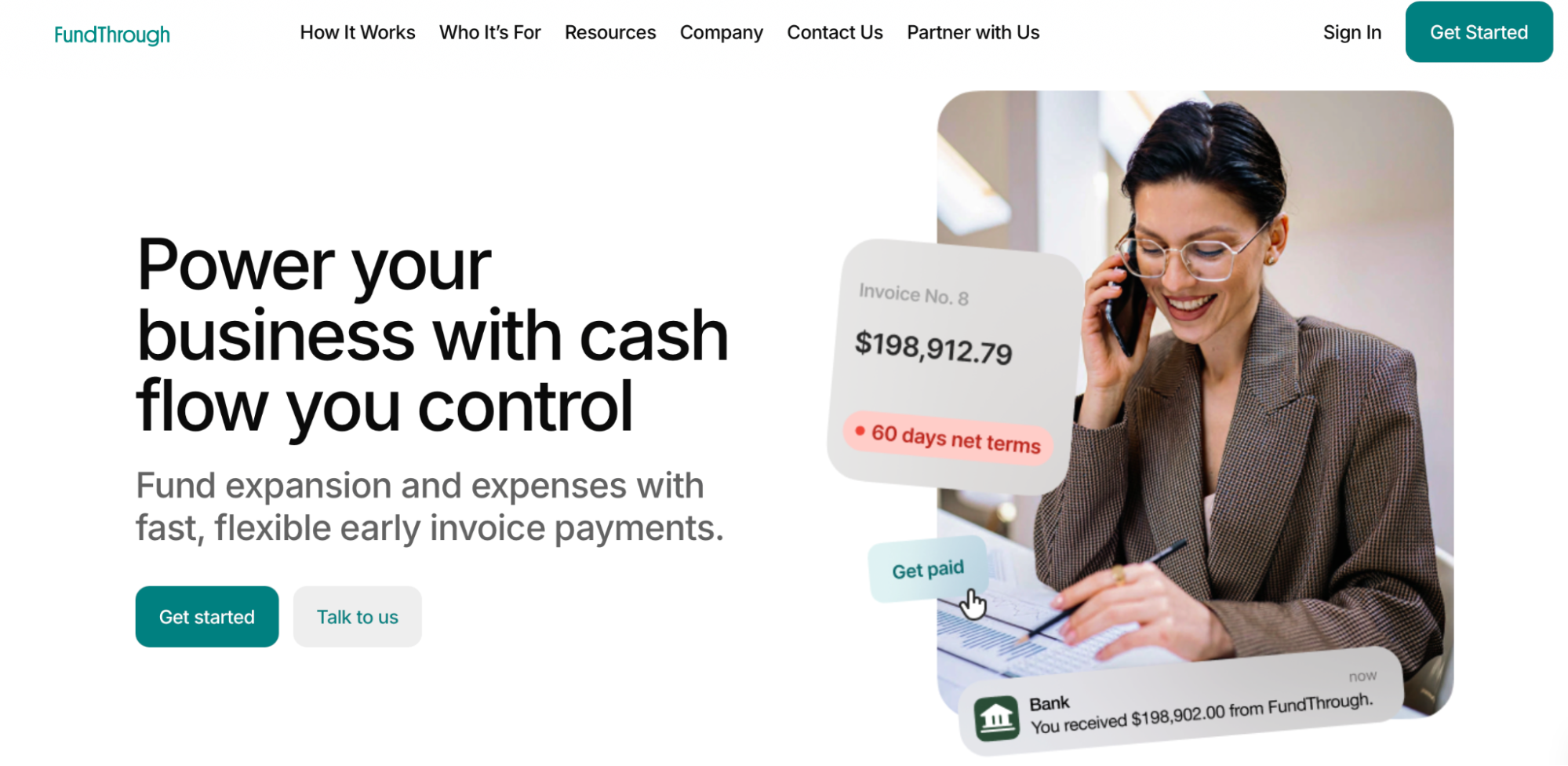
FundThrough offers 100% advance rates (minus fees) with fast funding and no long-term contracts. They're the successor to BlueVine's and Fundbox's factoring businesses, and they've built a platform focused on speed and simplicity for small business owners who want to factor invoices on their own terms.
Factoring rates of 1.9% to 2.9% per 30-day term
Advance amounts up to 100% (minus fees)
Funded within 24 hours
No minimum invoice volume or long-term commitments
Serves businesses in the U.S. and Canada
altLINE (The Southern Bank Company)
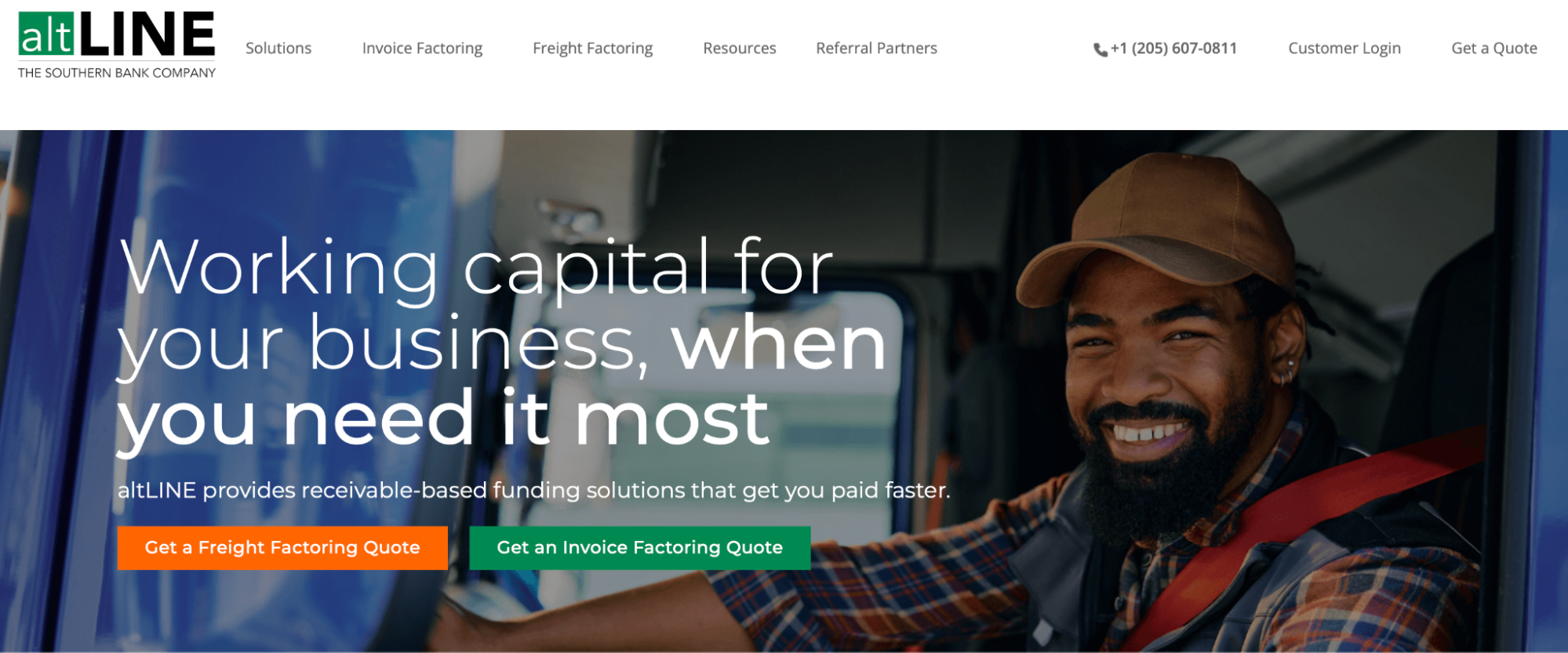
altLINE is a direct bank lender (Southern Bank Company, established 1936), which keeps their rates competitive. They offer accounts receivable factoring for B2B companies with recourse terms and bank-direct funding.
Factoring rates of 0.5% to 3.0%
Advance amounts between 80% and 90%
Same-day funding after initial setup (one to two business days for first invoice)
Serves staffing (including health care staffing), consulting, manufacturing, distribution, and government contractors
Does not serve trucking, construction, or direct health care
Triumph
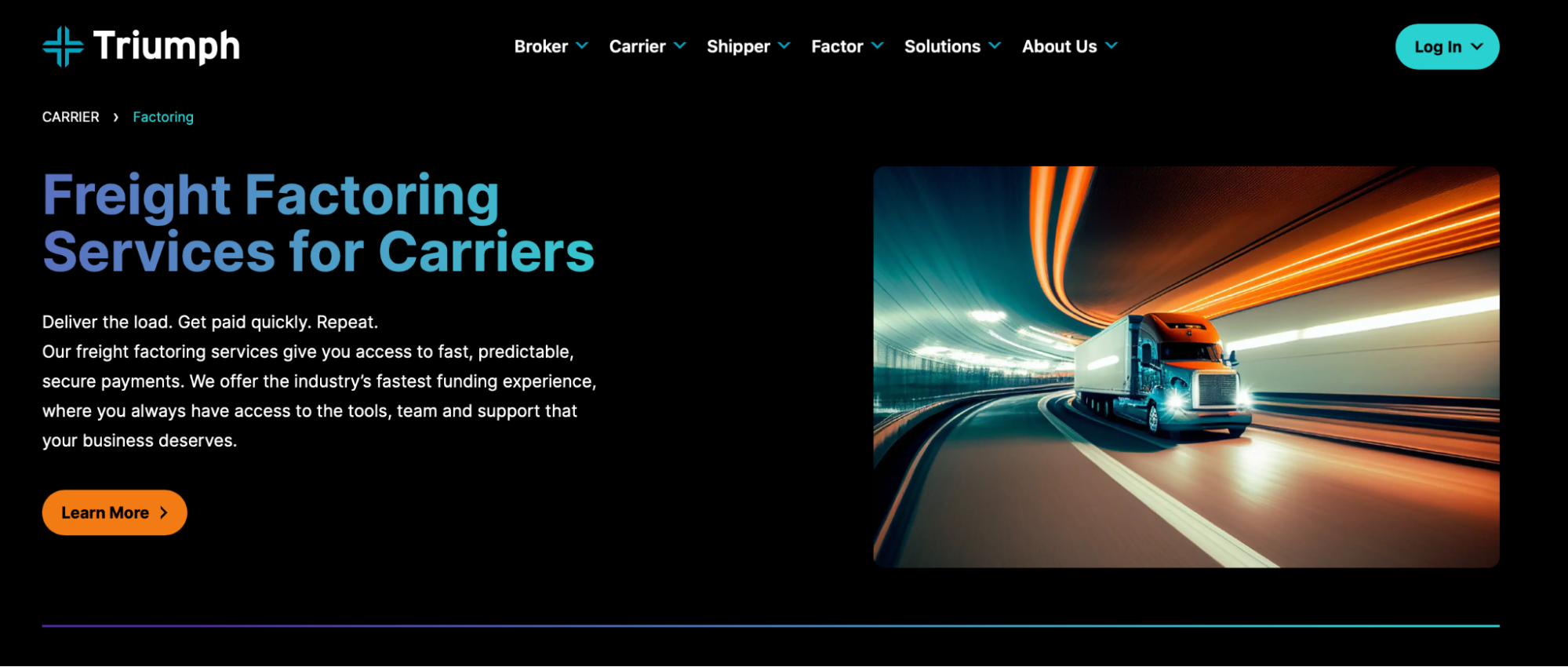
Triumph (formerly Triumph Business Capital) is one of the largest freight factoring providers in the country, processing over 600,000 invoices per month through their TriumphPay network. They offer both recourse and non-recourse factoring with same-day cash for trucking and logistics businesses.
Factoring rates of 1% to 4%
Advance amounts of 85% to 95%
85% of approved invoices funded within 24 hours
Recourse and non-recourse options available
Fuel card programs and freight broker network access
RTS Financial
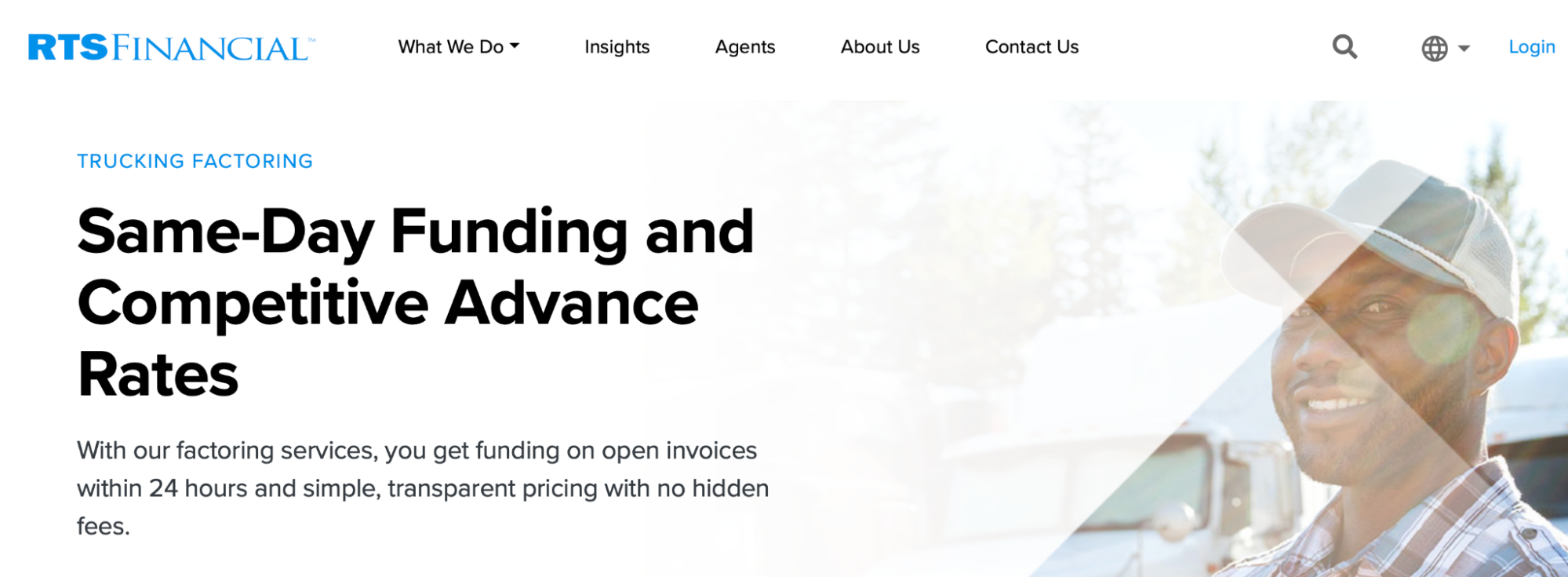
RTS Financial (a subsidiary of Shamrock Trading Corporation) serves trucking businesses, oilfield services, staffing, and medical companies. A partnership with Pilot Flying J gives carriers bundled fuel savings alongside their factoring program.
Factoring rates of 1.75% to 4.25% (volume-based pricing)
Advance amounts vary by volume and account history
Same-day funding in most cases
Serves trucking, oilfield, staffing, medical, manufacturing, and distribution
Pilot Flying J fuel discount program at 850+ stations nationwide
Riviera Finance
Riviera Finance has been in the factoring business since 1969, with 25+ locations across the U.S. and Canada. They're one of the few providers that offer non-recourse factoring as their default, meaning they absorb the risk if your customer doesn't pay due to credit issues. Their flat-rate pricing (not tiered) keeps costs predictable.
Flat-rate pricing (not tiered), so your fee stays the same regardless of how long your customer takes to pay
Advance amounts vary by client; contact Riviera for a quote
Funding within 24 hours of invoice verification
Non-recourse factoring (Riviera takes on the credit risk)
In-person support at 25+ local offices
No setup costs, no monthly minimums
eCapital
eCapital is one of the larger factoring providers in North America, with over 20 years in business and more than 42,000 clients financed. They offer industry-specific factoring for transportation, health care, staffing, and manufacturing, with both flat-fee and prime-plus pricing structures.
Factoring rates of 1% to 5% (varies by industry and volume)
Advance amounts up to 100% of invoice value
Funding within 24 hours after invoice verification
Both recourse and non-recourse factoring available
Serves transportation, health care, staffing, manufacturing, and distribution
GovCon Funding
GovCon Funding is a direct lender for government contractors. It has offices in New York and Chattanooga, Tennessee, and has financed more than $500 million for its clients. It doesn't rely on years of financial statements. Instead, it looks at your contract and the agency paying it. That helps primes and subcontractors who've won an award but have to wait 60 days or more for the government to pay.
Pricing based on your contract, paying agency, and billing history
Fees charged only on the invoices you choose to advance, with no monthly payment
Approval in days, and after setup, invoices are advanced without being underwritten again
Serves federal, state, county, and municipal contractors, both primes and subcontractors
Also offers contract lines of credit, payroll financing, and mobilization financing for work you haven't invoiced yet
How Much Do Factoring Companies Charge?
Most factoring companies charge a discount rate (a percentage of the invoice amount) plus possible additional fees for account setup, same-day funding, or wire transfers. Here's what to expect:
Discount rate. The main factoring fee, typically 0.5% to 5% per 30-day period. Some companies quote weekly rates (like 0.25% to 1% per week), so make sure you're comparing apples to apples. This is the cost of getting fast access to your cash.
Service and origination fees. Some providers charge flat fees for account setup ($150 to $500 is common), monthly minimums, or account management fees. These are usually one-time or periodic costs separate from the per-invoice discount rate.
Potential hidden fees. Early termination penalties, processing fees, wire transfer charges, credit check fees, and inactivity charges. These can add up, especially if your fee structure isn't clearly disclosed up front. Ask for the full cost breakdown before signing anything.
What Affects Your Pricing

Customer creditworthiness
Stronger customer credit often means lower fees because the factoring company takes on less risk

Industry
Fields like trucking or construction may have higher factoring rates due to longer or less predictable payment terms

Invoice volume
Higher volume usually means lower rates

Advance rate
A higher advance percentage (90%+ vs. 70%) may come with a slightly higher fee
Example Scenario
You factor a $10,000 invoice with a 90% advance rate and a 2% factoring fee. You get $9,000 up front. Once your customer pays the full $10,000, the factoring company keeps $200 (2% of the invoice amount), and you get the remaining $800. Total cost: $200.
Should You Choose Factoring, or a Business Loan?
The decision really comes down to speed, flexibility, and how steady your cash flow is. Both have their place, and knowing when each one fits saves you time and money.
When To Choose Factoring
Factoring works best for businesses with uneven cash flow, especially if you're waiting on slow-paying clients. It's a practical option for trucking companies, staffing agencies, freight brokers, and professional services firms where invoice volume is high and working capital keeps operations running.
Approval is based on your customers' creditworthiness, not yours, so limited credit history isn't a barrier. There are no fixed monthly payments; the factoring company collects directly from your customers on the original payment terms.
When To Choose a Business Loan
If your revenue is stable and you're planning for long-term expenses (buying equipment, expanding, hiring), a traditional loan or line of credit may be a better fit.
Those financing solutions are built for bigger investments that need predictable repayment terms over months or years. A line of credit also works well as a revolving cash flow tool if you don't want to sell your invoices.
Choosing between these funding options depends on whether you need immediate cash, how steady your income is, and whether you want flexible business financing or predictable monthly payments. Both factoring and traditional financing can fuel business growth; it just depends on your setup and goals.
Minimum Qualifications
For Financing Through Clarify Capital

$10,000 in monthly revenue
Your business must earn at least $10K per month in a business bank account.

500+ credit score
You can get approved with any credit score. But the better your credit rating, the better interest rates lenders offer. Your FICO score should be above 500.

Minimum six months in business
Your company should be operational for a minimum of six months. This shows business lenders that your company is sustainable and won't go out of business.

Have a business bank account
Your Clarify advisor will need three or four months of your most recent bank statements to verify income. This is just to see you're actually making $10K+ month in revenue.
Advantages and Disadvantages of Factoring Companies
Here's a look at the pros and cons of using factoring companies for business financing.

Advantages
- Turns unpaid invoices into same-day or next-day cash, smoothing out the gap between finishing a job and getting paid
- The factoring company handles collections from your customers, freeing up your time to focus on running the business
- Doesn't add debt to your books (you're selling receivables, not borrowing)
- Approval is based on your customers' credit, not yours, making it accessible for startups and entrepreneurs with limited credit history

Potential Downsides
- Factoring fees (0.5% to 5% per invoice per month) add up over time, especially if you're factoring consistently at high volume
- You give up some control over how your customers are contacted during collections, which can affect your relationship with them
- Some contracts lock you into long-term commitments with early termination penalties and monthly minimums
- Relying too heavily on factoring instead of fixing deeper cash flow problems can hurt long-term sustainability

Choose the Right Factoring Partner
Factoring companies aren't all the same. Picking the right one takes more than comparing fees. In my experience, the best invoice factoring companies for small businesses match your industry, cash flow needs, and risk tolerance.
Here's how to figure out which factoring partner fits:

Identify your priorities
Do you need same-day funding? Higher advance rates? Non-recourse factoring so you're not on the hook if a customer doesn't pay? Or a provider that specializes in your industry and understands your typical payment terms?

Compare total costs, not just the headline rate
Ask about setup fees, monthly minimums, early termination penalties, and wire transfer charges. A 1% factoring rate with $500 in monthly fees could cost more than a 2% rate with no extras.

Check contract flexibility
Some factoring services lock you into long-term contracts. Others let you factor invoices when you want, with no minimums. If your revenue is seasonal or unpredictable, a flexible factoring program is a better fit.

Look at customer service and account management
Choose a factoring partner that's clear about their terms, has responsive support, and makes the application process simple. If you value in-person relationships, companies like Riviera Finance operate local offices across the country.

Lean into industry specialization
Some invoice factoring companies focus on specific sectors: Triumph and RTS Financial specialize in freight factoring for trucking businesses, while eCapital covers health care, staffing, and manufacturing. A provider that knows your space will offer better cash flow solutions and understand your typical invoice cycles.

Verify their reputation
Look for positive reviews, years of experience in the factoring industry, and FDIC-insured partnerships if relevant. Don't skip asking for references from other clients in your field.
Need help getting started? Clarify Capital makes it easy to compare the top factoring companies. Fill out one quick application, and you'll match with a provider based on your invoice volume, industry, and how fast you need funding. Start your application here. It only takes a few minutes.
FAQs About Factoring Companies
I hear these questions regularly from business owners considering factoring for the first time.
What Is the Main Purpose of Factoring?
Factoring turns unpaid invoices into immediate working capital. Instead of waiting 30 to 90 days for invoice payments, a factoring company buys the invoices and gives you most of the money up front. It's especially useful in industries like staffing, trucking, and health care, where payment terms are long and cash flow needs are constant.
How Much Does Working With a Factoring Company Cost?
Most factoring companies charge 0.5% to 5% of the invoice amount per 30-day period. Your rate depends on your industry, your customer's credit, how much you're factoring, and how fast you need the cash. Always ask for the full fee structure breakdown, including any service fees or hidden charges, so you know the total cost before signing.
How Do Factoring Companies Pay You?
Payments happen in two parts. First, you get an advance (typically 70% to 95% of the invoice value) within 24 to 48 hours of approval. Then, once your customer makes the full invoice payment, the factoring company sends you the remainder minus their fee. Many providers offer same-day or next-day deposits, especially for established accounts.
What Are the Requirements To Use a Factoring Company?
Most factoring companies require that you invoice other businesses (B2B or B2G), that your customers have reasonable creditworthiness, and that your invoices are free of liens or encumbrances. Minimum invoice volume varies by provider (altLINE requires $15,000 per month; others have no minimums). Your personal credit score matters less than your customers' ability to pay.
What Industries Commonly Use Factoring Companies?
Trucking and freight companies are the largest users of factoring, followed by staffing agencies, health care providers, manufacturing, oilfield services, and professional services firms. Any B2B business that invoices customers on 30 to 90-day payment terms and needs faster access to cash is a candidate for invoice factoring services.

Michael Baynes
Co-founder, Clarify
Michael has over 15 years of experience in the business finance industry working directly with entrepreneurs. He co-founded Clarify Capital with the mission to cut through the noise in the finance industry by providing fast funding and clear answers. He holds dual degrees in Accounting and Finance from the Kelley School of Business at Indiana University. More about the Clarify team →
Related Posts


![Average Small Business Profit Margins by Industry [2026]](/assets/blog/average-profit-margin-by-industry/average-profit-margin-by-industry-small-1d61bf94b8aefe97c7acab8c81a6feab33f2e135a7c38e1a3b98b851071bd59d.jpg)