

 Reviewed by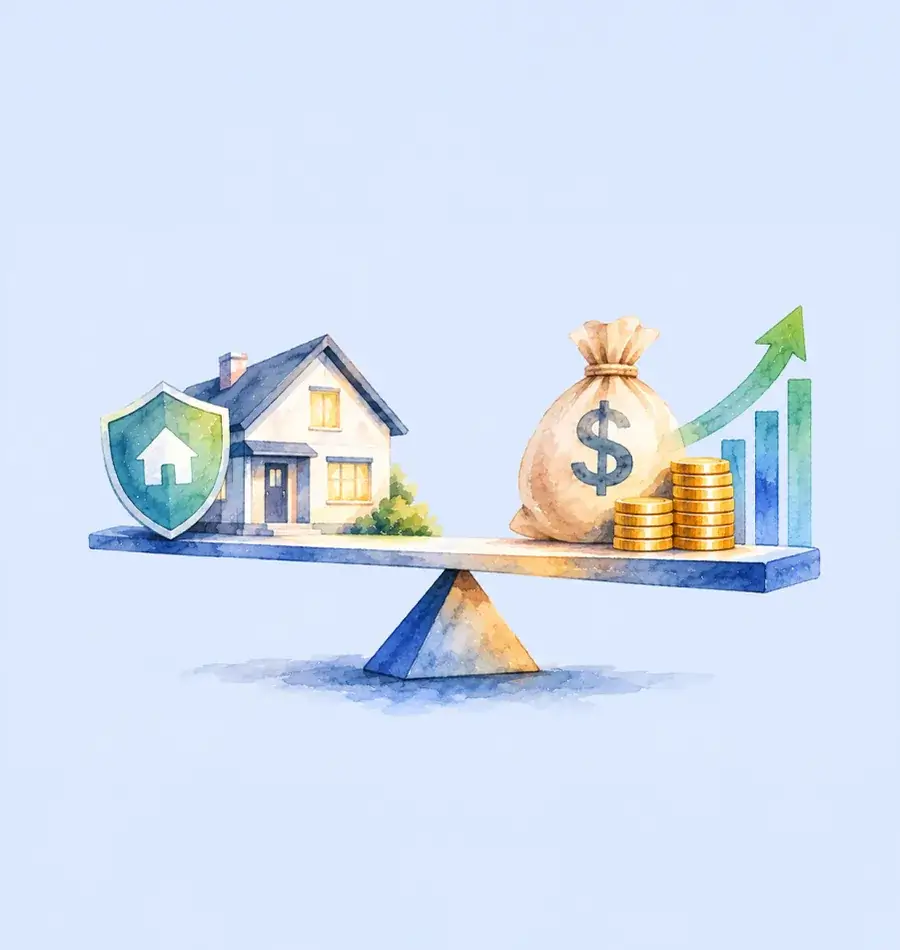
When business owners are considering borrowing money to help them grow or get through a seasonal gap, there are two paths I often see them stuck between: getting a more traditional-style business loan or tapping a home equity line of credit (HELOC).
I've been in the small business lending industry for more than 15 years now, so I've helped a lot of entrepreneurs understand the differences. On one hand, a HELOC often comes with a lower interest rate and can help get you flexible access to capital on an as-you-need-it basis. But a business loan (which is a broad term that can include a lot of different financing options) avoids putting your home on the line as collateral, is often more flexible on eligibility, and may get you money more quickly.
The right option when considering these two financing paths specifically is going to depend on your tolerance for higher costs, appetite for risk, and, of course, you and your business's financial eligibility. The bottom line: a HELOC may win when your priority is getting a lower rate, while a business loan can be the better choice if you'd rather keep your home out of the equation.
Here, I'll compare what each option can actually cost, how difficult they can be to qualify for, and the risks involved so you can decide which makes more sense for your business. I'll also show you how to apply through Clarify Capital if or when you're ready.
| Loan | Secured by | Typical borrowing limit | Rate range | Best for |
|---|---|---|---|---|
| Clarify Capital's home equity line of credit (HELOC) for Businesses | Equity in the business owner's residential property | Based on available home equity; up to $750,000 | As low as prime | Business owners with home equity who want relatively low-cost, longer-term capital and are comfortable securing it with their home |
| Term loan (short or long-term) | Varies by lender and loan; may be secured or unsecured | $10K to $5M | APR from 6% | One-time, defined expenses where you know how much you need up front |
| SBA 7(a) loan | Collateral requirements depend on loan size and lender/SBA rules; partially government-backed | Up to $5 million | About 9.75% to 13.25% APR (SBA caps the rate at the prime rate plus 3.0% to 6.5%; prime is 6.75% as of August 2026) | Larger, long-term investments such as expansion, working capital, equipment, or acquiring/improving real estate |
What's the Difference Between a HELOC and a Business Loan?
A HELOC allows you to borrow money on a revolving basis, via a line of credit, and is secured by the equity you own in your home. You get approved for a certain credit limit and can draw from that source as you need to during what's called the “draw period.” Then comes the repayment period, when it's time to pay back your outstanding balance plus interest (only on what you have borrowed, not your full credit limit amount).
The amount you can borrow depends on your property's value, how much (if anything) you owe on it, and a lender's specific combined loan-to-value (CLTV) ratio limit.
Here's a hypothetical example of how that works: Let's say your home is worth $500,000 and you still owe $250,000 on its mortgage. If a lender allows a maximum 70% CLTV, the property could support up to $350,000 in total debt secured by it. Subtract the $250,000 you still owe on the mortgage, and you could potentially have up to $100,000 in additional borrowing capacity through the HELOC.
A “business loan” can refer to several financing options, such as an SBA loan or a term loan, with different rates, eligibility requirements, and repayment structures.
Generally, unlike a HELOC, they're not secured by the equity you have in your home. You qualify instead based on things like business financials/cash flow, revenue, credit score, and time in business. With an SBA 7(a) or term loan, you typically receive a lump sum of money and repay it, plus interest, over a specific time period.
The Total Cost of a HELOC vs. a Business Loan
Earlier I mentioned that HELOCs tend to offer lower rates because they're secured by your home, while business loans may have higher rates but can get you capital faster and often with more flexible qualification requirements. Though interest rates are a very big factor, they aren't the whole picture.
How long you carry a debt can have just as much of an impact on what you ultimately pay. Sometimes a lower rate over a longer period can cost you more in total interest than a higher rate that you pay off faster. Let's visualize this and break down what costs can actually look like.
For example purposes, I'll compare a HELOC with one specific type of business loan: an SBA 7(a) loan. I'm also going to use a 6.75% rate for the HELOC and a 9.75% rate for the SBA 7(a) loan (based on the rates in our comparison chart from earlier). These calculations assume both balances are fully amortized through monthly payments over the stated period, with no fees or additional draws and no changes to either interest rate.
| Borrowing scenario | HELOC at 6.75%* | SBA 7(a) at 9.75%* | Difference |
|---|---|---|---|
| $100K over 5 years | ~$18,100 interest ~$118,100 total repaid | ~$26,700 interest ~$126,700 total repaid | ~$8,600 less with HELOC |
| $100K over 10 years | ~$37,800 interest ~$137,800 total repaid | ~$57,000 interest ~$157,000 total repaid | ~$19,200 less with HELOC |
| $250K over 5 years | ~$45,300 interest ~$295,300 total repaid | ~$66,800 interest ~$316,800 total repaid | ~$21,500 less with HELOC |
| $250K over 10 years | ~$94,500 interest ~$344,500 total repaid | ~$142,500 interest ~$392,500 total repaid | ~$48,000 less with HELOC |
*These are hypothetical rates used for comparison. HELOCs often have variable rates, while SBA 7(a) loans can have fixed or variable rates. So the actual cost of either option may look different from these examples. Plus, because I'm not accounting for fees and other closing costs, these numbers aren't meant to represent an actual financing offer.
The main thing I want you to take away from this is that both interest rate and repayment time matter when considering total cost of borrowing.
When the borrowing amount and term are the same, the lower-rate HELOC costs less in each example above. But a lower rate doesn't always mean less interest overall: the $250,000 HELOC at 6.75% costs about $94,500 in interest over 10 years, compared with about $66,800 for the higher-rate SBA loan paid off in five. Paying debt off faster generally means higher monthly payments, though, so you'll need to weigh total cost against what your business can comfortably handle each month.
HELOC vs. Business Loan: Which Is the Right Move for You?
Just because you have significant equity in your home doesn't necessarily mean you should use it as collateral when borrowing. The biggest tradeoff in a HELOC is that, if for some reason you default on payments, you risk losing your home.
A HELOC probably isn't the right move when you're borrowing to cover ongoing losses, don't have a clear repayment plan, or couldn't comfortably make the payments if business revenue temporarily declined. For example, Dave Ramsey generally advises his audience to avoid HELOCs because they create additional debt secured by the home.
For an established business owner or investor with steady business revenue and a clear plan for the money, though, borrowing against that equity can be a calculated way to access capital, as long as the potential business benefit justifies the cost and risk. I think getting a HELOC on your residence makes sense if you have strong home equity, want a lower rate, are comfortable with the risk, and at the same time want to:
Cover a temporary cash-flow gap
Bridge a short-term gap when you have reliable revenue coming in to repay what you draw

Buy business equipment
Purchase machinery, vehicles, technology, or other equipment your business needs

Take on a growth opportunity
Finance inventory, hiring, marketing, or other costs tied to a specific expansion opportunity

Finance a planned renovation
Pay for improvements to your business location when you know the scope and expected cost
Cover a large, predictable expense
Spread out a significant business expense rather than pulling the entire amount from your cash reserves
An SBA 7(a) loan may be a better fit when:
You don't necessarily need revolving access to money where you're repeatedly borrowing, repaying, and redrawing funds
Your need is for a large, long-term investment
You want a longer-term repayment plan and are okay with a lengthier approval process
You want to fund multiple types of expenses in one loan (for example, equipment, working capital, expansion, or eligible real estate costs)
A conventional term loan might be a better fit if:
You know exactly how much you need for a defined, one-time expense and don't really need a revolving source of money
You need a lump sum relatively quickly and don't want to go through the more involved SBA application process
You're willing to accept a potentially shorter repayment term or higher cost than SBA financing in exchange for a simpler or faster process
You don't qualify for SBA financing or your intended use of funds isn't eligible under the SBA program
What Lenders Will Look For
If you're applying for a HELOC, lenders are going to assess several factors about you, your finances, and your property to both make a decision on whether they will lend to you and, if they do, the terms of what they're offering. Those factors can include:
Home equity and value
Income and employment
Debt-to-income (DTI) ratio
Combined loan-to-value (CLTV) ratio
Credit score and history
Existing mortgage debt and liens
If you're opting for a business loan, it's very different. The lender is generally going to put much more emphasis on your business's financial health and its ability to repay the debt, although your personal credit and finances can still come into play. Depending on the financing product, lenders may look at:
Business revenue
Existing debt
Time in business
Business and personal credit score
Cash flow and ability to repay
Collateral or personal guarantee
Why Business Owners Work With Clarify
Clarify Capital's 5.0 Trustpilot rating is the highest in the industry, and we've placed more than $1 billion across 50,000+ small-to-midsize businesses (SMBs).
Clarify matches you across 75+ vetted lenders and can get you a written offer in as quickly as 24 hours. Every applicant works with a U.S.-based lending advisor (not a chatbot or a call center) from application through financing.
Minimum Qualifications
For Financing Through Clarify Capital

$10,000 in monthly revenue
Your business must earn at least $10K per month in a business bank account.

500+ credit score
You can get approved with any credit score. But the better your credit rating, the better interest rates lenders offer. Your FICO score should be above 500.

Minimum six months in business
Your company should be operational for a minimum of six months. This shows business lenders that your company is sustainable and won't go out of business.

Have a business bank account
Your Clarify advisor will need three or four months of your most recent bank statements to verify income. This is just to see you're actually making $10K+ month in revenue.
Here's how the application process works through Clarify Capital:

Step 1:Apply online
It takes about two minutes. You'll need your business's legal name, EIN, time in business, monthly revenue, requested loan amount, owner contact information, and a credit authorization.

Step 2:Connect with a lending advisor
A U.S.-based Clarify Capital lending advisor reviews the application, runs a soft credit pull (no impact to your score), and requests 3 to 4 months of recent business bank statements.

Step 3:Get matched and funded
Clarify Capital works with 75+ vetted lenders and matches your profile with the right financing. Approvals often get a same-day offer (SBA loans can take longer).
If you're ready, my team and I at Clarify Capital can help you explore the best financing options for your specific situation. Get started and apply today.
Frequently Asked Questions
Here are answers to common questions I get about HELOCs, business loans, and how to compare them.
Is a HELOC Better Than a Business Loan?
Neither is necessarily better than the other. The right choice depends on the risk you're willing to take and what you plan to do with the money. A HELOC may offer a lower interest rate, but it puts your home at risk. A business loan may cost more, but it can make more sense if you'd rather keep your home out of the equation or don't have enough equity to borrow against.
What Is the 20% Rule for SBA?
Anyone who owns 20% or more of the business must sign a personal guarantee for the loan.
Can an LLC Get a HELOC Loan?
It depends on how the property is owned and on the lender. A traditional HELOC is generally secured by residential property, and many consumer HELOC lenders require the borrower to be an individual rather than an LLC. However, some lenders offer business-purpose HELOCs that allow eligible business owners to access their home equity for business funding. If the property itself is owned by an LLC, your options may be more limited and lender-specific.
What Does Dave Ramsey Say About HELOCs?
Dave Ramsey generally recommends against HELOCs. His main arguments are that they put the property at risk and create a new debt that doesn't generate cash flow.
How Does Clarify Capital Protect My Business and Financial Information?
Clarify Capital follows SOC 2 (Service Organization Control 2) security principles designed to protect sensitive business and financial information. This includes safeguards such as secure data handling practices, controlled access to information, and ongoing monitoring to help protect your data throughout the application and funding process.

Bryan Gerson
Co-founder, Clarify
Bryan has personally arranged over $900 million in funding for businesses across trucking, restaurants, retail, construction, and healthcare. Since graduating from the University of Arizona in 2011, Bryan has spent his entire career in alternative finance, helping business owners secure capital when traditional banks turn them away. He specializes in bad credit funding, no doc lending, invoice factoring, and working capital solutions. More about the Clarify team →
Related Posts