

 Reviewed by
Managing unpredictable expenses or planning for growth often means tapping into outside capital. A business line of credit offers flexible access to working capital when you need it most. But before you borrow, it's smart to understand how the costs add up.
That's where our business line of credit calculator comes in: It breaks down the numbers (your estimated monthly payment, total interest, and full repayment cost). I've helped thousands of business owners find the right financing, and running the numbers first is always the best place to start.
Below, I'll walk you through how business lines of credit work, how to estimate monthly repayments, what factors drive costs, and how this option compares to traditional business loans.
Business Line of Credit Calculator
A business line of credit calculator estimates what your financing will actually cost before you borrow. By entering a few key inputs like loan amount, interest rate, and repayment term, business owners can quickly see their estimated monthly payment, total interest charges, and the full repayment amount.
This tool is especially useful for small business owners trying to balance day-to-day cash flow, plan for upcoming expenses, or cover seasonal gaps. Whether you're evaluating your first business line of credit or comparing multiple financing options, using a calculator helps you understand the total cost of borrowing before committing.
Running these numbers in advance helps you make more informed financial decisions that align with your borrowing needs and overall business goals.
How a Business Line of Credit Works
Unlike a traditional business loan, which gives you a fixed lump sum with scheduled repayments, a business line of credit offers more flexibility. It works like a credit card: you're approved for a set credit limit and can draw funds as needed. You only pay interest on the total amount you actually use, not the full loan amount.
This revolving credit setup is ideal for managing short-term working capital needs. You can withdraw funds during the draw period, repay them, and draw again without reapplying. Business lines of credit are available from a range of financial institutions, including traditional banks, credit unions, and online lenders, each with different rate structures and eligibility requirements.
Since repayment terms vary by lender, it's important to understand how each one structures their financing (especially how and when you'll need to pay interest or repay the principal).
How To Estimate Your Monthly Payment

To estimate your monthly payment on a business line of credit, you'll need to consider whether you're making interest-only payments or paying off both principal and interest (amortized payments). During the draw period, many lines of credit allow interest-only payments. After that, the repayment period may require larger monthly repayments that include principal.
Here's how the math works at different draw amounts and rates:
$50,000 draw at 10% interest rate:
Interest-only payment: approximately $417 per month
Amortized over 24 months: approximately $2,308 per month
$100,000 draw at 7% interest rate:
Interest-only payment: approximately $583 per month
Amortized over 12 months: approximately $8,653 per month
Your total cost depends on several key factors: the interest rate, loan term, and outstanding balance. This is why using a business line of credit calculator sets you up for success with a clear picture of how your financing works for you. Understanding amortization schedules, total interest, and how your total payments change over time helps you avoid surprises.
Key Factors That Affect Cost
Several factors influence how much your business line of credit will cost over time. Understanding each one can help you estimate your total interest and choose the most affordable option for your business.
Credit score. A higher credit score typically results in lower interest rates and better repayment terms.
Interest rate. Rates are typically variable, though some lenders may offer fixed-rate options. This affects how much you'll pay over the life of the credit line.
Annual percentage rate (APR). This includes both interest and fees, giving a clearer picture of your total cost.
Annual fee. Some lenders charge a yearly fee just to maintain access to the credit line.
Loan term. The length of time you have to repay affects your total interest paid.
Repayment terms. Whether you make interest-only payments during the draw period or fully amortized payments changes your monthly obligations significantly.
Prepayment penalties. Some lenders charge fees if you pay off your balance early. Ask about this before signing; it can affect the total cost of borrowing.
Lender policies. Each financial institution sets its own pricing, approval criteria, and fee structure. When comparing options, look for established lenders that clearly disclose their rates, fees, and terms.
Credit approval. Your time in business, monthly revenue, and financial history all affect your eligibility and the loan terms you're offered.
How To Qualify for a Business Line of Credit
Before you apply, you should know what lenders are looking for. While requirements vary, many financial institutions evaluate a similar set of factors.
Credit score. Many lenders require a personal credit score of at least 600. Traditional banks generally require scores in the low 700s at a minimum, and SBA lenders typically look for at least 680. Online lenders may work with scores in the 600 to 650 range. Clarify Capital sometimes offers same-day funding for scores over 550.
Time in business. Clarify Capital requires businesses to have at least six months of operating history. The longer your track record, the more options you'll have.
Annual revenue. Clarify Capital requires at least $10,000 in monthly revenue. Other lenders may set a minimum annual revenue threshold, commonly $50,000 to $100,000 or more, depending on the credit limit you're requesting.
Documentation. Be prepared to provide recent bank statements, tax returns, and basic business financial records. Clarify Capital requires three months of your most recent bank statements to verify income.
Business bank account. You'll need a dedicated business checking account. Clarify Capital requires one as part of the application process.
Business credit. A strong business credit profile, including on-time payments to vendors and low existing debt, can improve your chances and help you access better terms.
Meeting these benchmarks doesn't guarantee approval, but it puts you in a strong position. I recommend running the numbers through a business line of credit calculator first to see what repayment structure your business can realistically handle.
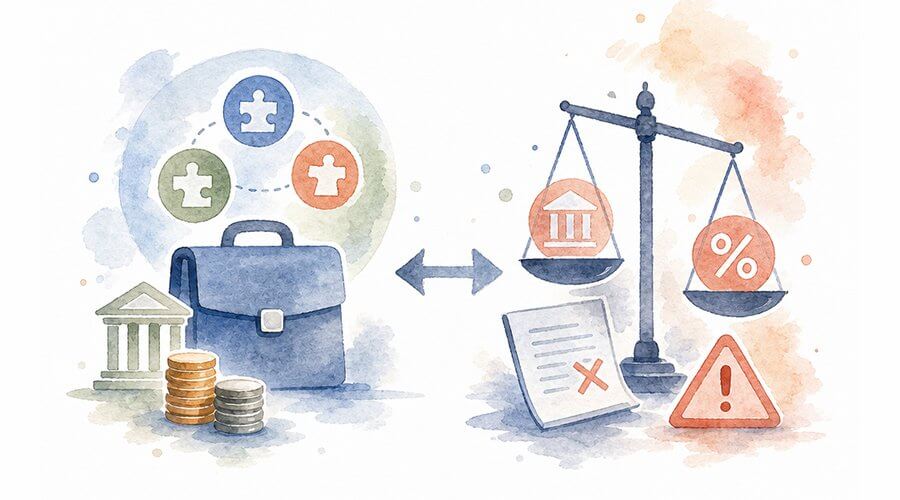
Business Line of Credit vs. Business Loan: What's the Difference?
A business line of credit and a business loan both offer access to capital, but they work differently and serve different needs.
A business loan gives you a lump sum up front that's repaid over a fixed period. Payments typically follow an amortization schedule, meaning you pay off both principal and interest in equal monthly installments. In my experience, this is the stronger choice for large, one-time expenses (like buying equipment or renovating a space) where you know exactly how much you need.
A business line of credit works more like a credit card. You get access to a set credit limit and only pay interest on the amount you draw. It's a flexible tool for covering short-term working capital needs like payroll, inventory, or emergency expenses. Repayment terms vary, but many lines allow interest-only payments during the draw period, with full repayment due later.
| Business Line of Credit vs. Business Loan | ||
|---|---|---|
| Feature | Business line of credit | Business loan |
| Funding structure | Revolving; draw as needed | Lump sum up front |
| Interest charged on | Amount drawn | Full loan amount |
| Repayment | Flexible; interest-only or amortized | Fixed monthly payments |
| Best for | Short-term or recurring expenses | One-time large purchases |
| Common terms | 6–18 months (for some online lenders) or revolving with annual renewal for traditional bank lines | 1–25 years (fixed) |
| Examples | Working capital, payroll, inventory | Equipment, real estate, SBA loans |
If you need a specific amount for a defined purpose, a small business loan (including SBA loans) may be the better fit. If you want ongoing access to funds for variable expenses, a business line of credit gives you more flexibility.
Who Should Use a Business Line of Credit?
A business line of credit is a flexible financing option that supports a wide range of business needs. In my experience working with small business owners, it's ideal for companies that want ongoing access to working capital without committing to a fixed loan.
Here are the types of businesses and situations that benefit most:
Small businesses. Companies with limited cash reserves rely on credit lines to manage day-to-day expenses or take advantage of growth opportunities.
Businesses with seasonal fluctuations. If your revenue varies throughout the year, a line of credit helps balance cash flow during slower months.
Real estate firms. These businesses use lines of credit for renovations, marketing costs, or short-term operational needs.
E-commerce brands. Online sellers benefit from quick access to funds to handle shipping, advertising, and supplier payments.
Many business owners pair a line of credit with their existing checking accounts and business bank setup for seamless access, drawing funds when needed and repaying directly from operating revenue.
Calculate Payments Before You Borrow
Using a business line of credit calculator helps you understand the financial impact of borrowing before you commit. With just a few inputs (loan amount, interest rate, and repayment term) the tool estimates your monthly payment, total interest, and overall repayment cost. This makes it easy to compare loan options side by side and decide what fits your budget.
Whether you're comparing a line of credit to a business credit card or weighing the difference between revolving credit and a term loan, running the numbers first puts you in control. It's a simple step that helps business owners protect cash flow and avoid overborrowing.
Ready to explore your options? Apply today with Clarify Capital to get personalized funding offers and find the right fit for your business.
Frequently Asked Questions
I'll answer some common questions about business lines of credit below.
How Is a Business Line of Credit Calculated?
The cost of a business line of credit is based on three main inputs: the amount you draw, the interest rate, and the repayment term. Many lenders charge interest only on the outstanding balance, not the full credit limit. During the draw period, you may make interest-only payments. Once the repayment period begins, your monthly payments will include both principal and interest, following an amortization schedule. A business line of credit calculator lets you plug in these variables to estimate your total payments and total interest before you borrow.
What Is the Monthly Payment on a $50,000 Line of Credit?
It depends on the interest rate and whether you're making interest-only or fully amortized payments. At a 10% annual interest rate, an interest-only payment on $50,000 would be approximately $417 per month. If you're repaying principal and interest over 24 months at the same rate, the monthly payment rises to approximately $2,308. At a 15% rate with interest-only payments, you'd pay about $625 per month.
Can I Use My EIN To Get a Loan?
An Employer Identification Number (EIN) alone usually isn't enough to qualify for a business line of credit or small business loan. Lenders use your EIN to verify your business identity and pull your business credit report, but they also evaluate your personal credit score, revenue, time in business, and financial history. Having a strong business credit profile tied to your EIN can help, but many lenders will still require a personal guarantee, especially for smaller businesses. The Small Business Administration has more information on what lenders typically require.
Is It Worth Getting a Business Line of Credit?
For many established businesses, yes, particularly if you deal with variable expenses, seasonal revenue swings, or need a financial safety net for unexpected costs. A line of credit gives you access to funds without the commitment of a fixed loan, and you only pay interest on what you use.
Here's what I tell every business owner I work with: The key is making sure the interest rate, fees, and repayment terms make financial sense for your situation. Running the numbers through a business line of credit calculator before you apply is the best way to evaluate whether the total cost fits your budget.
How Much Can I Get With a Business Line of Credit?
Credit limits vary widely by lender. Online lenders typically offer lines of credit from $10,000 to $250,000 (Clarify Capital offers them up to $5 million), while traditional banks and credit unions may go higher for well-qualified borrowers.

Bryan Gerson
Co-founder, Clarify
Bryan has personally arranged over $900 million in funding for businesses across trucking, restaurants, retail, construction, and healthcare. Since graduating from the University of Arizona in 2011, Bryan has spent his entire career in alternative finance, helping business owners secure capital when traditional banks turn them away. He specializes in bad credit funding, no doc lending, invoice factoring, and working capital solutions. More about the Clarify team →
Related Posts