


 Reviewed by
When you're running a small business, managing cash flow quickly becomes a daily challenge. Traditional business loans can be slow and hard to qualify for, which is why many owners turn to merchant cash advance companies for faster, more flexible funding.
With a merchant cash advance, lenders provide up-front working capital in exchange for a percentage of your future sales. Approval is usually fast, often with minimal paperwork, and you may be able to get funded in as little as a day, making it a solid option if you need capital now.
But speed comes at a price. Merchant cash advances often carry higher costs than other business funding types, so it's important to compare offers carefully.
This guide ranks top MCA providers, explains how factor rates work, and helps you calculate the real cost of repayment. You'll also see how Clarify Capital can help you compare MCAs against lower-cost options like term loans and credit lines, so you can find the right fit for your business needs.
What Is a Merchant Cash Advance?
A merchant cash advance (MCA) is a type of business financing that provides up-front capital in exchange for a portion of your future credit card sales or other receivables. It's not a loan. It's an advance against future revenue, which makes it more accessible for businesses that may not qualify for traditional funding.
Repayment happens through daily or weekly deductions, typically based as either a percentage of your sales or fixed withdrawals. This percentage is known as the holdback rate, and it adjusts with your revenue. That flexibility can help if your business sees fluctuations in income. Instead of interest, MCAs use a factor rate (like 1.3 or 1.5) to determine the total payback amount. For example, a $50,000 advance with a 1.4 factor rate means you'll repay $70,000, regardless of how long it takes — though paying it back more quickly increases the effective cost of capital.
To qualify for a merchant cash advance, many lenders require:
At least $10,000 in monthly revenue. Your business needs to show steady incoming cash flow.
Over 6 months in business. Startups less than half a year old usually won't qualify.
A business bank account. This is required to verify income and manage repayments.
Three months of recent bank statements. Lenders use this to assess revenue trends and risk.
A credit score of 550 or higher. Some lenders accept lower scores, but terms may be more expensive.
Unlike SBA loans, traditional business loans, or invoice factoring, MCAs don't usually require typical collateral and are often favored by startups, retailers, and companies with unpredictable credit card sales. They offer speed and flexibility, but at a higher cost.
Top Merchant Cash Advance Providers in 2026
Below are some of the most established merchant cash advance companies, selected for reputation, transparency, and service quality. These options range from fast funding and broad eligibility to a broker platform that helps you compare offers.
1. Rapid Finance

Rapid Finance provides short-term funding and working capital for small businesses that need quick cash. Many approvals and funding decisions happen in under 24 business hours.
Pros
Fast funding. Many businesses get approved and funded in less than one business day.
High approval rates. The lender accepts many businesses that traditional banks often decline.
Simple process. The online application is straightforward and reduces hassles.
Cons
Higher factor rates. Businesses with riskier profiles may pay more.
Frequent repayments. Daily or weekly deductions can tighten cash flow.
Not built for long-term growth. This option works better for urgent working capital than for financing growth.
Rapid Finance works well for businesses with steady credit card sales and strong daily volume.
2. CAN Capital
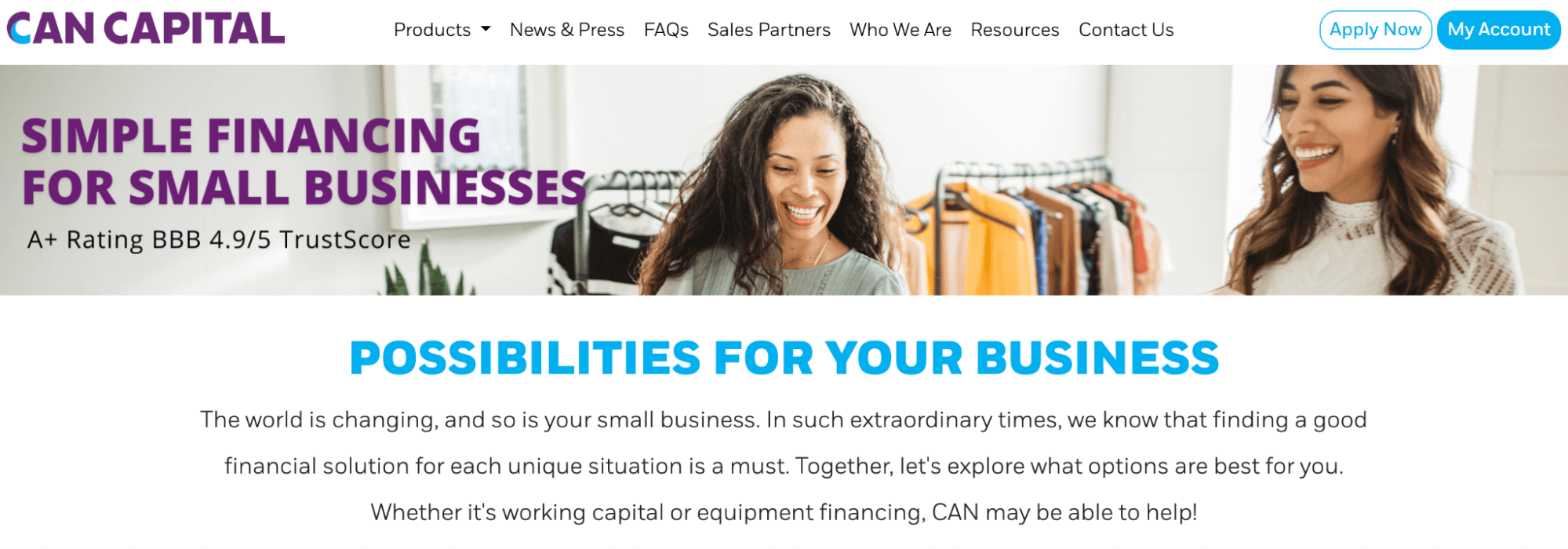
CAN Capital is one of the longest-standing direct MCA lenders, known for flexible underwriting and straightforward funding for businesses with consistent monthly revenue.
Pros
Easy renewals. Repeat funding can be simpler for returning customers.
Minimal paperwork. Low documentation often speeds up approvals.
Flexible underwriting. Revenue-based evaluations can help many businesses qualify.
Cons
Total cost can be high. Pricing is not always transparent, making comparisons harder.
Revenue requirements. Businesses with lower monthly income may get tighter terms.
Holdback-based deductions. These are calculated as a percentage of sales and can limit available cash during repayment.
CAN Capital is a solid choice for established businesses with consistent revenue patterns.
3. Yellowstone Capital

Yellowstone Capital focuses on serving higher-risk small businesses and those with bad credit, offering fast access to capital even if sales fluctuate.
Pros
Broad eligibility. The lender is accessible to businesses with less-than-perfect credit.
Fast funding. Some applicants can receive same-day deposits.
Works with variable sales. Seasonal or unpredictable revenue is accepted.
Cons
High costs. Factor rates can exceed 1.4, increasing total repayment.
Aggressive deductions. A large percentage of sales may be taken quickly.
Fee variability. Some industries face steeper charges.
Yellowstone Capital is often a good option for retail business owners with unpredictable card transactions.
4. Credibly
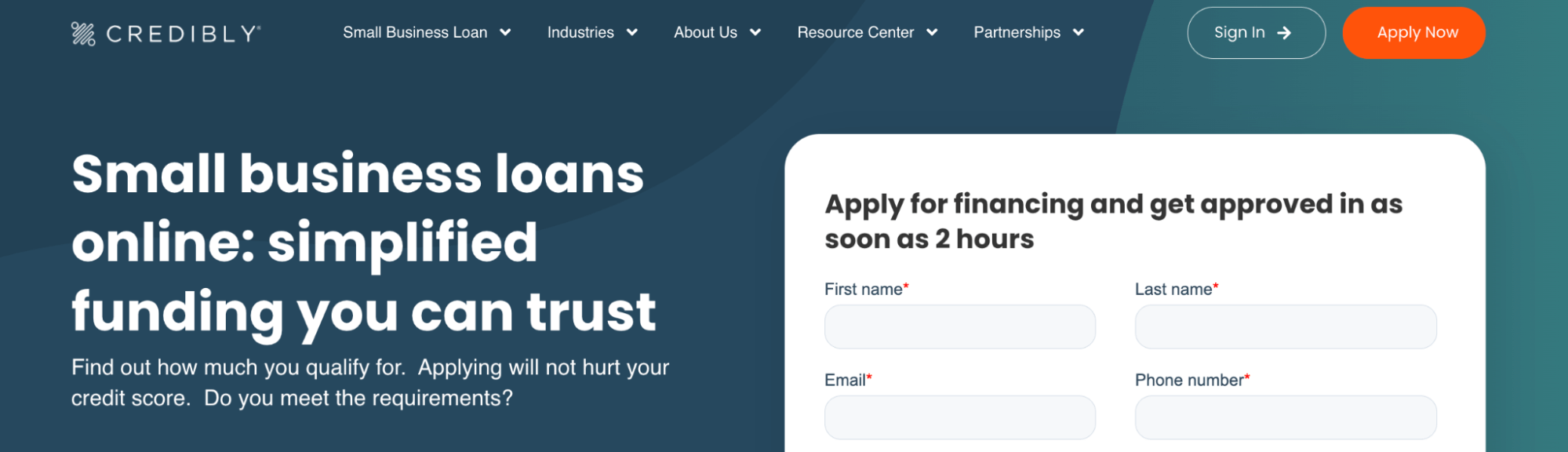
Credibly offers a mix of merchant cash advances and alternative products such as short-term loans and working capital financing, with clearer payment examples to help you forecast total costs.
Pros
Transparent terms. Repayment terms and total cost breakdowns are clear.
Multiple products. The lender offers business lines of credit and equipment financing.
Quick prequalification. Fast insights require minimal credit impact.
Cons
Best for steady revenue. Businesses should have reliable monthly income.
Documentation required. You'll need bank and financial documents for approval.
Startup limitations. This provider may not be ideal for businesses that are very new.
Credibly is a great option for businesses that want to compare several types of business financing before deciding.
5. Greenbox Capital

Greenbox Capital provides flexible funding tied closely to future receivables, often with same-day approval and fast deposits for qualifying businesses.
Pros
Flexible products. Options adapt to your sales patterns.
Fast deposits. Quick access to funds once approved.
Simple online process. Application and onboarding are usually easy.
Cons
Fee variation. Total cost depends heavily on your industry and profile.
High holdback percentages. Larger deductions can affect daily cash flow.
Not always the lowest cost. Some businesses may find affordable alternatives elsewhere.
Greenbox Capital suits businesses that want quick approval and have strong daily sales.
6. Clarify Capital (Broker Option)

Clarify Capital acts as a marketplace, connecting you to multiple MCA lenders and other funding options so you can compare merchant cash advances against term loans, lines of credit, and invoice factoring.
Pros
Side-by-side comparisons. Evaluate MCA offers alongside unsecured business loans and other products.
Personalized quotes. Financing matches your business profile.
Access to multiple lenders. You get more options than with a single provider.
Cons
Not a direct lender. Clarify facilitates connections but does not issue funds itself.
Dependent on partner terms. The offers reflect the criteria of third-party lenders.
Variable timelines. Funding speed varies by selected lender.
Clarify Capital helps business owners find the best loan amount and structure by comparing multiple funding options in one place.
How Merchant Cash Advances Compare to Traditional Business Loans

Merchant cash advances and traditional business loans serve very different needs, and knowing the difference can help you choose the better fit. MCAs are sales-based, meaning you repay them through daily or weekly deductions, either as a percentage of sales or fixed withdrawals. Traditional loans are debt-based and use fixed monthly payments. That can make MCAs more flexible for businesses with unpredictable revenue, but also more expensive and harder to manage over the long term.
Here's a quick comparison of MCAs versus traditional small business loans:
| MCAs vs. Small Business Loans | ||
|---|---|---|
| Feature | Merchant cash advance | Traditional business loan |
| Speed | Same-day approval and funding possible | Typically takes one to two weeks for approval and funding |
| Qualification | Lower credit score accepted; based on revenue and sales | Requires stronger credit and financial documentation |
| Repayment structure | Daily or weekly deductions based on sales volume, either as a percentage of sales or fixed withdrawals | Fixed payments over a set term |
| Cost | Higher effective APR equivalents and factor rates | Lower interest rates and predictable fixed payments |
MCAs offer fast funding with minimal paperwork, making them appealing for bad credit borrowers or anyone needing a short-term capital boost. But the repayment schedule can strain cash flow quickly. In contrast, term loans, SBA loans, or a business line of credit provide lower-cost lump sum financing and are usually a better fit for planned growth and predictable business needs.
Clarify Capital helps business owners compare MCAs, term loans, and lines of credit side by side so you can pick the right type of financing based on your goals, budget, and growth plans.
How To Choose a Funding Option

Before taking on any business financing, it's important to step back and evaluate your business needs. Start by looking at your monthly revenue, how steady your cash flow is, and how comfortable you are with frequent repayments. Merchant cash advances offer fast access to funds, but they also involve aggressive payback schedules, often daily, that can strain liquidity if your income fluctuates.
To make a smart choice, review the factor rate, holdback percentage, and total repayment cost of any MCA offer. These numbers affect how much you'll actually pay back over time. For some businesses, lower‑cost funding options like SBA loans, term business loans, or a business line of credit may be a better long‑term fit.
Keep in mind that eligibility requirements can vary widely by product. Some lenders prioritize credit history, while others focus more on how long you've been in business or your recent advance amount requests.
Get a personalized quote from Clarify Capital to compare MCA offers alongside traditional business loan options. You may find a lower‑cost solution that fits your working capital needs better, whether you need immediate cash or a more flexible credit line.
Apply today to see your best‑fit funding options.
FAQs About Merchant Cash Advances
Many small business owners considering merchant cash advances have similar questions about how they work, what they cost, and whether they're the right fit. This section answers common concerns about business funding, repayment terms, and comparing funding options to meet your company's needs.
What's the Best Merchant Cash Advance Company?
The best choice among merchant cash advance companies depends on your type of business, how much you need to borrow, and your credit score. Some MCA lenders specialize in fast funding for credit-challenged businesses, while others focus on transparency and service.
To find the right fit, it's smart to compare multiple offers — including through brokers like Clarify Capital, who can help you evaluate offers from several providers at once. The best option is the one that aligns with your small business financing needs and repayment comfort.
What Happens if You Default on a Merchant Cash Advance?
Defaulting on a merchant cash advance can lead to serious consequences. Lenders may pursue collections, file lawsuits, or report missed payments, all of which can damage your credit score and strain your business operations.
If you're struggling with your repayment terms, it's critical to contact your lender early. Many are willing to renegotiate or offer short-term financial assistance. You can also explore refinancing or more flexible funding through brokers like Clarify Capital, who work with businesses navigating difficult situations.
What Fees Are Associated With Merchant Cash Advances?
Merchant cash advances come with several potential fees that can impact your total cost:
Factor rate charges. Instead of interest, MCAs use a fixed multiplier (e.g., 1.3x) to calculate total payback.
Origination fees. Some lenders charge up-front processing costs.
Administrative fees. These can include ACH transfer costs or servicing fees.
Before accepting an offer, review the repayment schedule, total cost, and any prepayment penalties. A clear understanding helps small business owners avoid surprises during repayment.
What Is a Small Business Cash Advance?
A small business cash advance is a form of MCA that provides fast funding to help business owners cover expenses, improve cash flow, or seize new opportunities. The advance is repaid using a percentage of daily sales, usually tied to credit card or receivables volume.
Since it's based on expected future earnings, funding can be available in just a few business days, often with limited documentation and up-front requirements.
This option is especially useful for small business owners who need working capital quickly but may not qualify for traditional bank loans.
What Kinds of Working Capital Are Available for Small Businesses?
Several working capital solutions are available depending on your cash flow goals and qualifications:
Merchant cash advances. Ideal for fast access to funds based on daily sales.
Short-term loans. Fixed repayment over a few months with clearer cost estimates.
Business lines of credit. Revolving access to capital when needed.
Invoice factoring. Advance based on outstanding customer invoices.
Each of these financing options supports different business needs, so it's worth comparing funding options based on your revenue, timeline, and comfort with repayment structures.
Are Merchant Cash Advances Legal?
Yes, merchant cash advances are legal in the United States, but they are regulated differently from traditional loans. Because they involve the purchase of receivables, they are not classified as debt in the same way and may fall outside traditional consumer lending frameworks, though some state regulations still apply.
Still, it's essential to read the contract carefully and fully understand your repayment terms. Make sure you're working with a reputable lender and know your rights before signing. If you're unsure, a trusted broker like Clarify Capital can help you navigate different business funding offers and avoid predatory practices.

Michael Baynes
Co-founder, Clarify
Michael has over 15 years of experience in the business finance industry working directly with entrepreneurs. He co-founded Clarify Capital with the mission to cut through the noise in the finance industry by providing fast funding and clear answers. He holds dual degrees in Accounting and Finance from the Kelley School of Business at Indiana University. More about the Clarify team →
Related Posts