

 Reviewed by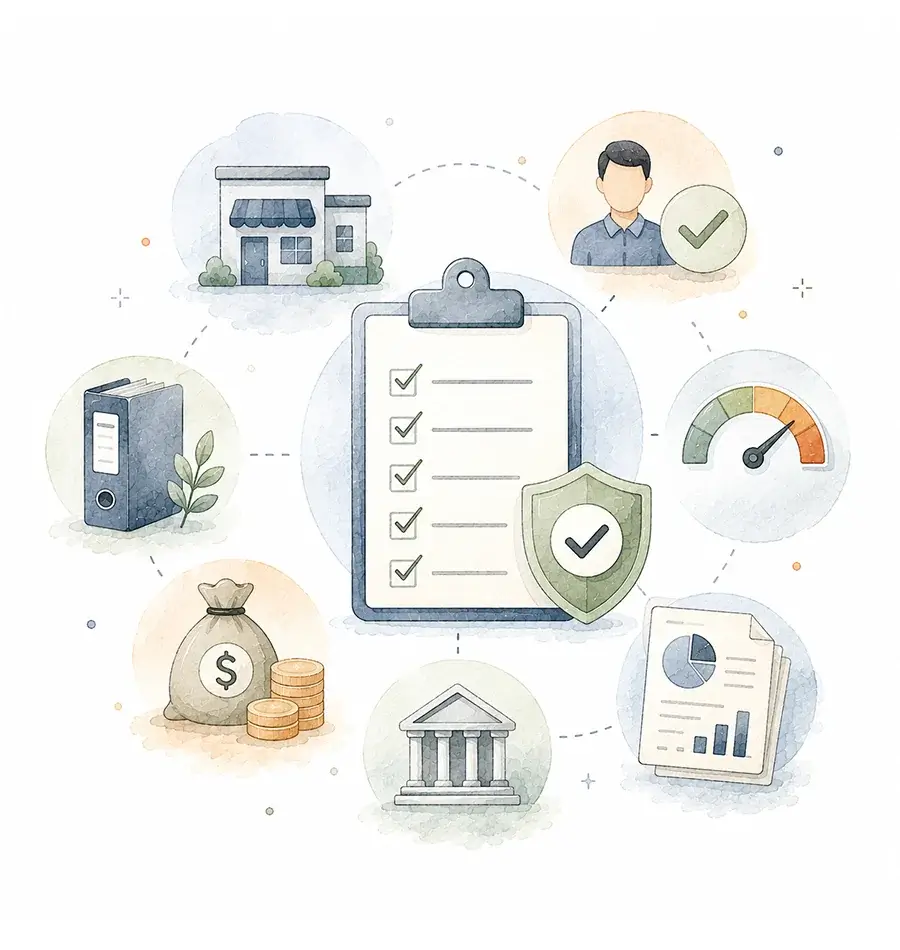
Many small and medium-sized businesses (SMBs) reach a point where they are ready to expand and need financing to make it happen. The financing option I often see SMBs turn to first is a Small Business Administration (SBA) loan. These loans can be great options for businesses that want long repayment terms and competitive rates, but aren't in a hurry to get the cash.
If you're thinking about applying for an SBA loan, the rules changed this year. Starting July 4, 2026, qualified borrowers can use 7(a) and 504 financing together for up to $10 million total.
Remember, the SBA doesn't provide these loans. Approved lenders do, and the federal government guarantees some or all of the loan. So you'll need to meet two separate sets of qualifications before you're approved, the lender's and the SBA's.
I have more than 15 years of experience helping SMBs get SBA loans. I've seen the same concerns come up again and again. Below, I'll outline how to apply for an SBA loan, what you'll need to qualify, and common questions that I hear from clients.
| Program | Maximum loan amount | Best suited for | Repayment terms |
|---|---|---|---|
| SBA 7(a) | $5 million* | Flexible needs: working capital, real estate, equipment, refinancing, business acquisitions | Up to 10 years for working capital and equipment; up to 25 years for real estate |
| SBA 504 | $5.5 million* (CDC/debenture portion) | Owner-occupied commercial real estate and long-life equipment | 10, 20, or 25 years |
| SBA Express | $500,000 | A streamlined 7(a) option for faster financing and lines of credit | Follows 7(a) maturities (up to 10 years; up to 25 years for real estate) |
| SBA Microloan | Up to $50,000 (average about $13,000) | Startups and smaller working capital, inventory, or equipment needs | Up to 7 years |
*Combined 7(a) + 504 ceiling: Up to $10 million total as of July 4, 2026: for example, up to $5M through a 7(a) plus up to $5M through a 504 for the same borrower.
SBA Loan Eligibility Requirements
Every SBA applicant first has to meet the basic qualification guidelines that the SBA sets. Here are the core criteria for a 7(a) loan, in plain language.

It's a legitimate, operating business.
Your business is real and up and running, not just an idea.

It generates a profit.
Non-profits can't get an SBA business loan.

It's located in the U.S.
You run your business inside the United States or its territories.

It meets the SBA's size limits.
Those limits depend on your industry.

It's an acceptable type of business.
Some industries don't make the list, which I cover later.
You can't get similar terms from a conventional lender.
The SBA serves businesses that can't get comparable financing elsewhere.
You can prove creditworthiness and the ability to repay.
Your credit and cash flow need to show you can pay the loan back.
Size limits are what trip people up most often. The SBA sets its size standards by industry based on your North American Industry Classification System (NAICS) code, and it measures your company by your average yearly receipts or by the number of employees you have. There's no one-size-fits-all number, so a trucking business with five employees and a software business with 10 can both still count as small.
The "credit elsewhere" rule is another source of confusion, but it doesn't imply anything negative about your business. Creditworthiness simply means you can prove to the lender that you can pay back the loan. The SBA was created to help businesses that wouldn't otherwise get comparable terms, and its guarantee is what makes that possible. It's a benefit to you as the applicant, not a mark against your business.
Another concern that's usually unfounded is your business structure. The SBA accepts limited liability companies (LLCs), corporations, partnerships, and sole proprietorships, as long as you operate for profit and meet the size, eligibility, and creditworthiness criteria. If you wan t to figure out which paths tend to be easier to qualify for, take a look at the easiest SBA loans to qualify for.
The SBA also tightened its ownership rules in 2026. As of March 1, all owners of the business, direct and indirect, have to be U.S. citizens or U.S. nationals whose main home is in the U.S. Lawful permanent residents (green card holders) can no longer hold an ownership stake, and even a 1% share held by an ineligible person disqualifies the business.
Credit Score, Time in Business, and Revenue
We get a lot of questions about the minimum score needed for approval. The SBA doesn't require a minimum credit score, a minimum length of time in business, or a minimum in yearly sales. Those requirements come from lenders.
The SBA's standards are very general. You need a reasonable ability to pay back the loan, and you have to be considered "creditworthy." Each lender then decides whether you meet its own credit requirements, so some lenders may deny you when others may approve the same loan.
There was also a significant change in 2026. Before March 1, 2026, the SBA ran a FICO Small Business Scoring Service (SBSS) prescreen on all applications for 7(a) Small Loans of $350,000 or less. As of March 1, 2026, that prescreen is no longer required. As of March 1, 2026, the SBA no longer requires that prescreen as part of its standard eligibility process.
That doesn't mean credit scores no longer matter. Lenders still evaluate creditworthiness, and many continue to use SBSS and other scoring tools in their underwriting. The difference is that applicants are no longer automatically screened out at the SBA level for failing to meet a minimum SBSS threshold, giving lenders more flexibility to evaluate each business on its overall merits.
Time in business works the same way. The SBA doesn't set a specific length of operation or a minimum yearly revenue, since lenders decide those based on your operating history and your potential to repay. Lenders usually prefer two or more years of history, but newer businesses aren't shut out. The Microloan program fits small and new companies.
Strong credit, a longer operating history, and steady revenue widen your access to financing options and can lead to better terms. Still, there's flexibility in the SBA's guidelines that leaves room for businesses that don't meet every lender's requirement.
What Disqualifies a Business From an SBA Loan
The reassuring part first: A lot of what people fear isn't an automatic disqualifier. Imperfect credit, a short track record, or a bank that already said no can still be workable.
| What disqualifies you | Details |
|---|---|
| Ineligible type of business | The SBA excludes some businesses under the ineligible business types listed in 13 CFR 120.110. Examples include nonprofits, companies mainly engaged in lending or financial activities, passive businesses that don't actively operate, life insurance companies, businesses based outside the U.S., and pyramid-sale distribution plans. Businesses that derive more than one-third of gross annual revenue from legal gambling activities are also ineligible. |
| History or criminal activity | A principal's conviction for a crime tied to fraud or misrepresenting material information can create eligibility problems. The same goes if a principal defaulted on a prior U.S. government loan and caused a loss to the government. |
| Falling short on a minimum requirement | Missing one or more baseline criteria, such as the SBA size standard, for-profit requirement, U.S. operating requirement, creditworthiness standard, or credit elsewhere rule, can also rule you out. |
Down Payment, Collateral, and Personal Guarantees
It helps to know what you might have to put in and pledge to get an SBA loan.
On smaller 7(a) loans, the SBA doesn't require collateral for amounts of $50,000 or less, and SBA Express lenders don't have to take collateral on loans up to $50,000.
On larger 7(a) loans, lenders follow their own collateral policies and often place a lien on available business assets, and sometimes personal assets, too. When a lender records a claim on your business assets through a Uniform Commercial Code (UCC) filing, it creates a public record showing it has a claim on those assets until you pay the loan off. Our guide to secured vs. unsecured business loans explains how this works.
Personal guarantees are common and tough to avoid. Anyone who owns at least 20% of your business generally has to personally guarantee an SBA loan. Each of them also submits a personal financial statement.
Down payments depend on the program. The SBA doesn't set a down payment percentage for 7(a) loans, so the equity you need depends on the lender and how you'll use the money. The 504 program has clearer rules. There, you'll usually put in at least 10% equity, and that can rise to 15% to 20% for newer businesses or special-purpose properties.
Required Documentation
The SBA requires only a couple of standard forms, and each lender sets the rest of the paperwork.
Two SBA forms show up on nearly every file. SBA Form 1919, the Borrower Information Form, collects details about you (the business owner), the loan request, and any existing debt, and it supports the required background checks (SBA Form 1919). SBA Form 413, the Personal Financial Statement, comes from each owner of 20% or more, and the SBA uses it across the 7(a) and 504 programs to size up each owner's finances.
After that, each file varies by lender. The SBA itself says the contents of a loan application depend on the size of the loan and the lender's process, so your exact checklist comes from the lender. Lenders usually ask for business and personal tax returns, financial statements like a profit-and-loss and a balance sheet, a debt schedule, business licenses, and a business plan. Gathering these early can speed things up.
Differences Between Programs
The programs share a baseline, but each one adds its own tests. Here's what's different.
| Program | What makes it unique |
|---|---|
| SBA 504 | Adds size and use requirements. The borrower has to be a for-profit, U.S.-based business with a tangible net worth under $20 million that has averaged less than $6.5 million in net income over the past two years after federal taxes (SBA). You can only use 504 funds toward fixed assets like land, buildings, and long-life equipment, or toward refinancing qualified real property. For financed real estate, the building has to be at least 51% owner-occupied when you're using existing space, or 60% for new construction. A 504 project also has to create or keep jobs or satisfy another public-policy goal. As of October 1, 2025, that means one job per $95,000 of SBA-guaranteed debenture (up from $90,000), or one per $150,000 for small manufacturers (up from $140,000). Rates are fixed. |
| SBA 7(a) | The most flexible option. It has no job-creation requirement, and you can use the funds for nearly any business purpose a commercial lender allows. The SBA guarantees up to 85% on loans of $150,000 or less and up to 75% on larger loans. Rates can vary. |
| SBA Express | Trades some guarantee for speed. The maximum loan amount is $500,000, with a reduced SBA guarantee of 50%. |
| SBA Microloans | Loans made through nonprofit, community-based lenders. They go up to $50,000 and average about $13,000. Funds can't go toward paying off existing debt or buying real property, and rates usually run 8% to 13%. |
You can also combine the two largest programs. As of July 4, 2026, a borrower can pair up to $5 million through a 7(a) with up to $5 million through a 504, for $10 million total (the SBA doubled the old $5 million ceiling). Small manufacturers get extra room: they can take up to $5 million in 7(a) while still using 504 financing for separate projects.
Is an SBA Loan Right for Me?
Most people want the lowest cost they can get, but in some cases, it makes sense to accept a slightly higher cost if getting financing sooner keeps you operating.

Speed matters more than rate.
SBA loans take time and a lot of documentation. The rate can be competitive, but approval from an SBA lender usually takes several weeks. A fast business loan can be a viable alternative. You may pay more over the life of the loan, but you get the money much sooner than you would through an SBA loan.

You have short-term needs.
SBA loans favor the long term, so they don't work well as a gap-filler or for an ongoing cycle of revolving working capital. In both cases, a business line of credit or a short-term business loan can be a better fit.

You can't qualify for an SBA loan yet.
Newer or developing businesses often can't meet the SBA's criteria because they're short on income history, assets, or credit history. You can still look into low-documentation business loans or a line of credit for weaker credit profiles to help you build toward SBA eligibility.

You need to buy a specific item.
Some financing targets a single use. Equipment financing covers machinery, vehicles, and similar purchases, invoice factoring turns unpaid invoices into immediate cash, and a merchant cash advance provides fast, revenue-based financing.
Minimum Qualifications

$10,000 in monthly revenue
Your business must earn at least $10K per month in a business bank account.

500+ credit score
You can get approved with any credit score. But the better your credit rating, the better interest rates lenders offer. Your FICO score should be above 500.

Minimum six months in business
Your company should be operational for a minimum of six months. This shows business lenders that your company is sustainable and won't go out of business.

Have a business bank account
Your Clarify advisor will need three or four months of your most recent bank statements to verify income. This is just to see you're actually making $10K+ month in revenue.
We hold the highest trust rating in the industry, and a real, U.S.-based lending advisor guides you through every step.

Get an SBA Loan With Support From Clarify
Sorting through the requirements can be tough, but you don't have to do it alone.
At Clarify Capital, we help you figure out which SBA program fits your business and source financing from our network of 75+ vetted lenders, so you know where to turn. We've financed more than 50,000 businesses and over $1 billion, with a 24-hour average funding time on many of our financing options.
If you're ready, you can apply today and see what you qualify for.
Frequently Asked Questions on SBA Loans
Here are some of the most common questions that I hear about SBA loans.
Is It Difficult To Qualify for an SBA Loan?
SBA loans are competitive but achievable. The SBA looks for an operating U.S. business that meets size standards, shows creditworthiness and a reasonable ability to repay, and can't get similar financing on normal terms. Strong credit, a solid track record, and steady cash flow improve your odds. Programs like Microloans suit newer businesses.
What Types of Businesses Can't Get an SBA Loan?
A few categories can't get an SBA loan. These include businesses in lending or finance, passive or rental-type companies, gambling-dependent or speculative ventures, and non-profits. Illegal activity, failing the SBA's size standards, or being able to get comparable credit elsewhere on reasonable terms can also disqualify you.
Can an LLC Get an SBA Loan?
Yes, an LLC can get an SBA loan. Eligibility comes down to whether you run an operating, for-profit U.S. business that meets size standards and shows creditworthiness, not your entity type (LLC, corporation, partnership, and so on). If you own at least 20% of the LLC, you'll generally have to personally guarantee the loan.
How Much Is the Monthly Payment on a $50,000 Business Loan?
It depends on your interest rate and repayment term, and the term makes a big difference. Take a $50,000 loan at 6% APR with equal monthly payments. Over five years, that's about $965 a month. Over two years, it jumps to about $2,216 a month. The easiest way to see real numbers for your situation is to run them through our SBA loan calculator. Your Clarify lending advisor can also show you specific payment scenarios based on your qualifications.
Can I Get an SBA Loan With Bad Credit?
It depends. The SBA doesn't set a minimum credit score. And as of March 1, 2026, it dropped the FICO SBSS prescreen for 7(a) Small Loans of $350,000 or less, so a low prescreen result no longer rules you out at the SBA level on its own. Lenders still weigh your credit, and options like Microloans may fit weaker credit profiles better.
Do SBA Loans Require a Personal Guarantee?
Generally, yes. Anyone who owns at least 20% of the business usually has to personally guarantee the loan, and each of those guarantors also submits a personal financial statement (13 CFR 120.160; SBA Form 413). This holds whether the loan is small or large.
Is My Information Secure When I Apply?
Yes. Clarify follows SOC 2 security principles to keep the information you share protected. And checking your options will not affect your credit score, so you can see what you qualify for before anything touches your credit.

Michael Baynes
Co-founder, Clarify
Michael has over 15 years of experience in the business finance industry working directly with entrepreneurs. He co-founded Clarify Capital with the mission to cut through the noise in the finance industry by providing fast funding and clear answers. He holds dual degrees in Accounting and Finance from the Kelley School of Business at Indiana University. More about the Clarify team →
Related Posts
![7 Best Equipment Financing Companies and Loan Options [2024]](/assets/blog/best-equipment-financing-companies/best-equipment-financing-companies-small-3874c9814fbefadd9f9419a140059f72e2893541ce88c7548a49986f0e852ee2.jpg)