

 Reviewed by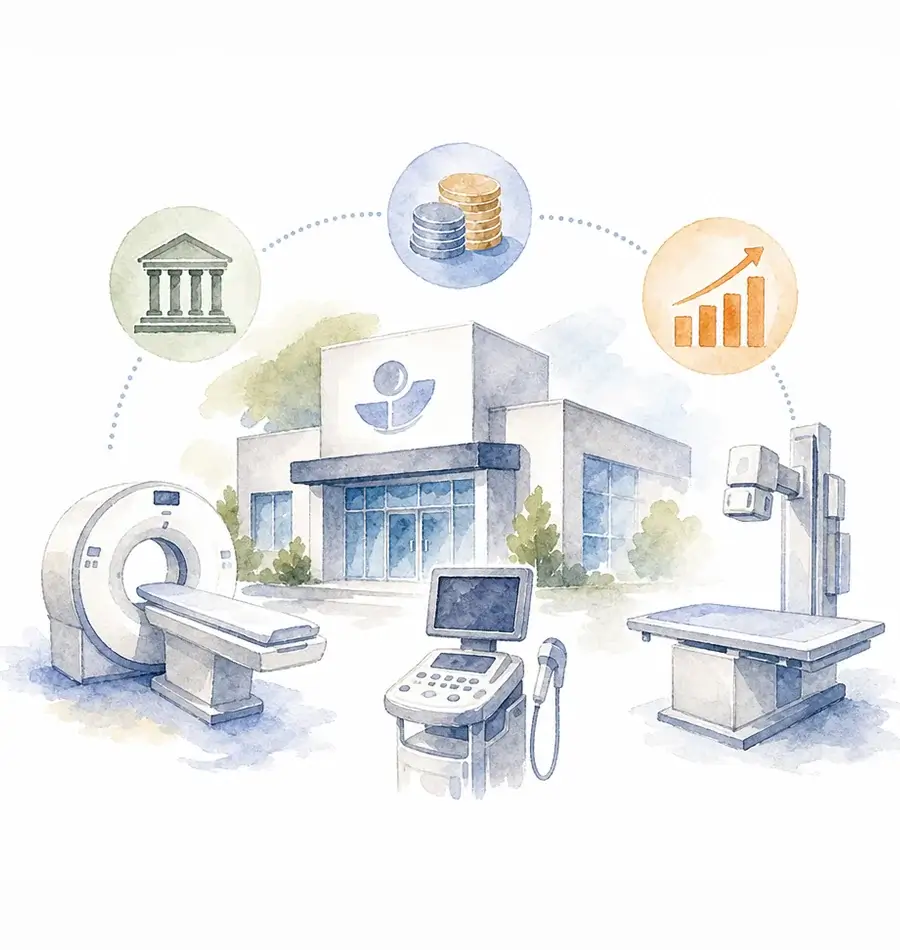
Last year, a pair of seasoned doctors came to my office looking for advice on a very specific financing scenario. One was a radiologist and the other an orthopedic surgeon; the two were partnering up to open an additional imaging center that would serve three nearby outpatient clinics.
Within the general medical practice world, imaging centers are quite capital-intensive up front because of their unique reliance on very expensive and advanced equipment. As medical professionals with many years of experience in their industry, the client duo didn't need advice on how to run the business. They needed to know how they could realistically get the money for what would be a seven-figure build-out without draining their existing business assets.
At Clarify Capital, we were able to save them the pain of shopping bank by bank for loan offers and options. In just a few weeks, my team and I helped them understand their financing options, connect with several lenders, and ultimately receive multiple loans to start constructing the imaging center.
My team and I have helped hundreds of medical professionals fund business growth, so I'm really familiar with the health care space and the financing options that best fit it. I'll walk through the most commonly used financing options for imaging centers, what the highest costs for these facilities typically are, and how you may want to use each financing option to match those expenses.
I'll also show you what it looks like to apply for financing through Clarify when you're ready.
| Best for | Typical amount | Typical term | Rate / estimated cost | Speed to funding | |
|---|---|---|---|---|---|
| Heavy Equipment Financing | Buying big-ticket MRI and CT systems | Up to 100% of equipment cost | 12 to 72 months | APR from 7% and up; equipment = collateral | As fast as 1 to 5 days |
| Equipment financing | Buying specific medical equipment/machinery, i.e. ultrasound, X-ray, PACS/RIS, and general clinical or IT equipment | Up to 100% of equipment cost | 12 to 72 months | APR from 6% and up; equipment = collateral | As fast as 1 to 5 days |
| SBA 7(a) loan | Buying the building, real estate, or the largest equipment when you can wait for the lowest rate | Up to $5 million | Up to 10 years (working capital, equipment) or 25 years (real estate) | About 9.75% to 13.25% APR (SBA caps the rate at the prime rate plus 3.0% to 6.5%; prime is 6.75% as of June 2026) | As quickly as two weeks (typically 30 to 90 days) |
| Term loan (short or long-term) | One-time, defined costs like a build-out phase or radiofrequency (RF) shielding | $10K to $5M | Can do short-term loans or long-term loans | APR from 6% | As fast as same day |
| Business line of credit | Covering staff hiring/payroll and working capital gaps that incur before patient volume and collections build (a draw, repay, repeat system) | $5K to $5M revolving | 6 to 36 months; payments weekly or monthly | APR starting at 6%; only pay interest on what you draw | As fast as same day once approved |
| Invoice factoring (aka medical receivables factoring) | Turning eligible unpaid health care receivables into cash once you're billing | An advance of 75% to 100% of invoice value | Tied to when invoiced customer pays, typically 30, 60, or 90 days | Uses discount fee per invoice (no fixed APR); from 0.5% to 5% per invoice per month | Usually 1 to 2 weeks |
The Four Biggest Expenses for Imaging Centers
To understand which financing options and loans are going to be best for your imaging center, you first have to know what parts of the business require the most investment. These are the four areas where I see the most capital need from doctors who are opening or acquiring an imaging center, along with the financing options that I think are best suited to cover each of them.
1. Imaging Equipment
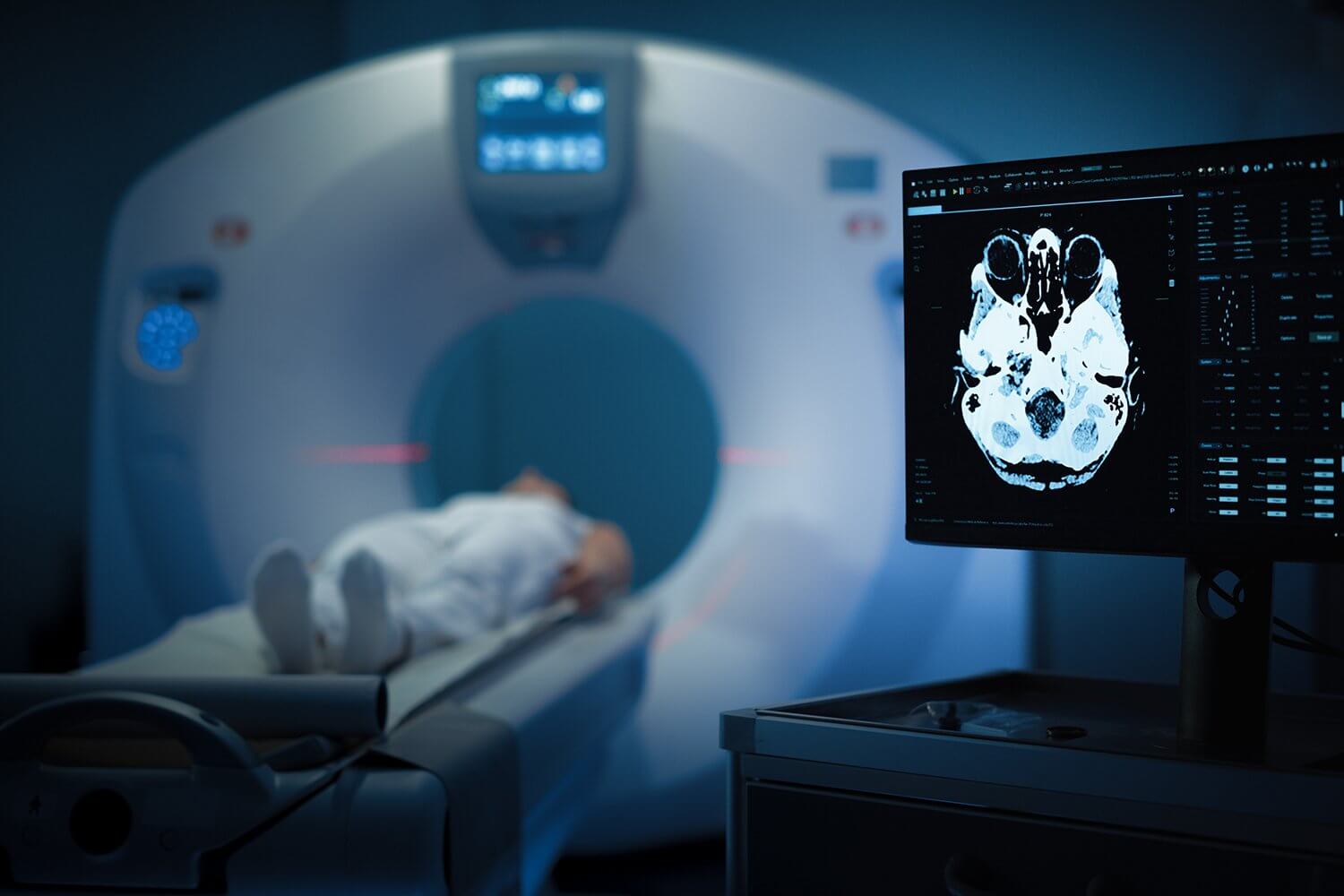
Equipment is the single biggest cost for an imaging center. You'll usually need at least one of each of these machines, if not more, to offer basic imaging services:
MRI scanner ($900,000 for the system alone, and well over $1 million after installation)
CT scanner ($90,000 to $900,000)
Digital X-ray system ($45,000 to $200,000)
Ultrasound machine ($20,000 to $200,000 new)
Mammography units for breast cancer screening and DEXA scanners for bone density tests are also common machinery at imaging centers.
My financing recommendation: Equipment financing for ultrasound and X-ray machines; heavy equipment financing for the MRI and CT machines
Equipment financing is a type of small business loan designed specifically for buying all types of equipment, machinery, or vehicles. You get it as a lump sum, then pay it each month over a fixed term. There's usually no down payment, and qualifying is also fairly accessible because the equipment itself acts as collateral.
Heavy equipment financing is the same thing as equipment financing, just with a more specific use for larger and more costly equipment.
2. Facility Build-Out and Radiofrequency Shielding
In addition to the purchase or rent cost of your real estate, consider that you'll need to convert your space adequately into a medical facility if it isn't one already. That requires a waiting area, reception, exam/machine rooms, a lab, and more. An interior build-out for a typical medical office is about $150 to $300 per square foot. That means, for example, a 3,000-square-foot space would run you anywhere from $450,000 to $900,000.
On top of those things, which are typical for any medical practice, your MRI suite is your big-ticket build-out cost. The radiofrequency (RF) shielding, magnetic shielding, and structural work are the main reason siting and installation run $50,000 to $80,000 just for a standard 1.5T MRI setup and push a $900,000 machine to a $1 million-to-$2 million total project cost.
My financing recommendation: An SBA 7(a) loan if you're buying the space; a term loan for the build-out phase
SBA 7(a) loan is a flexible and partially government-guaranteed loan. They can go up to as much as $5 million and typically require you to put about 10% down. They're known for their great rates and long repayment terms, and are typically quite accessible in terms of qualifying.
A term loan is a loan that's given as a lump sum of money to be paid back over a specific repayment period (whether it's a short-term or long-term loan will determine this) at a set interest rate. Short-term loans are often more costly due to shorter terms and faster access, while long-term loans tend to offer lower interest rates but require a greater commitment.
3. Technology and Software
Your imaging center is going to need at least two types of software:
Picture archiving and communication systems (PACS) to store and share medical images from the machines (these have a five-year total cost of ownership of around $41,000)
Radiology information systems (RIS) to manage scheduling, reporting, billing, and other day-to-day operations
To use these systems, don't forget that you'll need:
Computers
Wi-Fi system
Phone system
My financing recommendation: For the hardware, I recommend equipment financing or a term loan. I'd suggest rolling software subscription costs into a business line of credit.
A business line of credit (LOC) is designed for borrowing cash. It gives you access to a pool of funds which you can draw from as needed, pay back, and then re-draw from continuously. You only pay interest on that borrowed portion, not on the unused credit.
4. Technologist Staffing
In the early months of opening your imaging center, your scan volume and collections might not be where you want them. It can take a while to get business ramped up, but the staff have to be there and on payroll from day one. At an imaging center, you'll need specialized technologists who are certified. MRI technologists, for example, earn a median of $88,180 while radiologic technologists earn about $77,660.
My financing recommendation: A business line of credit
A note on early cash gaps
A new imaging center can't bill Medicare for advanced imaging until the facility is accredited. Under the federal MIPPA mandate, suppliers of the technical component of advanced diagnostic imaging (MRI, CT, nuclear medicine, and PET) must be accredited by the American College of Radiology (ACR), the Intersocietal Accreditation Commission, or the Joint Commission to receive Medicare reimbursement. Build this accreditation timeline (and the working capital to carry payroll and loan payments until you're accredited and billing) into your plan.
Compare the Cost: New vs. Refurbished Imaging Equipment
No matter whether you choose to go with new equipment, refurbished equipment, or a mix of both for your imaging center, equipment financing and heavy equipment financing will work as strong financing options. In any case, the machines serve as collateral, so the choice is more about the total cost of ownership (machinery plus their service contracts, warranties, and life expectancy) than whether it's financeable.
| New | Refurbished | Typical savings | Watch out for | |
|---|---|---|---|---|
| MRI (1.5T) | $900,000+ | $150,000 to $500,000 | 44% to 83% | Annual Original Equipment Manufacturer (OEM) service contracts, which run about $42,000 to $134,000 a year, regardless of condition |
| CT Scanner | $90,000 to $900,000 by slice count | $50,000 to $210,000 depending on refurbishment | 30% to 70% | The refurbisher's warranty and remaining tube life (may need to replace) |
| Ultrasound | up to $200,000+ | $80,000 to $120,000 | 40% to 60% | Software licensing updates, unavailable features on older models |
Why Imaging Center Operators Work With Clarify
Clarify Capital's 5.0 Trustpilot rating is the highest in the industry, and we've placed more than $1 billion across 50,000+ small to midsize businesses.
Clarify matches you across 75+ vetted lenders and can get you a written offer in as quickly as 24 hours.
Every applicant works with a U.S.-based lending advisor (not a chatbot or a call center) from application through financing.
Minimum Qualifications

$10,000 in monthly revenue
Your business must earn at least $10K per month in a business bank account.

500+ credit score
You can get approved with any credit score. But the better your credit rating, the better interest rates lenders offer. Your FICO score should be above 500.

Minimum six months in business
Your company should be operational for a minimum of six months. This shows business lenders that your company is sustainable and won't go out of business.

Have a business bank account
Your Clarify advisor will need three or four months of your most recent bank statements to verify income. This is just to see you're actually making $10K+ month in revenue.
How To Apply for Imaging Center Financing With Clarify Capital

Step 1: Apply online
It takes about two minutes. You’ll need your medical practice's legal name, EIN, time in business, monthly revenue (or projected revenue), requested loan amount, owner contact information, and a credit authorization. Apply here.

Step 2: Connect with a lending advisor
A U.S.-based Clarify Capital lending advisor reviews the application, runs a soft credit pull (no impact to your score), and requests 3 to 4 months of recent business bank statements. For acquisition financing, expect a deeper request: trailing 12 months profit and loss statement (P&L), balance sheet, tax returns, and the target practice's financials.

Step 3: Get matched and funded
Clarify works with 75+ vetted lenders and matches your profile to the lender most likely to approve you at the best terms. Approved files often get a written offer the same day. You can sign electronically, complete the ACH setup, and the funds will hit the practice's business bank account as soon as that day.
Turn Your Equipment Into Financing
Unlike many other types of medical practices or businesses in general, an imaging center's most expensive asset (machinery) can also serve as collateral. That makes it easier to finance such large purchases without having to pledge other things as a guarantee. My team and I at Clarify can help you explore the best options, including heavy equipment financing and equipment financing, for your imaging center. Get started and apply today.
Frequently Asked Questions
Here are answers to questions I often get about financing for imaging centers.
How Much Does It Cost To Open an Imaging Center?
For most imaging centers, it will be a seven-figure build. That's largely because of the pricey equipment needed to operate an imaging center (for example, $1 million+ for an MRI machine and install alone).
Is an Imaging Center a Good Investment?
It depends on referral volume, payment type mix (insurance vs cash), and how efficiently you run the schedule. The big appeal in terms of financing options is that the biggest cost (the equipment) is a hard asset that secures its own loan, which makes the build more financeable than a business whose value is mostly goodwill.
Should You Buy New or Refurbished Imaging Equipment?
Going with refurbished equipment can cut costs significantly, sometimes by as much as 70%. But you have to weigh those savings against the total cost, which includes annual servicing fees, how much life a machine realistically has left in it, and warranties.
Do You Need ACR Accreditation To Bill Insurance?
For advanced imaging like MRIs, CT scans, PET scans, and nuclear medicine, yes. Federal regulations require your imaging center to be accredited by the ACR, the Intersocietal Accreditation Commission, or the Joint Commission to receive Medicare reimbursement. Plan for that in your build-out timeline.
Does Imaging Equipment Financing Require Collateral?
If using equipment financing to buy equipment, the equipment acts as the collateral. In most cases, no other collateral is needed for the loan.
Can I Get Financing to Buy or Expand an Existing Imaging Center?
Yes. Practice acquisition and expansion are classic SBA 7(a) and equipment financing use cases. Clarify Capital specifically helps finance businesses that have been operating for six months or more, so buying or expanding an established business fits while starting from zero generally won't.

Bryan Gerson
Co-founder, Clarify
Bryan has personally arranged over $900 million in funding for businesses across trucking, restaurants, retail, construction, and healthcare. Since graduating from the University of Arizona in 2011, Bryan has spent his entire career in alternative finance, helping business owners secure capital when traditional banks turn them away. He specializes in bad credit funding, no doc lending, invoice factoring, and working capital solutions. More about the Clarify team →
Related Posts