


 Reviewed by
Most business owners I work with start their funding search the same way. They open Google and look up small business grants, hoping to find money they don't have to pay back.
Then reality hits. The grant they want has a 3% approval rate. The application takes weeks to write. The money can only be used for one specific purpose. And even if their business wins the award, the funds may not arrive for six months.
The reality of small business grants is that, yes, they exist, but very few small businesses qualify. Some grants are worth chasing. For most, though, funding a growing business comes down to getting a loan. Knowing which options to use is the key to a smart funding plan.
Below, I'll show you how small business grants and loans actually stack up, when each one is the right call, and how to successfully apply for either type of funding.
Grants vs. Loans: What's the Real Difference?
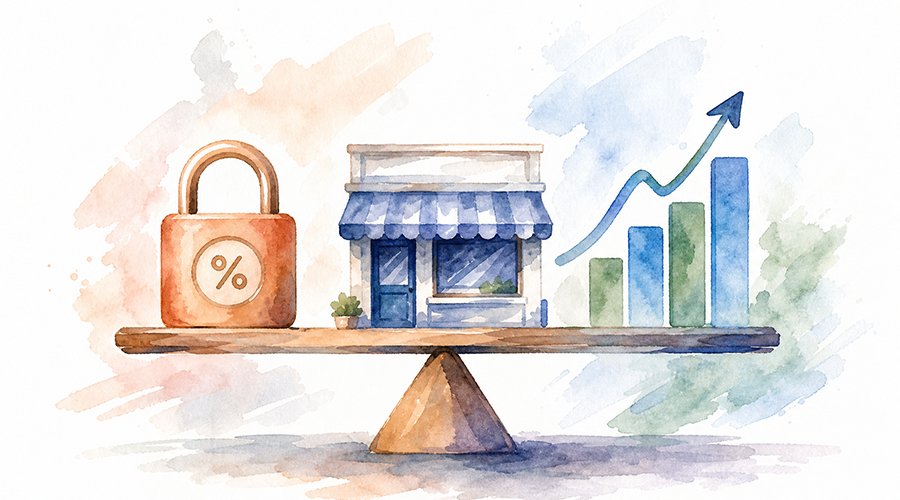
Grants are money you don't pay back. Loans are money you pay back with interest. The details are where most owners trip up.
| Grants | Loans | |
|---|---|---|
| Where the money comes from | Governments, nonprofits, and corporations | Banks, online lenders, and brokers |
| What you pay back | Nothing; the money is free | Principal plus interest on a set schedule |
| Strings attached | Restricted to a specific purpose (research, equipment, hiring veterans, opening in a target ZIP code) | You decide how to use the money |
| Competition | You compete against thousands of other applicants | Approval odds are far better than any grant |
| Approval rate | 10% to 30% | Often 50% or higher with good credit |
| Time to funding | Depends on type of grant; can take several months | Most loans are funded in days, not months |
For most business owners, loans do the heavy lifting. Grants, when you can get them, are a bonus.
Why Grants Alone Usually Aren't Enough
Most federal grant programs receive thousands of applications for a small number of awards. Take the Small Business Innovation Research (SBIR) program, which helps fund research and development (R&D) by small businesses working on innovations that meet federal R&D needs and have commercialization potential. If you run a restaurant or a trucking company, SBIR isn't for you.
State and local grant programs usually come with geographic limits or a specific outcome they're trying to fund (job creation in a target zone, for example). If your business fits one of these requirements, you might qualify.
Grants for women-owned, minority-owned, and veteran-owned businesses can be easier to access than traditional grants, but the competition is still steep.
Most for-profit businesses don't qualify for the grants they think they do. The ones that do qualify are competing against hundreds or thousands of other applicants.
That's not a reason to skip grants entirely; it's just why you may want to only apply for the ones you actually qualify for. Build your real funding plan around loans.
Types of Small Business Grants Worth Exploring
If you're going to chase grants, focus on the ones that match your business. Here are the main categories.
Federal grants
Programs like Small Business Innovation Research (SBIR), Small Business Technology Transfer (STTR), Small Business Administration (SBA) initiatives, and the United States Department of Agriculture (USDA) Rural Business grants. Best for research-focused, tech, or rural businesses.
State and local grants
Economic development initiatives, Community Development Financial Institution (CDFI) programs, and Small Business Development Center (SBDC) resources. Best when your business creates local jobs or fits a target area.
Demographic-specific grants
Programs for women-owned, minority-owned, and veteran-owned businesses. Best when your ownership qualifies you for a dedicated funding stream.
Nonprofit and private grants
Corporate grant programs (FedEx, Comcast RISE, Verizon Small Business) and foundation grants. Best for owners with a clear story and a specific use case.
Start your search at Grants.gov for federal programs. Your local SBDC office is the best place to find state and regional opportunities. Most SBDC services are free.
Types of Small Business Loans
When grants don't come through (or don't cover what you need), loans pick up the slack. Here are the main options most business owners use:
SBA loans. SBA loans are partially backed by the Small Business Administration, which lowers risk for the lender and unlocks better rates for you. They're great if you can wait. Funding usually takes 30 to 90 days, and rates start around 9.75% APR.
Term loans. A term loan is a lump sum paid back over a set period with regular payments. Best for one-time expenses like expansion, renovations, or buying inventory in bulk. Rates start at 6% APR, and funding can happen as fast as same-day.
Business lines of credit. A business line of credit gives you a revolving limit you can draw from when you need it. You only pay interest on what you use. Best for managing cash flow, covering seasonal dips, or handling unexpected expenses. Rates start at 6% APR.
Equipment financing. Equipment financing is a loan tied directly to the equipment you're buying. The equipment itself acts as collateral. Best for trucks, machinery, kitchen gear, and tech upgrades. You can finance up to 100% of the equipment's value.
Merchant cash advances (MCAs). A merchant cash advance is an advance against future sales. You pay it back as a percentage of daily revenue. Factor rates run 1.08 to 1.45. Best for owners who get turned down by traditional lenders but have steady sales.
Invoice factoring. Invoice factoring advances up to 100% of an unpaid invoice. The factoring company collects the payment from your customer. Best for business-to-business (B2B) companies with long payment cycles.
SBA Microloans. SBA Microloans range up to $50,000 and are offered by nonprofit lenders. They're often used by smaller businesses that need a smaller amount of capital, and they're a separate program from SBA 7(a) loans.
When Grants Aren't Enough: How Loans Fill the Gap
After 15+ years helping owners get funded, I've seen the same scenarios over and over. Grants almost never cover the full picture. Here are the most common situations where loans step in to fill the gap. This is why most of the owners I work with end up using both: grants when they qualify, and loans for everything else.
You applied for a grant and won't hear back for six months
Each grant cycle runs on its own schedule. There's little chance a grant will help you when you need funding by the end of the current quarter. A loan can fund as fast as same-day.
You received a partial grant
Many grants only cover a portion of a project's total cost (for example, 50% of equipment costs). You'll still need a loan to cover the rest.
Your business doesn't qualify for any grants
Most for-profit businesses don't fit the eligibility criteria for available grants. A loan doesn't care if your industry is "grant-eligible," so you can get a loan regardless of whether you qualify for a grant.
You need recurring access to capital
Grants are usually one-time awards, so they're not built for ongoing funding needs. If you need flexible, recurring access to capital, a business line of credit is the better fit.
The grant restricts how you can use the money
You won a research grant, but now you actually need working capital for payroll. You can't redirect grant funds, so a loan gives you the flexibility that a grant doesn't.
How To Apply for a Grant
Grant applications take time and effort. Following these steps will improve your chances of approval.

Find programs you actually qualify for
Start your search for federal grants at Grants.gov, and use your local SBDC for state and regional programs. Skip programs where your business clearly doesn't fit.

Read the eligibility criteria carefully
Most rejections happen because the applicant didn't meet a basic requirement. Check industry codes, revenue thresholds, ownership requirements, and geographic limits before you start writing.

Write a strong proposal
Grant reviewers read hundreds of applications. Be specific about what you'll do with the money, who benefits, and how you'll measure success. Vague applications lose.

Plan ahead
Most grants take several months from application to funding. Plan your cash needs accordingly. Don't count on grant money for anything time-sensitive.
A few quick tips from my experience:
Apply for multiple grants at once. The math is the math. Applying to one grant is a long shot, but applying to 10 gives you real odds.
Use your SBDC. Small Business Development Centers offer free help writing applications. Most owners don't know this resource exists, and most owners also don't win grants.
Don't pay for "grant matching" services. Most are scams. The legitimate sources of information (Grants.gov, your state economic development site, your local SBDC) are all free.
How To Apply for a Loan
Loan applications are usually faster and easier than grant applications, especially with online lenders. Here's the basic flow.

Check your credit
Pull your personal and business credit reports before you apply. You want to know your numbers before a lender does.

Gather your documents
Most lenders ask for the same basic stack: two years of tax returns, three months of recent business bank statements, ID, business formation documents, and a clear use of funds.

Compare lenders
Don't take the first offer. Banks, online lenders, and brokers all price differently. Compare rates, terms, and what each one needs from you.

Apply and wait for an offer
Online lenders and brokers often respond in hours. Banks and SBA lenders take weeks. Pick your timeline based on how fast you need the money.
The speed advantage of loans is real. SBA loans can take 30 to 90 days. Bank loans take a few weeks. At Clarify Capital, qualified borrowers can get funded as fast as the same day. The application takes about two minutes, and checking your options will not affect your credit score.
Can You Combine Grants and Loans?
Yes. In fact, that's how most effective funding plans are built.
A grant covers a specific, restricted purpose. Maybe you won an equipment grant. Maybe you got a research and development grant. Maybe you landed a workforce training grant. The grant pays for that one thing.
A loan covers everything the grant doesn't. This can include cash flow, payroll, advertising, expansion, supplies, and lease payments. The flexibility of a loan fills the gaps a grant can't touch.
I've worked with owners who use grants for big one-time investments (like new equipment or technology) and a business line of credit for day-to-day cash flow. Others apply for SBA Microloans alongside state-funded grant programs. There's no rule that says you have to pick one.
A few things to keep in mind when combining the two.
Review your grant terms. Some grants prohibit borrowing against items purchased with grant funds. Others limit how grant money can interact with other capital. Most don't, but always check.
Time your funding. Don't sign loan documents until the grant is confirmed. If the grant doesn't come through, you may need to restructure your funding plan.
Track everything. Grants usually require detailed reporting on how funds were used. Keep grant-funded purchases separate from loan-funded purchases in your books.
Minimum Qualifications

$10,000 in monthly revenue
Your business must earn at least $10K per month in a business bank account.

500+ credit score
You can get approved with any credit score. But the better your credit rating, the better interest rates lenders offer. Your FICO score should be above 500.

Minimum six months in business
Your company should be operational for a minimum of six months. This shows business lenders that your company is sustainable and won't go out of business.

Have a business bank account
Your Clarify advisor will need three or four months of your most recent bank statements to verify income. This is just to see you're actually making $10K+ month in revenue.
Get Funded With Clarify Capital

Grant hunting is a long game with low odds. If you need capital in the next 30 days, a loan is the realistic answer.
I've spent more than 15 years helping owners across trucking, restaurants, retail, healthcare, and dozens of other industries get funded. The owners who do best are the ones who treat grants as a bonus and loans as the actual plan.
Ready to see what you qualify for? Apply today and get a clear picture of your options. The application takes about two minutes, and checking your options will not affect your credit score.
Frequently Asked Questions About Grants and Loans
Below you'll find the most common questions that I get asked about grants and loans.
What Is the $10,000 SBA Grant?
The $10,000 SBA grant most people are asking about is the Targeted EIDL Advance, which was part of the federal pandemic response. The program has stopped accepting new applicants. The SBA does still provide grants to various businesses and nonprofits through partner organizations. For current options, check sba.gov, Grants.gov, or contact your local Small Business Development Center (SBDC).
Can an LLC Get Grant Funding?
Yes. Most grant programs accept applications from LLCs, corporations, and sole proprietors as long as the business meets the program's eligibility criteria. Whether you file as a corporation, LLC, partnership, or sole proprietor matters less than how well your project matches the goals of the organization issuing the grant.
How Do You Get Free Money To Start a Small Business?
The honest answer? Free money to start a business is hard to find. Most grants are designed for existing businesses that generate revenue. There are some startup-focused grants (especially in tech, research, and minority-owned business categories), but the number of awards each year is small. Realistic options for starting a business are personal savings, friends and family, and a business line of credit. Once you have six months of business activity, you can also look at an SBA Microloan. Clarify Capital does not fund startups; we work with businesses that have been operating for at least six months.
Do You Have To Pay Back a Small Business Grant?
No, grants don't require repayment. The trade-off is that grants come with restrictions on how the funds can be used, and recipients must report how they spent the funds. If you don't comply with the grant terms, you may have to return the money. So while you don't make payments in the traditional sense, you do have to use the funds the way the grantor intended.
Is It Easier To Get a Grant or a Loan?
A loan is significantly easier to get than a grant. Grant approval rates often range from 10% to 30%. Loan approval rates can exceed 50%, depending on the lender, your credit, and your ability to show steady revenue. At Clarify Capital, the minimum requirements are a 550 credit score, $10,000 in monthly revenue, and at least six months in business.
Should I Get a Grant or a Loan for My Business?
It depends on your timeline, your business type, and what you need the money for. If you have time (at least six months) and your business fits a grant program, applying for a grant can be worthwhile. If you need money now, want flexibility in how you use it, or don't qualify for any grants, a loan is the better option. Many owners apply for both at the same time and use whichever comes through first.
What's the Fastest Way To Fund a Small Business?
Online lenders and brokers are the fastest path to funding. Term loans and business lines of credit can be funded as quickly as the same day for qualified borrowers. SBA loans can take 30 to 90 days. Bank loans can take a few weeks. Grants take several months at a minimum.
Will Checking My Loan Options Affect My Credit Score?
Checking your options will not affect your credit score. When you check through Clarify Capital, we run a soft pull to show you what you may qualify for. A hard pull only happens later if you accept an offer from a specific lender.
How Does Clarify Capital Safeguard My Personal and Financial Data?
Clarify Capital follows SOC 2 security principles to protect your financial and personal data. That covers how we handle and store your sensitive information through the application process. Your bank statements and tax returns are handled with bank-level encryption.

Michael Baynes
Co-founder, Clarify
Michael has over 15 years of experience in the business finance industry working directly with entrepreneurs. He co-founded Clarify Capital with the mission to cut through the noise in the finance industry by providing fast funding and clear answers. He holds dual degrees in Accounting and Finance from the Kelley School of Business at Indiana University. More about the Clarify team →
Related Posts


![Business Action Plan Template for 2025 Growth [Free]](/assets/blog/business-action-plan-template-2025/business-action-plan-template-2025-small-cda22747f8266c0ffbaec17daaaae20a84835bff0f9e94315070bb25a2d95f6b.jpg)