

 Reviewed by
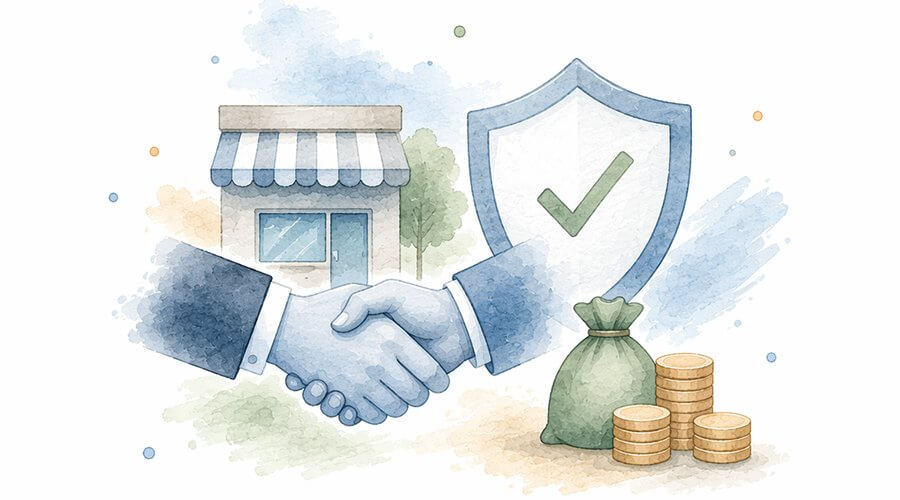
A franchise gives you a known trade name, a proven model, and a set of customers who are already familiar with your brand.
If you're considering franchise ownership in 2026, expect to pay for the buildout, equipment, and first few months of payroll, on top of the franchise fees that come with opening a new location. Franchise loans are there to help you cover those costs.
I've spent more than 15 years arranging financing for small-to-midsize business (SMB) owners, and franchise loans are some of the easiest to get approved.
Here's what to compare if you're thinking of opening a franchise.
| Financing type | Typical rate | Time to financing | Down payment | Best for |
|---|---|---|---|---|
| SBA 7(a) loan | Starting at 6.75% | As quickly as two weeks (typically 30 to 90 days) | None required with Clarify Capital | Buying or opening a franchise with a low monthly payment |
| SBA 504 loan | Starting at 6.19% | 30 to 90 days | 10%, or 15% to 20% for a brand-new location | Financing real estate or heavy equipment |
| Business term loan | Starting at 6% | As fast as same day | None required | A lump sum for the franchise fee or buildout, fast |
| Business line of credit | Starting at 6% | As fast as same day | None required | Uneven costs during ramp-up |
| Equipment financing | Starting at 6% | 1 to 5 days | None | Equipment, vehicles, and point-of-sale (POS) systems |
| HELOC | As low as prime | As fast as one week | None | Owners with home equity adding or expanding a location |
The Best Financing Options for Franchisees
There isn't a single franchise loan. Most franchise operators combine a few different types of financing when they're opening a franchise. Below, I've covered the most common ones.
SBA 7(a) and 504 Loans
An SBA loan is a common way to buy a franchise. The U.S. Small Business Administration (SBA) guarantees a portion of the loan, which lowers the lender's risk. This lets you get better interest rates and longer repayment terms on the loan, compared to a conventional loan.
SBA 7(a) lets you borrow up to $5 million with rates starting at 6.75%. You need at least two years in business and a personal credit score of 640. No down payment is required with Clarify Capital.
The 504 program is built for fixed assets like equipment and real estate. The maximum loan amount for a 504 loan is $5.5 million.
Short-Term Business Loan
A short-term business loan gives you a lump sum of cash that you repay on a fixed schedule. You can borrow up to $5 million with rates starting at 6% through Clarify Capital. Receive financing as fast as same day.
Business Lines of Credit
A business line of credit is a revolving credit line that you draw, repay, and then draw again. You only pay interest on what you use. The line revolves over 6 to 36 months.
Equipment Financing
Equipment financing covers any major equipment purchase that you need to make for your business (think ovens, refrigerators, and POS systems). With Clarify Capital, you can finance up to 100% of the equipment value with rates starting at 6%. Financing usually lands in one to five days. The equipment serves as collateral, so your personal assets stay out of the deal.
Home Equity Line of Credit (HELOC)
If you own a home, a HELOC can be a way to tap into its equity for your business. Interest rates go as low as prime, which is sitting at 6.75% right now. The draw period runs up to five years, with repayment terms up to 30 years.
HELOCs pair well with SBA loans. I've seen franchise operators cover the down payment for an SBA loan with a HELOC, or use it to cover day-to-day expenses.
The downside is that your home secures the line. If the business isn't successful, the risk extends to your home.
Merchant Cash Advances and Invoice Factoring
Merchant cash advances (MCAs) and invoice factoring are only options if your location is already open and bringing in business. They're not ways into franchise ownership. Use both to cover a cash flow gap in a location that's already up and running.
Bank Loans, Franchisor Financing, and ROBS
These are three other paths that come up often, though none of them run through Clarify Capital. A traditional bank loan gets you a low rate. Average business loan rates at banks range from 6.37% to 10.98%. To unlock the lowest rates, banks ask for multiple years in business, collateral, and a down payment.
Franchisor financing is another option I see franchise operators reach for. Some brands connect you to third-party lenders that they already work with. They may also defer a portion of the franchise fee or finance equipment directly.
The last option I'll mention is rollovers as business startups (ROBS). ROBS lets you move retirement savings into a C corporation to finance a franchise investment without triggering an early withdrawal penalty. The risk here is that if the business goes under, so does your retirement savings.
Why SBA Loans Work Well for Franchises
SBA 7(a) loans are strong options for franchise financing. Here's what I tell my clients:
Rates are capped. SBA limits the interest rate a lender can charge over the prime rate.
Repayment terms are long. Ten years is standard, with the length extending to 25 years for real estate.
Down payments are low. No down payment is required for an SBA loan through Clarify Capital's network of lenders.
The trade-off with an SBA loan is that it takes a long time to finance. I tell my clients that SBA financing can land as soon as two weeks, but typically takes anywhere from 30 to 90 days. If timing isn't on your side, SBA loans may not be the best option.
How To Get a Franchise Loan
Franchise operators typically follow these steps when applying for a franchise loan.
Step 1: Pick the brand
Check the minimums that franchisors publish for liquid capital, net worth, and franchise fees.
Step 2: Check the SBA Franchise Directory
If you're interested in an SBA loan, checking this list will let you know if you're able to finance your franchise with one.
Step 3: Read the Franchise Disclosure Document (FDD)
A required disclosure that lays out your estimated initial investment.
Step 4: Gather documents
Organize your personal tax returns, financial statements, credit history, a business plan with financial projections, and the FDD.
Step 5: Apply
Banks and SBA lenders may take longer to review and approve your application. Online lenders can sometimes approve you the same day.
Step 6: Close and fund
Sign the franchise agreement and the loan documents.
Minimum Qualifications

$10,000 in monthly revenue
Your business must earn at least $10K per month in a business bank account.

500+ credit score
You can get approved with any credit score. But the better your credit rating, the better interest rates lenders offer. Your FICO score should be above 500.

Minimum six months in business
Your company should be operational for a minimum of six months. This shows business lenders that your company is sustainable and won't go out of business.

Have a business bank account
Your Clarify advisor will need three or four months of your most recent bank statements to verify income. This is just to see you're actually making $10K+ month in revenue.
What Lenders Review Before They Approve You
The application process changes depending on where you're applying, but most lenders and franchisors review the same things. Here's what I tell my clients to keep in mind.
| What lenders review | What franchisors review |
|---|---|
| Personal credit score If you've never owned a business, lenders rely on your personal credit score to determine creditworthiness. | Liquid capital Franchisors want to see that you have enough cash to pay for day-to-day costs. |
| Time in business Lenders weigh whether you're a first-time buyer or if you own multiple locations. | Net worth This is a review of everything that you own minus your debt. |
| Down payment For SBA loans, expect to put in at least 10% of the total project costs. | Brand approval Some franchisors require you to sit through an interview or pass a background check. |
| Collateral and the personal guarantee If you own 20% or more of a business, you'll have to sign a personal guarantee for an SBA loan. |
Franchise Fees and What Else To Budget For
You're paying more than just a franchise fee. Here are other fees to keep an eye out for.
| Cost | What it covers |
|---|---|
| Franchise fee | A fee you pay the brand to open, and it's usually due at signing |
| Total initial investment | The cost of building out your location and the equipment you need to run it day-to-day |
| Working capital | The cost of rent, payroll, and inventory before the location becomes cash flow positive |
| Down payment | The amount of cash you put into the deal |
| SBA guarantee fee | Charged on the guaranteed portion of an SBA loan |
| Origination fee | Charged by many lenders to set up the loan |
| Royalties and advertising | Fees paid to the franchisor that include advertising |
What Top Franchise Brands Require To Get Started
Let's take a look at what it actually costs to open a top franchise. The franchise fee is just a small part of the entire picture.
| Brand | Franchise fee | Total initial investment | Net Worth |
|---|---|---|---|
 | $40,000 | $443,000 to $1,832,500 | $500,000 |
 | $15,000 | $199,135 to $536,745 | $150,000 net worth plus $100,000 in liquid assets |
 | $35,000 for first location | $275,500 to $770,500 | $1 million+ |
How to Read a Franchise Disclosure Document
The franchise disclosure agreement (FDD) is a disclosure that every franchisor gives before you commit. Every FDD covers the same 23 items in the same order.
Here are the items that matter most:
Item 7. This section covers the full cost to open.
Item 19. Here you'll find what existing franchise locations earn.
Item 20. This goes over the number of locations that have opened, closed, and changed ownership. It also includes the names of current and former franchise operators.
Item 3. This section covers any lawsuits involving the franchisor.
Items 5 and 6. This section covers the franchise fee and any ongoing fees. These typically include royalties, advertising fees, technology, and renewal.
Item 10. Here you'll find information about whether the franchisor finances any part of the deal itself.
Match the Financing to the Franchise
The right type of financing depends on what you're buying. Match the money to the job and consider using multiple sources of financing.
When you're ready to see what you qualify for, apply today. Clarify Capital shops your application around to our network of 75+ vetted, reputable lenders. Checking your options won't impact your credit score.
Franchise Loan FAQs
These are the most common questions I hear from franchise operators.
What Is Franchise Financing?
Franchise financing is any money that you borrow to buy or expand a franchise. It can cover the franchise fee, buildout, equipment, and the working capital you need to run the business.
What Is the Best Way To Finance a Franchise?
SBA loans are common, low-cost options for financing a franchise. They offer low rates and long repayment terms. The trade-off is that SBA loans often take a long time to close.
What Is the Monthly Payment on a $50,000 Business Loan?
It depends on the interest rate and repayment term. At 9.75% over 10 years, the payment runs about $654 per month. At 10% over five years, it's $1,062.
Can You Open a Chick-fil-A Franchise for $10,000?
The initial franchise fee to open a Chick-fil-A location is $10,000. Chick-fil-A pays for the site, the building, and the equipment. They also retain ownership of the restaurant. Most brands work the other way around, where you own the business and carry the costs of opening it.
What Is the Payment on a $1,000,000 Business Loan?
It depends on the interest rate and repayment terms. Over 10 years at roughly 9.75%, roughly $13,077 a month. Stretch that over a 25-year period, and the payment drops to about $8,911.
Can I Use an SBA Loan To Buy a Franchise?
Yes, you can use an SBA loan to buy a franchise if the brand appears in the SBA Franchise Directory. If it isn't listed, the franchisor has to submit its documents to the SBA for review first.
What Credit Score Do I Need for a Franchise Loan?
It depends on the lender and the financing option. Most SBA lenders look for a credit score of at least 640 to qualify. Higher scores get you better rates and terms.
How Does Clarify Protect My Data?
Clarify Capital follows SOC 2 security principles. Checking your options won't impact your credit score.

Michael Baynes
Co-founder, Clarify
Michael has over 15 years of experience in the business finance industry working directly with entrepreneurs. He co-founded Clarify Capital with the mission to cut through the noise in the finance industry by providing fast funding and clear answers. He holds dual degrees in Accounting and Finance from the Kelley School of Business at Indiana University. More about the Clarify team →
Related Posts

![86% of Small Business Owners Are Using AI to Find Financing in 2026 [Survey]](/assets/study/ai-lending-journey-report/ai-lending-journey-report-small-1f3feb9d64cd090acfd3bd3dfde9745acd75533acf4827d669faa0f19362d01e.jpg)