

 Reviewed by
Amazon is one of the nation's most trusted businesses, so it makes sense that many small business owners use it to expand into the e-commerce industry. The platform continues to grow, attracting more sellers and increasing opportunities for online businesses.
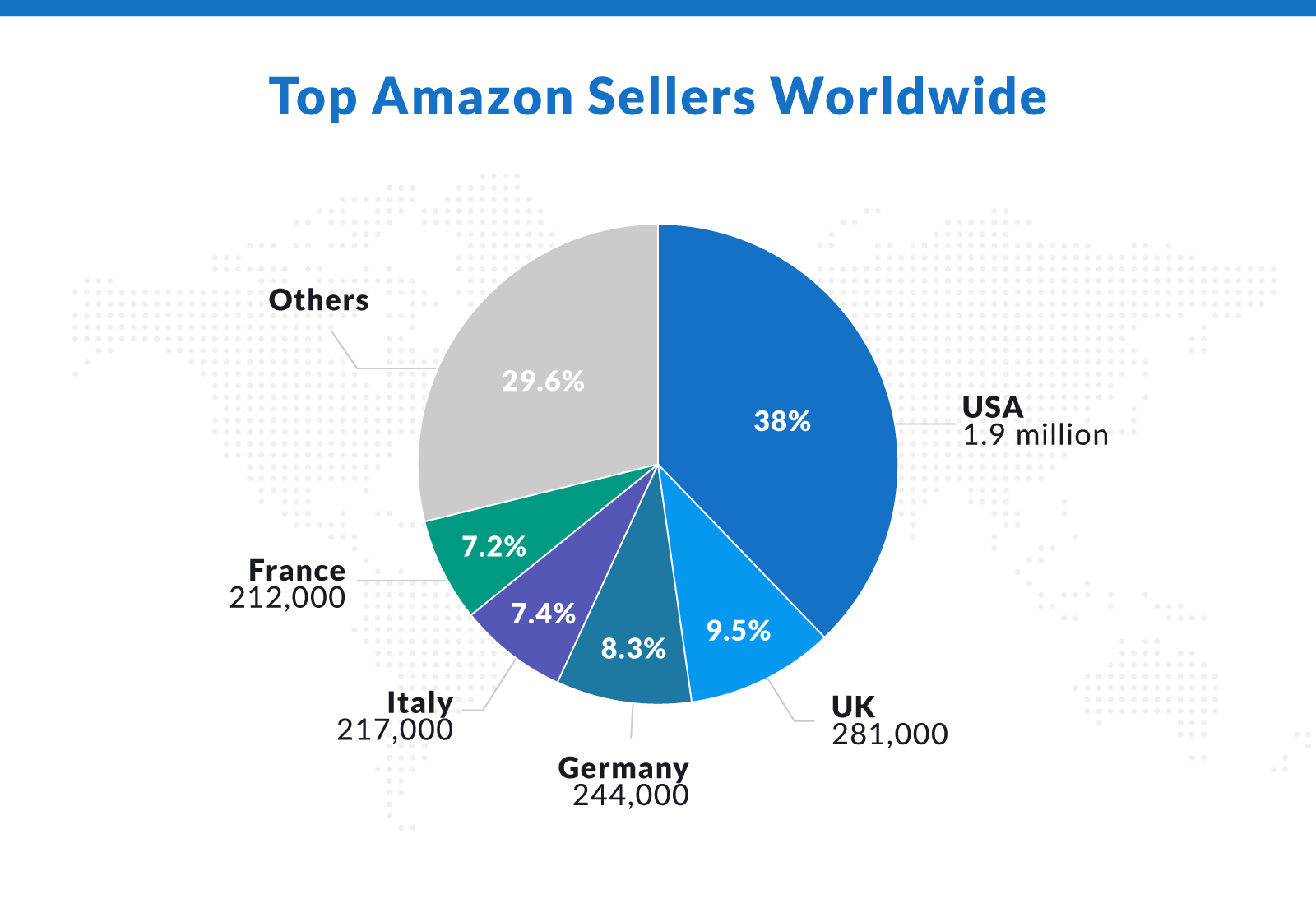
Here are the top Amazon sellers worldwide, according to the Helium 10 analytics platform, based on how many are in each nation:
USA. 1.9 million (38% of all sellers)
UK. 281,000 (9.5% of all sellers)
Germany. 244,000 (8.3% of all sellers)
Italy. 217,000 (7.4% of all sellers)
France. 212,000 (7.2% of all sellers)
However, in the competitive world of online selling, it's necessary to have enough working capital to run your Amazon business.
Many sellers look for financing solutions that give them room to grow without the long process from a traditional bank. Financing for Amazon sellers can be challenging to secure since online businesses tend to have fewer assets for collateral than brick-and-mortar businesses.
Fortunately, there are alternative funding opportunities for e-commerce business owners, even if you're new or don't have a credit history. In this guide, we'll help you identify and compare the best financing options for your Amazon business.
7 Best Loan Options for Amazon Sellers
If you sell on Amazon, here are the best financing options to consider.
1. Business Line of Credit
A business line of credit provides online retailers with quick access to cash up to a pre-approved limit. Unlike traditional loans, this type of funding allows you to easily borrow capital for almost any business purpose, including marketing your brand, restocking inventory, and more. Many Amazon sellers use lines of credit to manage delays in payout schedules or bridge cash flow gaps between Amazon sales spikes.
The best part is that interest is only charged when you use the funds. From filling cash flow shortages to covering operating expenses, lines of credit come in handy for e-commerce business owners who need short-term funding to help with cash flow management.
Since limits are based on how you handle your account funds responsibly, having a line of credit can help you build up your business credit.
Pros:
Fast approval rate, possible within 48 hours
Charges interest only on used funds
Can help improve credit score
Cons:
Various fees, such as origination and monthly maintenance
Higher interest rates than traditional loans
2. Inventory Financing
With inventory financing, you can receive funding for your Amazon business using your products as collateral. Inventory financing works like a revolving line of credit, providing the working capital you need up to 100% of your assets' value. These can be business assets like equipment and products, or personal assets like a car.
This loan type is available for both small and midsize businesses, including those with bad credit. It works well for sellers who need a funding solution tied directly to their product stock rather than a traditional bank review process.
With many online lenders, you can qualify for inventory financing as long as your company has at least six months of business operations, over $10,000 of gross revenue per month, and at least a 550 credit score.
Pros:
Flexible payment, you borrow capital as needed
Easy and quick application process
Funded up to 100% the value of assets
Cons:
Funds based on collateral value
Higher interest rates than traditional loans
3. SBA Microloan
An SBA microloan is a smaller loan funded by the U.S. Small Business Administration (SBA) and one of the only affordable small business loans that specifically target startups. Both new and existing businesses can borrow up to $50,000, with repayment terms generally between one and six years and interest rates between 6 and 9%.
Rates you pay depend on the financing program you choose, the loan amount you borrow, and the term length. With the capital you receive, you can purchase new inventory, office equipment, and most business expenses. You just can't use it to pay off debts or real estate.
As a new Amazon Seller, you can submit a financial projection, which shows the lenders what products you'll sell and how you plan to repay the loan. Lenders generally require collateral as security if you can't pay them back.
Pros:
Startups and established companies both eligible for up to $50,000 in funding
No minimum credit score requirement
Low fees and interest rates + long repayment terms
Cons:
Long application process (b/c of extensive business documentation)
Can only use for biz expenses (not paying off debt or real estate)
Must provide collateral
4. Short-Term Loan
Short-term loans are the most popular way to fund small businesses. They're a fixed amount of financing with predetermined interest rates, and you make monthly payments to repay the loan. Additionally, short-term loans don't require collateral and are easier for borrowers with bad credit to get approved.
Short-term funding is often used by entrepreneurs trying to optimize cash cycles during fast growth periods. If you need additional funds to restock inventory or cover shipping costs, short-term loans are quick working capital you can tailor to your needs.
Though term loans from banks tend to have higher fixed interest rates, online lenders have less strict eligibility requirements and can offer better deals.
Pros:
Quick access to a lump sum of capital
Tax-deductible interest payments
Fixed-term rates and no collateral needed
Cons:
Higher interest rates
Shorter, more frequent repayment schedule
5. Merchant Cash Advance
With a merchant cash advance (MCA), you'll receive an upfront lump sum payment in exchange for a percentage of your Amazon business's future sales. This alternative financing option is fast, easy money for online sellers and doesn't require collateral.
You can typically receive cash disbursement in less than 72 hours, making it ideal for businesses with predictable sales. High-volume Fulfillment by Amazon (FBA) sellers also often benefit because repayments adjust along with real-time sales activity.
To qualify, lenders look at around six months of your merchant account statements and offer up to 30% of what you're processing annually. Since your personal credit isn't a factor, you can get approved for many MCAs with a 500 credit score. Some MCA lenders also have no credit requirements, so it's easy to get approved with proof of adequate business cash flow.
Pros:
Easy and fast approval for upfront cash
Repayment based on business sales
No collateral or credit score required
Cons:
Shorter, frequent repayments
Higher interest rates than traditional loans
6. Credit Cards
The best thing about business credit cards is that almost anyone with a business can qualify for one, especially startups and businesses with bad credit. You also don't need any assets to serve as collateral.
When you can't qualify for any other type of business loans, you can use credit cards for your Amazon business needs, like restocking inventory, paying for advertising campaigns, or investing in software and tools that help manage your seller account. Many Amazon sellers also use cards to pay service providers like photographers, prep centers, and ad managers.
Since you build credit with business credit cards, using them can help you qualify for higher-limit credit cards in the future, as well as other types of business loans. Just mind the credit limit and payback cycles, which can be challenging to manage during low sales.
Pros:
Easy to obtain
Helps build credit
Familiar and convenient payment method
Cons:
High-interest rates and late fees
Short repayment term
7. Amazon Lending
Amazon also directly offers loans to Amazon sellers through its own lending program, Amazon Lending. This is an invite-only program for top-tier Amazon sellers to help grow your business. Amazon doesn't disclose these details publicly online, but instead will send you a loan offer via email or through your Amazon Seller Central portal if you qualify.
Most likely, Amazon evaluates the health of your seller account and internal metrics, such as order volume and inventory movement, before sending an offer. This is why only certain sellers receive invitations.
Many businesses report that the Amazon Lending program offers up to $750,000 with repayment terms of three months up to two years and interest rates that range from three to 18%.
There are various financing options within Amazon Lending, including term loans, interest-only loans, and merchant cash advances (MCAs). Note that you still have to apply, as an Amazon loan offer isn't guaranteed.
Pros:
Fast approval and disbursement
No credit checks or application fees
Low interest rate
Cons:
Invite-only program
Late fees and additional interest for missed payments
Typically short-term loans with high monthly payments
Note: Amazon no longer underwrites loans and now connects sellers with third-party financing through Amazon Lending, including lines of credit, term loans, and MCAs. Amazon has since added partners like Intuit QuickBooks Capital and launched a program, Amazon Community Lending, which offers short-term loans of up to $100,000 through Lendistry.
Clarify Capital helps small businesses and e-commerce sellers access larger and more flexible funding than many traditional lenders offer. By connecting borrowers with an extensive network of lenders, we can offer loans up to $5 million, often with minimal collateral, lower entry requirements, and faster approval times.
Financing for Amazon Sellers: Side-by-Side Comparison
Here, you can compare e-commerce loans at a glance. This table shows interest rates, funding speed, and key requirements for each option, so you can see which is ideal for your business.
| Financing For Amazon Sellers Comparison | |||
|---|---|---|---|
| Financing option | Interest | Funding speed | Requirements |
| Traditional bank loan | 7% -12% | Several weeks to months | Tax returns, established bank account, years of business history, and collateral |
| Business line of credit | 7% – 28% APR, depending on lender and borrower qualifications | As early as 48 hours | Business account, creditworthiness, and responsible fund management |
| Inventory financing | 6% - 36% | 1–2 weeks | At least 6 months in business, $10,000+ monthly revenue, 550+ credit score, inventory as collateral |
| SBA microloan | 8% - 13% | 4–12 weeks | Startups or existing businesses, collateral, business documentation, and financial projections |
| Short-term loan | 10% - 99% | 24–72 hours | Generally no collateral, easier approval with less-than-stellar credit |
| Merchant cash advance (MCA) | 40% - 350%, factor rates 1.1–1.5 | 24-72 hours | Six months of merchant account statements, predictable sales, and sometimes a 500+ credit score |
| Business credit cards | 20% - 30% | 24-72 hours | Business entity, personal/business credit check, no collateral |
| Amazon lending | 6% – 18% (invite-only seller financing) | Usually <1 week | Invite-only for top sellers, evaluation of seller account metrics, and repayment terms vary |
How To Get a Business Loan as an Amazon Seller
Getting funding as an Amazon seller or online store works differently from applying as a traditional retail shop. Lenders look at sales history, inventory levels, and how steady your cash flow is, which is why many sellers explore various e-commerce business loans or Amazon inventory financing to keep operations moving.
As an Amazon seller, here are a few ways you can secure a business loan:
Use your Amazon sales data. Many lenders want to see consistent revenue, healthy reviews, and low return rates. Strong sales reports make it easier to qualify for Amazon seller capital or other funding options.
Show your inventory performance. If you turn products quickly or keep inventory moving, you'll have an easier time getting Amazon inventory financing. Lenders see your FBA stock and turnover as proof that the business is healthy.
Keep business financials clean. Lenders still check basics like tax returns, revenue statements, and your business bank accounts. The cleaner your records, the faster the approval.
Apply with lenders that work with Amazon sellers. Some financing companies focus on e-commerce business loans, so they understand online sales patterns and usually move faster than traditional banks.
Need fast funding to grow your Amazon business? Clarify Capital helps sellers access the right financing when they need it most.
Clarify Capital is loved by small businesses and startups, earning 5.0 out of 722 reviews on Trustpilot and providing fast, straightforward funding while focusing on each business's unique needs. You're guided by a professional, knowledgeable team that makes securing capital easy and efficient for online sellers.
How To Use Funding for Your Amazon Business
Cash flow issues and seasonal dips are two common problems among small business owners, including online sellers. It's important to consider these needs and have a plan for spending the funds before applying for a business loan.
Many sellers turn to financing solutions during seasonal swings, product launches, or unexpected slowdowns so they can stay competitive year-round.
Here are a few ways to strategically use your funds to both protect and grow your Amazon business.
Stock Inventory
Having extra inventory is critical during high-demand seasons. Using funds to stock up on inventory can help maximize sales potential. Consistent inventory helps your FBA listings keep momentum in between payout cycles.
Advanced Software
Take advantage of e-commerce software to streamline tasks, give real-time updates, and boost productivity. Many platforms have multifunctional solutions, including inventory and order management, bookkeeping, and various payment options.
Staff Recruitment
As your business grows, so will your need for extra hands. With funding, you can hire additional staff to delegate tasks and assist with shipping.
Website Design
When selling products online, your website needs to stand out from competitors. From a site redesign to professional product photography, you can use the funds to improve the look and feel of your online presence.
Emergency Funds
When unexpected expenses arise, you'll need a financial cushion. Loans can serve as the working capital you need to maintain financial stability.
Secure Funding for Your Amazon Business with Clarify Capital
E-commerce is still a fairly "new" concept to banks, which can make it hard to qualify for loans with traditional lenders. Nevertheless, alternative lenders are more accustomed to financing unique small businesses like Amazon sellers.
Online lenders, such as our Clarify Capital team, take a unique approach to determining eligibility, understanding the needs and challenges of e-commerce businesses. Through our network of over 75 lenders, we help Amazon sellers secure the right Amazon seller capital and provide online retail business owners with the best funding options tailored to their business needs.
FAQ About Financing for Amazon Sellers
If you have additional questions about getting financing as an Amazon seller, you're not alone. Here are answers to some of the most common questions we've encountered on this topic.
Is It Hard for Amazon Sellers To Get Financing?
It can be more challenging for e-commerce businesses in general to acquire bank loans, since most banks generally work with brick-and-mortar businesses. Traditional banks still look for tax returns, a strong bank account, and years of history, which many sellers don't have. Having a detailed business plan to demonstrate the financial projection of your Amazon business can help you look favorable to many lenders and open up flexible funding options.
What Is an Amazon FBA Loan?
An Amazon FBA loan is a type of financing designed for sellers using Fulfillment by Amazon. It provides working capital to restock inventory, manage cash flow, or cover operating expenses. These loans can come as lines of credit, term loans, or merchant cash advances, often offered through third-party lenders via Amazon Lending. They're tailored to e-commerce sellers, using sales data and inventory performance to qualify rather than traditional collateral.
Does Amazon Lending Affect Credit Scores?
Amazon Lending itself usually doesn't require a traditional credit check, so using it typically won't impact your personal credit score. However, third-party lenders providing loans through Amazon Lending may report activity to credit bureaus depending on the loan type, which could affect your business or personal credit.
What Financing Option Is Best for My Amazon Business?
Determining which type of funding is best for you will depend on your business's unique situation and goals. For example, if you need assistance with managing cash flow, a business line of credit is a viable option. On the other hand, if you need a one-time, lump sum of cash and have predictable sales, a merchant cash advance (MCA) may better suit you. Also, consider the loan amounts and payment terms offered by each lender when making your decision.
What if I Don't Qualify for a Loan?
There are several types of business loans available for those with bad credit, which are fairly easy to qualify for. However, in the unfortunate event you're still unable to get a loan, there are alternative financing options such as business credit cards, as well as alternative funding methods like crowdfunding.
Can I Use a Personal Loan To Fund My Amazon Business?
Yes, it's possible to use the funding from a personal loan to cover business expenses. However, understand that business loans tend to have much higher lending limits than personal loans and may not require using your personal assets as security.

Bryan Gerson
Co-founder, Clarify
Bryan has personally arranged over $900 million in funding for businesses across trucking, restaurants, retail, construction, and healthcare. Since graduating from the University of Arizona in 2011, Bryan has spent his entire career in alternative finance, helping business owners secure capital when traditional banks turn them away. He specializes in bad credit funding, no doc lending, invoice factoring, and working capital solutions. More about the Clarify team →
Related Posts