

 Reviewed by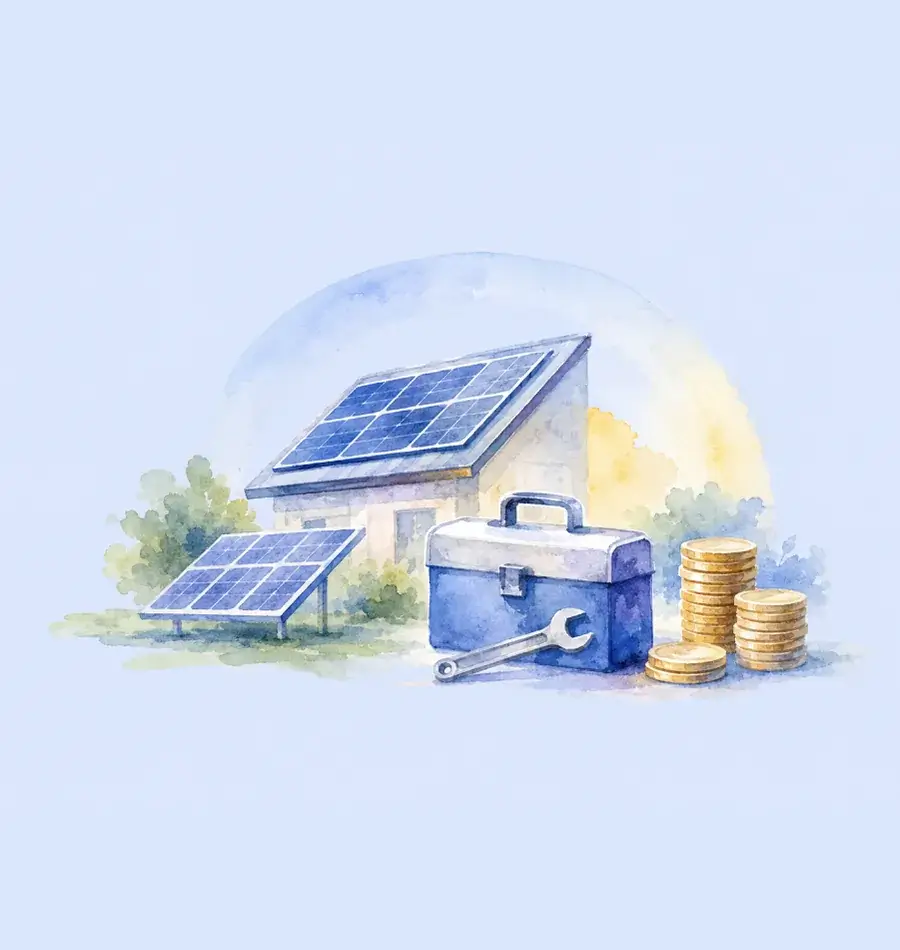
A few months ago, I had a busy solar panel installation contractor from Florida come to me for some financing advice. He was running about 30 projects at once, which was great for business. But he needed regular access to working capital to bridge the long permit-to-payment cycles that are typical of his business, in which contractors pay for the labor and materials of the work weeks before receiving their final payment.
When the contractor came to me, he had about $400,000 tied up in materials for active installations and was regularly waiting 90 days after completed installations to receive full payments. My team and I at Clarify Capital helped him get an SBA loan and a business line of credit so he could keep covering payroll, hire more staff, and feel comfortable buying all the supplies he needed ahead of time to take on even more projects at once.
Contractors and installers in the solar panel business usually have two pain points when it comes to financing in general: one, offering their customers financing at the point of sale so that they can pay for their services, and two, the contractors obtaining financing themselves for the day-to-day operations of their business. Here, I'm only talking about the latter.
I’m going to break down which types of financing I recommend for solar panel installation businesses and what areas of the business I think they suit best. I’ll also explain what lenders will want to see to get approved and, when you’re ready, how you can apply.
| Best for | Typical amount | Typical term | Rate / estimated cost | Speed to funding | |
|---|---|---|---|---|---|
| SBA 7(a) loan | Working capital, business expansion, acquisitions, hiring crews, owner-occupied warehouse/shop purchases, and refinancing eligible debt | Up to $5 million | Up to 10 years (working capital, acquisition) or 25 years (real estate) | About 9.75% to 13.25% APR (SBA caps the rate at the prime rate plus 3.0% to 6.5%; prime is 6.75% as of July 2026) | Typically 30 to 90 days; a slower option |
| Term loan (short-term or long-term) | One-time, defined costs; long-term: branch expansion, hiring additional crews, or major technology upgrades; short-term: payroll, permit-related cash-flow gaps, or a large inventory purchase | $10K to $5M | Can do short-term loans or long-term loans | APR from 6% | As fast as same day |
| Equipment financing | Purchasing work trucks, vans, trailers, lifts, scaffolding, testing equipment, and other installation tools | Up to 100% of equipment cost | 12 to 72 months | APR from 6% and up; equipment = collateral | As fast as 1 to 5 days |
| Business line of credit | Purchasing inventory, paying suppliers, covering payroll between project milestones, managing permit-cycle cash-flow gaps, and handling unexpected operating expenses (draw, repay, repeat system) | $5K to $5M revolving | 6 to 36 months; payments weekly or monthly | APR starting at 6%; only pay interest on what you draw | As fast as same day once approved |
The 5 Areas Solar Installation Businesses Should Use Financing
Remember what I mentioned earlier: If you're looking for ways to offer your customers financing so that they can cover the cost of solar panels, this page isn't for you. Many installers help customers finance solar systems through point-of-sale loans, leases, power purchase agreements, Property Assessed Clean Energy (PACE) programs, or third-party participating lenders.
While these options help contractors close sales, they do nothing for your payroll, supply purchasing needs, or the permit-cycle gap. That's why solar contractors often need financing of their own. Here, I'm focusing solely on how solar installation business owners can use financing to run and grow their companies.
These are the five categories solar installation businesses usually use financing for, and which type of financing I think suits each one best:
Equipment and trucks

Permit-cycle working capital

Inventory

Payroll bridge

Large project capacity
Equipment and Trucks
Solar installation businesses rely heavily on having their own equipment to perform their services. Usually, that includes buying things like installation tools, ladders, scaffolding, boom lifts, work trucks and vans, trailers, testing equipment, and safety gear.
My financing recommendation: equipment financing
Equipment financing is a type of small business loan designed specifically for buying all types of equipment, machinery, or vehicles. You get it as a lump sum, then pay it each month over a fixed term. There's usually no down payment, and qualifying is also fairly accessible because the equipment itself acts as collateral.
Inventory
Notice how in the last section on equipment I did not include any of the actual components your business installs and/or buys ahead of projects. That's because those things (which can be everything from solar panels and inverters to battery storage systems, racking, wiring, and mounting hardware) should be considered inventory. Since you're going to be constantly buying and using these types of items, I'm not recommending the same type of financing here.
My financing recommendation: a business line of credit
A business line of credit (LOC) is designed for borrowing cash. It gives you access to a pool of funds that you can draw from as needed, pay back, and then redraw from continuously. You only pay interest on that borrowed portion, not on the unused credit. Instead of relying on a personal credit card for expenses, a business line of credit keeps your business and personal finances separate.
Permit-Cycle Working Capital
As was the case for my client, having access to working capital on an as-needed basis to help cover the gap between paying for a job and getting paid is often the biggest pain point for solar installation businesses. Contractors may have already paid for materials, labor, and other project costs while waiting for inspections, utility approvals, or final customer payments.
My financing recommendation: a business line of credit
Payroll Bridging
Your crews need to be paid on time and on schedule, regardless of when project payments come through. Projects can take a long time. If several jobs are moving through permitting or waiting on a final payment at once, covering payroll can become a real challenge.
My financing recommendation: a business line of credit or an SBA 7(a) loan if it's a larger/longer-term expansion of crews
An SBA 7(a) loan is a flexible and partially government-guaranteed loan that can be used for a wide range of purposes. They can go up to as much as $5 million and offer longer repayment terms than many other financing options, although approval typically requires more documentation than online business financing.
Large Project Capacity
As your business grows, you may start to think about trying to get some larger commercial or municipal solar installation projects. To handle bigger projects like these, especially when you have multiple things in the pipeline, you'll need cash to buy more inventory up front, hire additional workers, and cover operating costs before the full payments roll in.
My financing recommendation: SBA 7(a) loan or term loan
A term loan is a loan that's given as a lump sum of money to be paid back over a specific repayment period (whether it's a short-term or long-term loan will determine this) at a set interest rate. Short-term term loans generally have higher monthly payments but allow you to repay the debt more quickly. Long-term loans spread the cost over more time, often resulting in lower monthly payments but more total interest over the life of the loan.
What Lenders Will Look For
When you're applying for financing options, lenders are going to assess several factors about your business to both make a decision on whether they will lend to you and, if they do, the terms of the loan they're offering. Those factors include:
Credit score and history
Time in business
Business revenue
Business plan
Available collateral or personal guarantee
Up-to-date business licenses
How To Improve Your Loan Approval Odds
Every lender has its own underwriting criteria. Still, there are a few things you can do to strengthen your application:

Increase your credit score

Improve your cash flow and grow revenue

Separate business and personal finances

Consider a personal guarantee
Reduce existing debt
Match the financing type you apply for to your need
Traditional loans, like SBA and commercial real estate loans, often offer lower rates and longer repayment terms but typically require more documentation and a longer approval process. Revenue-based financing may be faster to fund, but it usually comes with higher borrowing costs and shorter repayment periods.
Why Solar Installation Businesses Work With Clarify
Clarify Capital's 5.0 Trustpilot rating is the highest in the industry, and we've placed more than $1 billion across 50,000+ small-to-midsize businesses (SMBs).
Clarify matches you across 75+ vetted lenders and can get you a written offer in as quickly as 24 hours. Every applicant works with a U.S.-based lending advisor (not a chatbot or a call center) from application through financing.
Minimum Qualifications

$10,000 in monthly revenue
Your business must earn at least $10K per month in a business bank account.

500+ credit score
You can get approved with any credit score. But the better your credit rating, the better interest rates lenders offer. Your FICO score should be above 500.

Minimum six months in business
Your company should be operational for a minimum of six months. This shows business lenders that your company is sustainable and won't go out of business.

Have a business bank account
Your Clarify advisor will need three or four months of your most recent bank statements to verify income. This is just to see you're actually making $10K+ month in revenue.
Ready To Apply for Financing? Here's How
Step 1: | Step 2: | Step 3: |
|---|---|---|
| It takes about two minutes. You'll need your business's legal name, EIN, time in business, monthly revenue (or projected revenue), requested loan amount, owner contact information, and a credit authorization. Apply here. | A U.S.-based Clarify Capital lending advisor reviews the application, runs a soft credit pull (no impact on your score), and requests 3 to 4 months of recent business bank statements. For acquisition financing, expect a more detailed request: trailing 12-month profit and loss statement (P&L), balance sheet, tax returns, and the target company's financials. | Clarify works with 75+ vetted lenders and matches your profile to the lender most likely to approve you at the best terms. Approved files often get a written offer the same day. You can sign electronically, complete the ACH setup, and the funds will hit the business bank account as soon as that day for revenue-based options (SBA loans take longer). |



Grow Your Solar Installation Business
A lot of solar installation businesses focus on how they can offer customers financing to close as many contracts as possible, but don't forget that the growth and long-term health of your business could also benefit from borrowing, too. The industry shows no signs of slowing down: according to the Solar Energy Industries Association (SEIA), there are more than 6 million solar installations in the United States as of June 2026.
So when you're ready, my team and I at Clarify Capital can help you explore the best financing options for your specific needs. Get started and apply today.
Frequently Asked Questions
Here are answers to common questions I get about financing for businesses that specialize in solar panel installation.
How Do Solar Contractors Offer Financing to Customers?
Some solar businesses partner with third-party financing companies that offer homeowners options like point-of-sale loans, leases, power purchase agreements (PPAs), or PACE financing. Though these may help customers pay for solar installations, they're completely separate from the financing that contractors who work in the industry use to run and grow their businesses.
What Does a Business Loan for a Solar Company Cost?
It depends on the loan type, repayment terms, interest rate, and the business's qualifications. There's no one answer. Generally, though, SBA loans usually offer some of the lowest rates, while the shorter-term and more revenue-based financing cost more in the long-run but provide faster funding and more flexible qualifying terms.
How Do I Cover Payroll and Panel Costs While Waiting on Project Payments?
As I recommended earlier in the article, many solar contractors tend to use a business line of credit to bridge payroll costs and cover panel inventory. It's a flexible option that lets you borrow on an as-needed basis, repay the balance with only interest on the amount you used, and then borrow again.
Can I Get Financing With Average Credit?
It's definitely possible. Strong credit will always help you qualify for better terms and rates, but lenders will also consider things like your business's revenue, cash flow, time in business, and overall financial health.
How Does Clarify Capital Protect My Business and Financial Information?
Clarify Capital follows SOC 2 (Service Organization Control 2) security principles designed to protect sensitive business and financial information. This includes safeguards such as secure data handling practices, controlled access to information, and ongoing monitoring to help protect your data throughout the application and funding process.

Bryan Gerson
Co-founder, Clarify
Bryan has personally arranged over $900 million in funding for businesses across trucking, restaurants, retail, construction, and healthcare. Since graduating from the University of Arizona in 2011, Bryan has spent his entire career in alternative finance, helping business owners secure capital when traditional banks turn them away. He specializes in bad credit funding, no doc lending, invoice factoring, and working capital solutions. More about the Clarify team →
Related Posts